
God Is Love
Read transcript
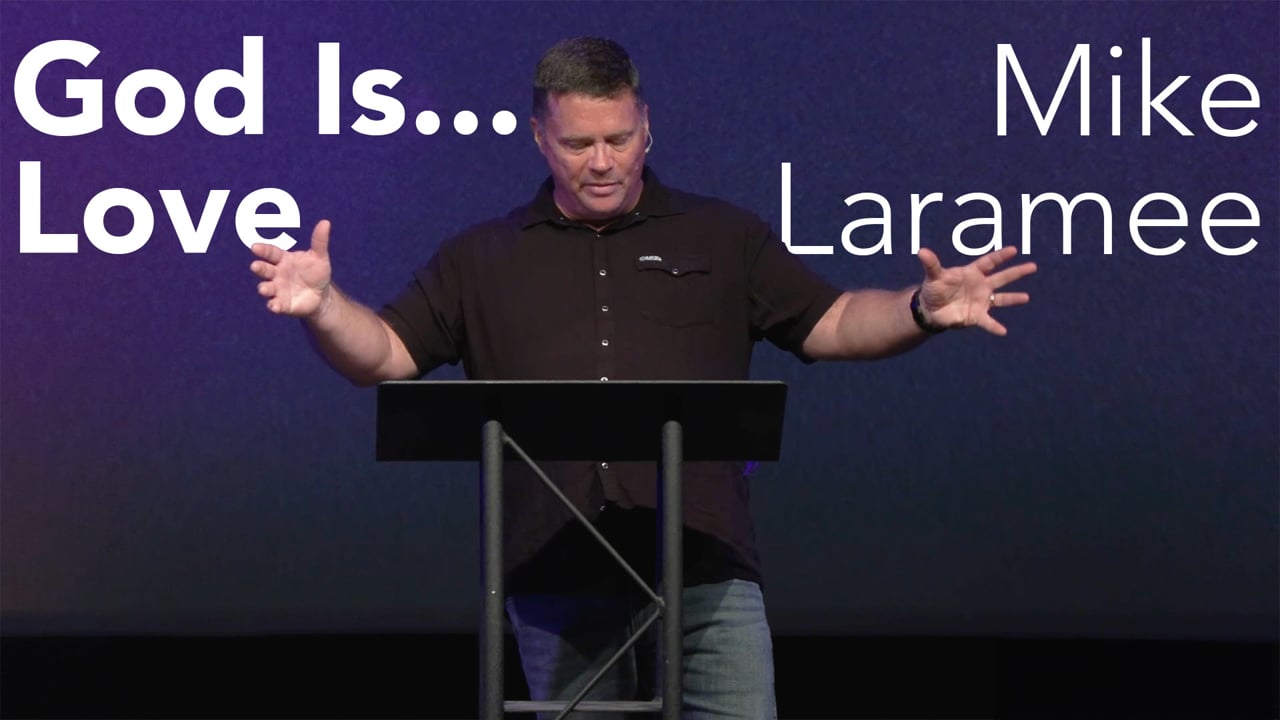
Well, good morning, church, and good morning to all y’all who are watching online. My name is not Pastor Gary. My name is Mike Laramee. I’m part of the preaching team, and we’re giving Pastor Gary a few weeks off. Now, some of that, he’s going to be taking some vacation and getting some well deserved rest, but not that this service would tell you this, but we’ve been growing like gangbusters lately.
And so we’ve actually tasked him with some very strategic vision work that we want him to do during this time. So we’re taking some of the preaching load off of him for the next four weeks. Don’t worry. He’ll rejoin us and he’ll finish out this series. So he will still be here, but we’re asking him to do some very important and serious work in the meantime, in addition to taking some time off.
So don’t worry, he’s not spending four weeks in Aruba or anything like that. That’s not really going to happen. I don’t think we pay him enough to do that anyway. So it is Memorial Day, and this is my, this is my slot. For those of you who’ve been coming to church for a long time here, Memorial Day tends to be my Sunday.
A couple years in the last two years, I’ve not been able to get my schedule to free up. But as a 21 year veteran of the air force, an eight year government contractor, after that, government service is kind of my thing. So that’s why they like to have me out here on Memorial Day. And, you know, we’re truly thankful and we honor our military men and women who lost their lives. So please don’t wish me a happy Memorial Day, because what you’re then saying is, I think you’re dead now.
Veterans Day is for us, okay? The ones who are still living, okay? But Memorial Day is for those 1.1 million US service members who have died in our nation’s conflicts dating back to the American revolution, which is a lot. And if you think about it, probably most of you at least know somebody who’s been touched by those kind of sacrifices. But you know what’s interesting is that every noble quality of mankind, that of self sacrifice, that of love, that of courage, those are all reflections of our God, because God has made us in his image and likeness.
And so we reflect. And so when we look at these characteristics of people that we celebrate on this Memorial Day weekend, we’re really celebrating those God given characteristics that we admire. So that makes today a very appropriate day to begin a new sermon series where we’re exploring how we can know God by getting to know his divine characteristics. And so this week we’re going to start with the one characteristic from which all his other attributes flow, and that is his love, because God is love. So let me introduce to you the series theme, verse, and it comes from John 17 three.
John 17 says this, and this is eternal life, that they know you, the only true God, and Jesus Christ, whom you have sent. So the purpose of God is this eight week series is to know God. The famous theologian and author Ji Packer says this in his book, knowing God. He says this what were we made for to know God. What aim should we set ourselves in life to know God?
Disregard the study of God and you sentence yourself to stumble and blunder through life blindfolded, as it were, with no sense of direction and no understanding of what surrounds you. This way you can waste your life and lose your soul. Ji Packer has a way with words, and he’s a very deep thinker and excellent theologian, and I highly recommend you read this book, knowing God. If you want to know a little bit more about God, there may be one in our lending library. If not, you know what?
It’s pretty cheap on Amazon. Go ahead and pick one up. I don’t get any kickback or anything like that, but it’s a very good book. Now, there is no way in eight weeks we’re going to cover everything that there is to know about God, okay? That’s a lifetime pursuit.
We couldn’t do it in eight years, let alone eight weeks. But, you know, we’re going to touch on some of these things, and we’re going to build a foundation. And one of the foundations that we’re going to build on is that God is Triune. He is part of a trinity, and he’s going to reveal himself because he has eternally existed in three persons. He’s going to continue to reveal himself in that way, and we’re going to see that here in this message.
God’s love is revealed in a Triune way. So we’ll look for that. To begin with, though, we’re going to look at the truth that God is love. And that’s a perfect starting point. And with conviction, I can tell you that we need love, right?
We need love, and we need to be loved. You know, there are other qualities that we could disagree on as to whether we need them or not. But love is universal, right? As those great philosophers, the Beatles, said, all you need is love. Love is all you need.
Now, I may disagree with some of the other things that they said, but I will agree with that. Psychologist John Bowlby. This is the father of attachment theory, the attachment theory of love. He says that the type of attachment style one develops through their childhood relationship with their caregivers, and that’s your mom and your dad, or just your mom or dad or grandparents or whoever raised you, that those childhood attachments play a role in your relationships in adulthood. In essence, what he’s saying is the way we’re loved as children impacts our relationships as adults.
So he built this work on this premise that this seems to be universally accepted. And if there’s anything that’s universally accepted in the fields of science or psychology or sociology, man, that’s a rare thing indeed. But this is universally accepted in his field, that we come into this world with an intrinsic need to be loved. And I used this example in the first service, and I can’t help it anymore because I’m going to use it again. Jonathan and Chelsea Wilson now just welcomed the newest baby that I know of in this church.
Four days old, and he’s here. He just walked out. Well, he didn’t walk out. His mom walked out with him. Right?
Four days old. If he was walking, that’d be something, wouldn’t it? But even that little infant, that four day old infant has an intrinsic need to be loved. And eventually he will learn to love as well. We come into this world with this need.
Now, maybe for you today, this truth actually is a tragic reality. We need love, but we feel unloved. Maybe this began early for many of us. Maybe in your early childhood, those memories you remember feeling unloved, that probably affected your relationship as an adult. Maybe he said to death, do us part, but he left.
Maybe she promised to love you in sickness and in health. But ever since your injury, she’s been distant and unloving. Maybe you confided in a dear friend about your deepest pain and need, and they turned it into gossip. Church. We’ve all got baggage like this.
We have all felt rejected. We’ve all felt unloved. At times, the very people who need love the most are sometimes the people who hurt those who need love. Love, you know, hurt people, hurt people. And sometimes those people who need love are the ones that don’t give it the most.
But God’s love is perfect. See, when others leave, he stays. Even if you have quirks and mistakes and mess ups and foibles and messes, God’s love stays. God is love. And his motivation and his actions are always to love.
In the book of one, John the apostle encouraged believers to know God, to get to know God, and to respond with loving one another. See, we can know God too. And we can know that God is love and respond in kind in love. See, how can we do that? How can we get to know God?
And how can we respond in love? Well, the text is going to give us three proofs, three proofs that God is love, and it’s going to inspire us to love one another. So if you join me, we’re going to read in first John, chapter four, verses seven through twelve. Beloved, let us love one another, for love is from God. And whoever loves has been born of God and knows God.
Anyone who does not love does not know God, because God is love. In this, the love of God was made manifest among us, that God sent his only son into this world so that we might live through him. In this is love. Not that we have loved God, but that he loved us and sent his son to be the propitiation for our sins. Beloved, if God so loved us, we also ought to love one another.
No one has ever seen God. If we love one another. God abides in us, and his love is perfected in us. And may God bless the reading of his word. Amen.
Amen. So we’re looking for three ways, three proofs that God is love and how we can respond in love. Here’s the first way. God the father sends. God the father sends.
So right there in verses, as we start off in verse seven, John starts off with the word beloved. Beloved. Now, John at this point is probably in his eighties writing this letter, and he’s writing to all of these people that he has ministered to over the years. And you can almost hear the grandfatherly, great grandfatherly love that comes out as he dresses, beloved. There’s a sweetness in his words that he says this.
Cause he’s talking to these people he deeply cares for. And not only does he know that he cares for them, but John knows that God loves them as well. So he says, you are loved not just by me, but by God, beloved. And he really goes into, and his beginning premise there in verses seven and eight is that love is from God. And whoever loves has been born of God.
So he really leans into this idea that love comes from God. And so we need to define what love is here. And if you’ve been coming to this church for any length of time, you probably know what word this is. This word appears 13 times in this particular passage. Just that word love.
And it’s that word agape. As a review, there are four different koine greek words that are translated into English as love. The first one would be Philae, where we get Philadelphia from the city of brotherly love philosophy, okay? It’s this brotherly love. It can be a conditional love, but it’s kind of like we’re pals, you know?
We hang out, we love each other, we hang out, we fish together, you know, that kind of thing. But it can be deeper than that. It’s a brotherly love, okay? There’s also storge. This storge is a familial love.
It’s the love that parents have for their children and vice versa. It’s that love. It can be also a kind of a transactional love, but it’s the love in a family, okay? We also have eros, or erotic love. It’s the love that a man has for a woman and for a woman, for a man.
It’s this passionate love. And none of those three are what we’re talking about here. What we’re talking about is agape, or agapao in the noun form. It is this love that comes from God. It means to love dearly, to be contented with.
But really, it’s an unconditional love, sacrificial love. It’s the love that God has, okay? It is a unconditional, sacrificial love. And that’s what John’s talking about. He says that God is agape, okay?
He’s saying God is that unconditional, sacrificial love. And then all of those challenges afterward are for us to also love in that manner. Is to also love in that manner. And he makes an interesting connection there in verse seven. He says in verse seven that whoever loves has been born of God and knows God.
So. And he’s not talking about that four year old infant that we were talking about. He’s talking about you and I. He’s talking about those who have been born again by the spirit. Those who claim Jesus Christ as savior.
If you’ve been born of God, you love, you love. That’s an evidence of that born again nature. To love like God is a clear indication that you are a new creation in Christ Jesus. Jesus. Now, in verse nine, it says that this love becomes manifest.
And it’s funny, because, you know, many of you all know that I’m an airline pilot. And the manifest says something to me. It manifests is all the list of people that are on board the airplane. That is not what we’re talking about this idea of being made manifest is to be revealed, okay? This something that was not known before has now come into view and is now to be known.
So God is making this love manifest. It’s being made known. And the NLT does a really good job of paraphrasing verse nine and maybe make it a little bit more understandable. And it says it this way. God showed how much he loved us by sending his one and only son into the world so that we might have eternal life through him.
So you see, God is putting that agape love in action by sending Jesus. So God sends Jesus. So he’s been sent here for a purpose and a mission. Now, I love Cs Lewis, and I’ve got to throw Cs Lewis quotes in here when I can. It’s not going to be on the screen, but this one’s pretty easy.
CS Lewis says the son of God became a man to enable men to become sons of God. Very profound. The son of God became a man to enable men to become sons of God. That’s you and me. That’s all of y’all.
It’s not gender specific. That means you all, every one of you who claim Jesus as savior have the same adoption as sons, as firstborn sons with the father. So that why in verse nine, we could live through him. We can live through him. So as God’s love flows through us, we can live through him.
And now, of course, you know, this is not just talking about us having breath. And, you know, this morning I got up and, you know, took a shower and we had some breakfast and we came over here to church and started setting up and getting ready for y’all. That’s not, I’m not just talking about breathing and moving and having our being. We’re talking about the second life, this eternal life that God gives us, the life that is eternal but also in abundance, right? Now, that love that flows through you allows you to live through him.
And if we think about Jesus ministry, when God sent Jesus here, right, certainly we had the cross in mind and we’ll talk about that in a moment. But what else did he do? He was here for three years, right? Doing ministry. What else did he do?
Well, he taught and he loved. He made friends, right? He had banquets and wedding feasts and he, he healed, right? He healed the deaf and the dumb and the lame and the blind, right? He fed people, he ministered to people, thus making himself an example for us.
He showed us how to love. So God sent Jesus to show us how to live out that agape love. See, God’s love is displayed in that he gave his and sent his only son to us. So that verse in first John mirrors and mimics John 316. John 316 17 says, for God so loved the world that he gave his only son.
See, he loved, so he gave his only son, that whoever believes in him should not perish but have eternal life. For God did not send his son into the world to condemn the world, but in order that the world might be saved through him. God loved, so he sent his son. And his son came here and ministered to us and showed us how to love. God sent his son also, that we might be redeemed and adopted into his family.
Look at Galatians four. But when the fullness of time had come, God sent forth his son, born of women, born under the law to redeem those who were under the law. Why? So that we might receive adoption as sons. God sent Jesus so that you and I can be part of God’s family.
He loved us that much. God’s love, though, is so humble. And Jesus humbled himself to the point of being a servant in that incarnation, that word, that incarnation. I have a good friend of mine down in Pensacola, another Bible teacher who loves to talk on incarnation. And the way he puts it is God put on skin.
God put on skin. So God became flesh and bones. And that’s a very humbling thing, right? For Jesus to, to put aside his robes of humanity, to set aside his throne and be born as a humble baby, as a humble galilean peasant. Philippians two says it this way.
Though he was God, he did not think of equality with God as something to cling to. Instead, he gave up his divine privileges. He took the humble position of a slave and was born as a human being. When he appeared in human form, he humbled himself in obedience to God and died a criminal’s death on the cross. That is a huge step in humility, that the God of gods would come down here and be a human person.
I don’t know if you’ve ever met anyone famous, but we have a tendency to really remember those encounters, right? And this may be a celebrity, this may be a sports figure, maybe a political figure, somebody that you’ve met in the past. You know, you remember that occasion. Maybe they were cordial, you know, maybe they were down to earth and easy going and you thought, this is a pretty good experience. Or maybe they were flippant and, you know, and they moved on quickly or they dismissed you or they were rude.
I had an occasion one time where I had a very famous retired basketball star on my airplane, and this guy had actually starred in a movie that remarkably has something to do with my career. You know, he was a. He started as an airline pilot, and I was trying to make conversation with him, trying to make light of this movie and his starring role in it. And he was very dismissive, rude, and quite frankly, didn’t feel like talking to me. So I said, okay, I’ll go back to the cockpit and you can sit up here where you’re all by yourself.
So he was not a particularly good experience for me meeting this celebrity. But imagine, though, that the most important person in the universe has all the time for you, all the time in the world, just for you. They’re fully available and they’re fully present, and their love doesn’t, you know, doesn’t shrink back in trouble, but goes out in power. That’s Jesus. That’s Jesus.
So if you. When you have an encounter with the most important person in the world, it’s not going to be like meeting a solution. Celebrity. We’re to love one another. Realize, too, though, that we’re not going to be able to do this perfectly.
I am not a perfect person to love. I try, but I’m going to make mistakes this side of glory. We’re not going to be perfect at this. But God is working on us, and we are to continue to try and love the way he does with God’s perfect love. See, some of you in the sound of my voice don’t feel that you’re loved.
But I tell you what, God’s love is present and it’s available to you right now. And he wants a relationship with you. He also wants you to be in relationship with others so that that agape love that flows through you, you can practice with others and you can experience it as well. He wants you to feel that love. So that’s the first way that God demonstrates love, that God sent his son.
Here’s the second God, the son, saves. God the son saves. And here’s that second proof that God is loved. That Jesus died for us. Okay?
That Jesus died for us. Well, why did he have to die? Because, you know, we loved our own sins so much that we would risk an eternity without God to keep it. But God loved us so much that we don’t have to reap those consequences. We don’t have to sit in our sin.
See, Jesus willingly took that cruel death as a criminal on the cross to pay the price for our sin. And in doing so he demonstrated his supreme love for mankind. This shows God’s agape. Love started out in only one direction. Right?
God loved us first, and while we were still enemies, we still loved our own selves more. See, that one way love was not returned. See, God loved and he acted. He sent Jesus to be that perfect sacrifice to reconcile us to him. And so we want to talk about that word that appears here in verse ten.
Propitiation. A big theological word for sure. Right, propitiation. What does that mean? Well, one of the meetings is a means of appeasing.
Okay? To make things better. Right. It’s a way of paying a debt. But really, the best translation is a sacrificial atonement.
It’s an atonement for sin. Propitiation. Now, why is that propitiation required? Well, remember, Romans 323 says that all have sinned and fall short of the glory of God. That’s all of us.
You and me together, we have all sinned. We’ve sinned in the past, may have sinned today. We’re gonna sin in the future. Okay. All have sinned and fall short of the glory of God.
And romans 623 says that the wages of sin is death. So since we’ve already established that we’ve all sinned, the payment for that is death. And so the answer is propitiation. It’s this atoning sacrifice of Jesus that pays for our sins. And remember, again, if you’ve not heard teaching on sin in a while, you know what?
A lot of churches don’t preach about sin, but sin is real. And the idea of sin is missing the mark. It’s an archery term, right? You aim at something and you hit something else. It’s an error.
It’s a mistake. But even more importantly than being an error or mistake, because that may minimize it, it’s to wander from the law of God. It’s to violate God’s law. Now, John Calvin, the great theologian, said this. He said God interposed his own son to reconcile himself to us because he loved us.
But this love was hidden because we were, in the meantime, enemies to God, and we’re continually provoking his wrath. Imagine that, parents. Imagine your kid just continually just provoking your anger and wrath. That’s what we were doing to God. But God loved us anyway.
Amazing. Part of that love is that he loved us when we despised him. He came and died for people and for us when we didn’t even want him. Romans five, eight. God shows his love for us in that while we were still sinners, Christ died for us and second corinthians 521, for our sake, he made him to be sin who knew no sin, so that in him we might become the righteousness.
Martin Luther calls that the great exchange. Right? We exchange our sin, and we give it to him, and Jesus gives us his righteousness, the great exchange. We didn’t deserve it, but Jesus loved us first and became our sacrificial propitiation, our atoning sacrifice. This sacrifice continues to show the magnitude that God of his love is, that his love has for us.
John 1513. Greater love has no one than this, that someone lays down his life for his friends. Let me show you a picture of a man, personal hero of mine. This guy’s name is John Chapman, technical sergeant, United States Air Force. This man was enlisted in the air force in 1986, and he became a combat controller.
He decided to become part of Air force special operations. Now to be a combat controller is a two year pipeline, a two year training pipeline. Only one in ten make it through. One in ten make it through this training pipeline. And it includes massive amounts of physical training.
These guys are incredibly fit. It also includes Navy scuba school and army static line and free fall parachuting. They become trained emergency medical technicians, and fantastically, they’re also trained air traffic controllers. Okay? These guys jump into a hostile zone, control air in the process to support efforts of the commander on the ground, and so they can also call in airstrikes.
Well, John Chapman was one of these guys that everybody liked because he could pretty much do anything that was put in front of him. One of those dudes self sacrificing during Operation Anaconda in March of 2002 in Afghanistan. John Chapman was part of a direct action team. And these teams were being put into observation posts on high points throughout Afghanistan to report on enemy movement, call in airstrikes, and to support operations. And at that point, in March of 2002, there were not a lot of ground troops, us ground troops, or coalition ground troops on the ground.
There was mostly afghani fighters that we were allied with. These teams were using us assets, especially air power, to support the Afghanis. Well, on the 4 March 2002, his team was being helicoptered in to a place called Tarrancoat. It’s a mountaintop in that area. And what they didn’t realize is that they were, while they were going to set up their observation post, they actually were setting up in the middle of an al Qaeda base.
There were hundreds of al Qaeda fighters in that particular area. And as they were landing on the or trying to land on the mountaintop, the helicopter came under extreme fire, including a rocket propelled grenade and one man. Navy SEAL petty officer first class Neil Roberts was on the ramp of the helicopter, about to jump off, when he fell off and fell onto the mountaintop. Well, the helicopter was so heavily damaged that it was out of control and ended up crash landing 7 miles away. Now everybody on the helicopter survived, they were all ready to go.
And so the team, including John Chapman, immediately got another helicopter and volunteered to go get their friend Neil Roberts, that was on the top of that mountain. So the second helicopter approached the mountain and it was getting shot up. The whole team got off the helicopter and John Chapman immediately ran and started looking for Neil Roberts. He was immediately engaged by multiple enemy fighters. Some accounts say that three different positions took him under fire at the same time.
He was wounded multiple times. Okay, they found a safe spot to hole up. John Chapman ended up becoming unconscious due to the loss of blood. And from his wounds he eventually got, he awoke, continued fighting, continued manually taking out enemy fighters, started calling in airstrikes to support this small team of about seven to ten men that were surrounded by hundreds of al Qaeda fighters. All these air assets started showing up and they started dropping bombs and started supporting these troops on the ground.
Eventually they got into a situation in the military we call danger close, where collateral damage concerns were so high that you’re basically dropping bombs on your own position. And that’s what was happening until those fighters ran out of bombs and now they had to strafe. So they ended up rolling in with their cannons and taking out enemy combatants until they could helicopter in a quick reaction force team of army rangers to build up the numbers and fight off these al Qaeda fighters. And eventually they were able to extricate them. Unfortunately, John Chapman succumbed of his wounds and died.
The members of the team credited him alone with saving the entire team. And for that he won the Medal of Honor. Greater love has no one than this, than someone lays down his life for his friends. Have you experienced the love of God that comes from receiving his son, savior, that Jesus who laid down his life for his friends? Would you like to know God better?
Recognize that all of us have sinned and we continually need a savior. Accept that atoning sacrifice of Jesus. Accept the love. So we see that God the father sends, God the son saves. And here’s the third proof that God is love.
God the spirit abides. God the spirit abides. You see, he abides in us and is ever present in our lives after salvation. When you accept Jesus Christ into your heart, Jesus the spirit the Holy Spirit comes up and takes residence in you. He abides in you.
So let’s talk about that word, abide. Okay? What does that mean? Okay. That’s a word that we don’t use every day, right?
To abide. It’s related to the word abode. So for those of you real estate people in the congregation, I know we got a ton of them. Okay. You know, you abide in an abode, right?
You live in a house, you abide in an abode. Jesus sends his spirit and the spirit abides within us. The idea is that the spirit will remain, will stay, okay? Will continue to be present, will continue to be and not to perish and endure. That’s this.
Abide is this continual presence. Doesn’t go away. And because of that, John says in verse eleven that we ought to love one another. We ought to love one another. Now that’s a word again that has kind of, the meaning’s changed a little bit.
When I say I ought to do something a lot of times, you know, here in the south, I ought to do this means I’m probably not going to get to it. I should do it. I’m probably not going to get to it. You know, that’s kind of the way I hear it used a lot of times, but that’s not really what the word means. The word ought to literally means to owe.
I owe this. God’s spirit lives within us. God loves us so much that you owe love to one another is what John is saying. We ought to love. We owe love.
It’s a debt that needs to be paid. Pay it forward. Pay it forward with the sacrificial love that Jesus demonstrated for you and that he continues to live in you. Pay it forward in action, that we should be loving one another with action and not just words. Now John says that no one has ever seen the father, but you can see the results of that love in each other.
If you. Again, that perfect example of abiding is the picture of love that comes from that new Christian. The evidence of the Holy Spirit inside the new believer is love. Now some of you all know that I like to interview pastors. If I’m going to submit to a pastor, I tend to interview them because I want to make sure that we are simpatico, right?
We believe the same things. And we’re down in Pensacola, Florida at the time. And I was going to a church and I wanted to figure out what this pastor believed because quite honestly, the church was a little more charismatic than I was probably comfortable with. At the time. And so I wanted to know exactly what his theology was on these kind of things.
And I was asking him about spiritual gifts. And what he said to me was, he says, no, no, no. Let’s not get sidetracked. The first evidence of the Holy Spirit and the believer is love. And from that you can see one, corinthians 13 two says this.
And if I have prophetic powers and understand all mysteries and all knowledge, and I have all faith so as to remove mountains, but I have not love. I’m nothing. Love is the evidence that the Holy Spirit has taken abide in you. If you are evidencing and manifesting love, then you can know that the Holy Spirit is taking residence inside. And what’s the purpose of this?
John says in verse twelve that we are to be perfected in love. To be perfected in love. And I think about that and I go, well, I’m not perfect. So what does it mean to be perfect biblically? To be perfect is not to be flawless because none of us are there, right?
It’s to be made complete. It’s to be made whole. It’s to accomplish the task that is before you, to bring it to an end. And I think the best way to think about it is to add to you what is lacking. Okay.
Cause we’re all works in progress. We’re all learning to love. We’re all learning to walk with Jesus in different ways in different states and different stages along the way. And God is working on you through the Holy Spirit who abides in you to make you perfect, to add what is lacking. That is what the purpose of that love is.
The gift of the Holy Spirit is our evidence that God abides in us. Look at one, John 324. Whoever keeps his commandments abides in God and God in him. And by this we know that he abides in us. By the spirit whom he has given us.
Again, the Holy Spirit, he moves those proofs from the head down to the heart. In Romans five five, it says that God’s love has been poured into our hearts through the Holy Spirit who has been given to us. One of the most amazing things about the love of God, especially as we see it manifested in the spirit that’s within us, is that that love abides in us. But it remains, it stays with us, and nothing can separate us from that love. If you are feeling unloved, read with me in Romans eight.
One of my favorite passages, Romans 838, starts, and I am convinced that nothing can ever separate us from God’s love. Neither death nor life, angels or demons, neither our fears for today nor our worries about tomorrow. Not even the powers of hell can separate us from God’s love. No power in the sky above or in the earth below. Indeed, nothing in all creation will ever be able to separate us from the love of God that is revealed in Christ Jesus, our Lord.
Amen. Nothing can separate you from that love. That love is guaranteed. Now, let’s think about the ever present smartphone. You probably have one in your pocket right now if you’re not using it right this moment.
Right? That phone needs the abiding presence of the electricity that’s in the battery, right? If that phone does not have electricity, it’s pretty useless. It’s about a paperweight, right? A big plastic and circuit paperweight.
It’s not really any good. Until that abiding power goes in, so, too, are we useless without the love of Christ that charges us up with that abiding presence of the Holy Spirit. See, God demonstrates his love for us by sending his spirit to abide in us. And he charges us and enables us to be part of his mission. And you know what?
We have a mission here. And our mission is to see that every man, woman and child here has repeated opportunities to get to know Jesus Christ. Repeated opportunities? Every man, woman and child, we’re on a mission. And that love that God has demonstrated for us, those proofs and that spirit that’s within us enables us to do that, because the most unloving act that we can do is to not tell somebody about Jesus.
God’s love compels us. We ought to love. We owe that love because he loved us first. He died for us when we were enemies. See, God’s love is present.
It’s sent, and it sets us free through the blood of Jesus. You know, equally as wonderful, though, is that God’s love perseveres. It remains, it abides in us. You know, many of you may feel abandoned. Many feel the weight of a loss of love.
Sometimes people leave when things get tough. The beauty of the spirit is that it abides in us. It’s never going to leave. When God seeks and saves you, he seals you with the promised Holy Spirit. His love stays on us forever.
My friend, you are loved by God, I am loved by God. And nothing, nothing can separate you from that. So let your love for one another persevere. Let it continue. Have the kind of love for one another that sticks around.
It doesn’t leave when times get hard or when sin enters the camp and it’s going to let that love endure. See, our God truly is love in the very area of our greatest need. As we started off with, in our very area of the greatest need, God is more than enough. His love is more than enough. He has put his love on display by sending his son, by saving us, and by abiding in us.
See, God is not only love, but he is love in action. Will you receive his love? Will you put your life in submission to his will? And finally, will you love one another as he has commanded? Let’s pray.
Father, we recognize that you are love. You have truly loved us and you have put that on display. You’ve put that love in action by sending Jesus to minister to us, to be that perfect example of love, to show us how to love one another. But you’ve also sent Jesus to die for us. And that in itself is a great expression of your love that you won’t allow us to continue to die in our sins.
And then, Father, you have sent the love in our hearts in the form of the spirit. So, Father, we pray, especially if you are here today and you’ve not experienced the love of God, you have not ever committed to Jesus Christ, his son. I want to pray with you, and there’s nothing magic about my words, but would you just pray along with me and just say, Jesus, I need this love? Would you forgive me of my sins? And would you be my lord?
Would you save me? Would you. Would you introduce me to this love and spirit? You’re welcome to take residence inside. You are welcome here.
Live within me. I want to serve you. And again, there’s nothing magic about those words. But if you prayed that earnestly believing, then welcome to the family. You are part of God’s family now, and you can experience that agape love of Jesus.
Many of us here today have loved imperfectly, and we’ve experienced that love in the past. But maybe we’ve choked it off, or maybe we’ve loved imperfectly. And I want to pray for you too. Father, many of us have not fully loved. We have loved it for a time, and maybe we’ve allowed love to grow cold.
Or maybe sin has entered the camp. Or maybe I have all kinds of other reasons why we may have choked off this love. But, Father, would you love us completely? I know you already do. Would you.
Would you let that love flow through me? Help me to love perfectly. I repent of those areas where I have not loved completely. And so would you help me to love one another as we ought to love one another? We love you Jesus, and we thank you for this.
It’s in your name we pray. Amen.
Read transcript
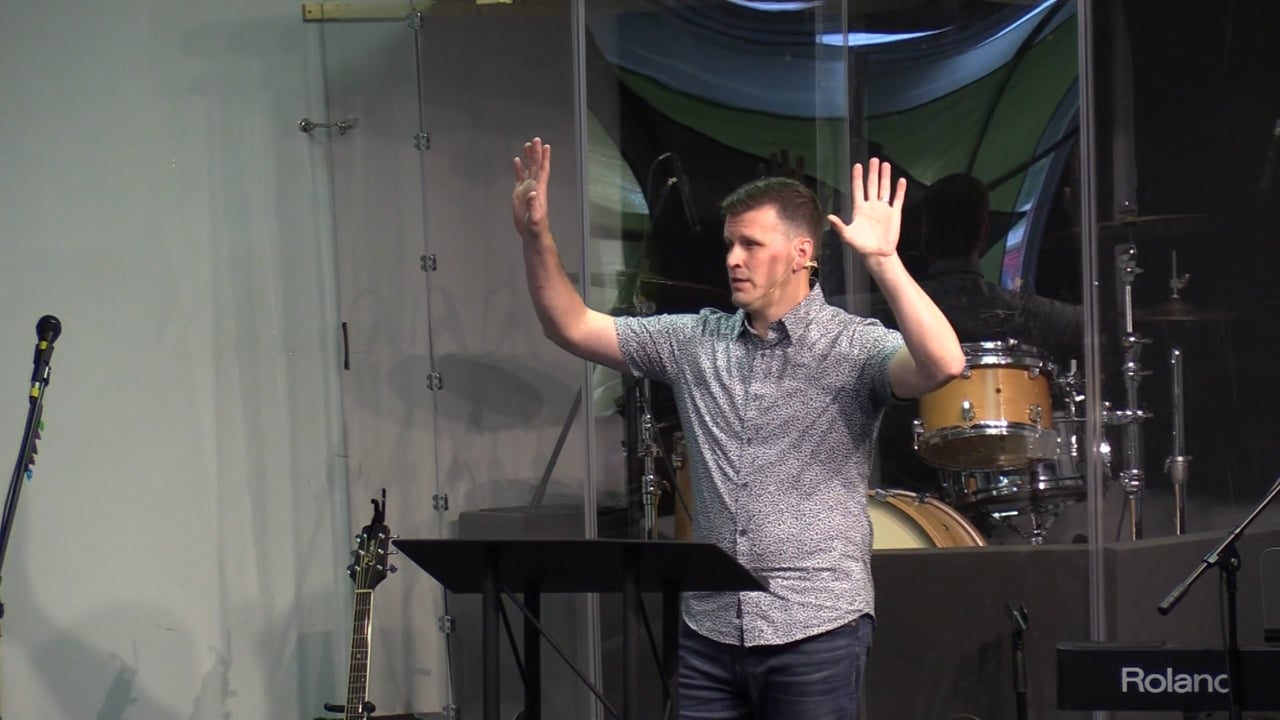
Wow, rich, that was awesome, brother. Well, beyond the humor and the fun of that, we, we are doing this wonderful thing together again this year. We’ve done this pretty much every year. We’ve existed as a church, tried to reach our neighborhood, reach our community, reach these young people we found, and this is just true, just true, statistically, that people come to faith before the age of 15 on the largest percentage. And so this is an important work and important ministry, and we like to have a good time doing it.
And so please sign up if you’re not yet serving. We can use all kinds of different talent for this. So we’re starting off this new series called God is. And for the next eight weeks, we’ll be digging in onto these, these wonderful attributes of God, these characteristics that, that we know and we see even in our own lives. But he is the perfect example of.
And so, happy Memorial day to everybody. I’m thankful you’re here. If you’re wondering if you’re newer around here, this is not our norm. As you can see, sometimes we have drums, but on a Memorial day weekend, people are all over the place. And so we’re thankful for what we had.
Thank you, Christy, today for being my one and only friend on stage. I could have had the donatters. I didn’t know. I told you no more Sundays off. John, I don’t know what I was thinking.
But anyway, I’m thankful for her. I’m thankful for the opportunity to worship, and I’m thankful for you today. Happy Memorial Day. This is an opportunity for us as a nation to be thankful and grateful and honor those men and women, those service members who’ve lost their lives, that we can have freedom and the rights that we have. It’s an incredible, incredible holiday.
And I think a good thing to remember as a church, because every quality like this, the sacrifice, the love, the courage, the boldness that it took, is a reflection of these divine qualities of God. So it’s a really good time to start this series on God’s maybe one of his most important qualities, and that is that God is love. And so for the next few weeks, we’re going to be digging in on this. Now, this is important. The bible speaks often of this, but let me give you our theme verse for why we’re digging in on who God is.
John, chapter 17 says, this is eternal life, that they know you. Now, that’s an interesting verse, that eternal life comes from knowing the only true God and Jesus Christ, whom you have sent. There’s a famous book, some of you may have read it. It’s a big boy. It’s a heavy read.
It’s called knowing God by Ji Packer. And in that he famously wrote, what were we made for? To know God. What aim should we set for ourselves in life to know God. Disregard the study of God and you sentence yourself to stumble and blunder through life blindfolded, as it were, with no sense of direction and no understanding of what surrounds you.
This way you can waste your life and lose your soul. He’s right about that. And the reason he’s right about that is we are made with our primary purpose of knowing and worshiping God. He made us for himself. Therefore, knowing him is the utmost and most important thing we can do.
And so we’re gonna cover a lot about God. But let me be honest about something. We simply cannot cover everything. Eight weeks. We would need more than eight years.
We need a lifetime of study to know God. That’s the joy of this life in Christ, is that every day we’re learning a little bit more. Every valley, every mountain, everything we go through is another opportunity to learn more about the character of God. And so we’re going to spend some time together, but we’re not going to cover everything. And we’re building on a foundation that could have been its.
It could have been its own sermon series, and that is that God is Triune. You’re going to see this on display in the verse today that we’re in in one John, chapter four, that God himself is father, son and holy spirit. Now, I could spend a lot of time unpacking that. That’s not the goal today. Maybe another time we’ll get together.
And so right away we’re building on that foundation, but we’re going to talk about how his love displays himself in that trinitarian way. Now, I can say with a pretty strong conviction that we all need to love and be loved. I don’t really think many of you, I don’t think any of you probably would debate me on that, that one of man’s greatest needs is to love and be loved. In fact, most psychologists, I didn’t read any, in fact, that disagreed with me on this as well as if you listen to any amount of music. The great philosophers, the Beatles, they once sang, all you need is love, love, love is all you need.
What a hit song. And literally all they did was write the same words and then write them in reverse. That’s amazing. Just so you know, you can be great. You don’t have to work too hard.
Psychologist John Boley, the father of this theory, this really famous theory in psychology now called the attachment theory of love. He built all of his work on this main premise that we kind of know universally, and that is we come into this world with an intrinsic need to be loved. We come out that way now as we dig into this topic that God is love, you might have some weird feelings about that. I recognize that many of you today. Maybe this truth about the need for love and the need to love is a tragic reality.
Maybe for you. Maybe dad left mom when you were young and he left you in the process. Maybe she promised to love you in sickness and in health, but ever since you got laid off, ever since that injury, she’s been really unloving. Maybe he said, till death do us part and he’s gone. Maybe you confided in a dear friend, told him your deepest, darkest secret, your deepest pain, and that has become a gossip in your life.
Now, church, we all come here today with that kind of baggage, that kind of baggage that we felt rejected at some point in our life. We felt unloved. Maybe it was early, maybe it started really young, but God’s love, my friends, is perfect. And there’s some really amazing attributes we’re going to dig in today about this love. When others leave and some do, God doesn’t perfect love.
God’s love stays even in the midst of your mess. Now, he doesn’t agree with your mess. He sticks around and helps you through it. Your quirks, your mistakes, your messes. He didn’t run.
He’s there. God is love, and his motivation and his action is always love. So we’re going to be in the book of first John today. This is a powerful reading. It says love in this passage 13 times.
Maybe one of the most powerful love topics in all of the Bible. In first John, the apostle here encouraged believers to know that God is love and to respond with loving one another. We can know, too, that God is love and respond and love. So I think the text is going to give us three proofs today, proofs that God is love. Because first of all, John’s doing that.
He’s proving the fact and then inspiring us to love one another. So let’s dig in first John. I’m in regular John. Let’s get to the right place. I don’t know what John four was going to be.
A whole different sermon, y’all. That was going to be interesting. Come here. First John, very small back here. All right.
First John, chapter four, verse seven through twelve. It says, beloved, let us love one another, for love is from God, and whoever loves has been born of God and knows God. Anyone who does not love does not know God, because church hear it. God is love. In this, the love of God was made manifest among us, that God sent his only son into the world so that we might live through him.
In this is love. Not that we have loved God, but that he loved us and sent his son to be the propitiation for our sins. Beloved, if God so loved us, we also ought to love one another. No one has ever seen God, but if we love one another, God abides in us and his love is perfected in us. God bless the reading of his word.
Amen. What a wonderful time. What a wonderful opportunity to know that God is love and respond according to that, respond in loving one another. The reason we can do that, the proof first that God the father sins, he sins. This is.
This is what God’s love does. It goes, it sins, it shows up. God’s love is present. That’s the kind of God we serve. We see right away this theological truth that John is building.
So much of this chapter on that is that God, God is love. And in order to know him and live according to his purpose, we have to know his love. We have to know it. We have to understand it. And then he gives the proof, which is first that God has sent.
Now he comes right out of the gate. I want you to know a little bit about this passage, that the thing that really marks it is where he says in verse seven, whoever loves has been born of God and knows God. And if you don’t love, you don’t know him. And so the key thing there is, do you know him? And if you do, you will love.
Because if you do know God, you will know that he is perfectly loving, and it will impact the way in which you treat others. And even beyond that, it’ll impact the way in which you look in the mirror and treat yourself, because you know God. So that’s the premise behind the whole topic. The thing he’s trying to prove, that God is love. If you know him, love will well up inside of you.
Maybe you’ve come today and you kind of feel this sense of, I’m angry a lot. I’m constantly frustrated. I don’t feel like if people were to define me, they would define it as a loving person. Maybe that worries you. Maybe that scares you.
I know for me it kind of does as well. That often I’m angry, often I’m frustrated, especially with my children. And that’s not how I want them to know me. I want them to know the love of the father. And so that’s where he starts.
And he so lovingly says twice in this passage, beloved. Now I want you to know who this John is at this point. The apostle John, when he first follows Christ, is probably a teen. Most think this, that he’s probably 18 or so. He outruns Peter to the tomb.
He kind of brags about it in John. It’s hilarious in his book that he says, the one who Jesus loved got there first. John the beloved is what we’ve called him. And he was faster. Why?
Well, partially because it seems in the text he’s younger. Peter’s an older fellow. I saw this funny meme the other day about Peter showing up with the bible going, what is this, John? What’d you write that in there for? Well, I beat you.
It’s fair and square. It was a funny meme anyway. Funny to me. You’d have to see it. But this is who John is now.
At this point. He’s writing towards the end of the first century. A lot of people think he’s probably in his seventies. He’s been through a lot at this point. He’s been persecuted a great deal.
And he comes out as more like a grandfather, saying, beloved. Dearly beloved, we’re gathered here today. This is the kind of john, gray haired, old, been around, well aged kind of John, and sees his grandkids here. In fact, there’s many times in one John, he says, my dear children. So he’s got this kind of perspective now, and he’s saying, look, if y’all know him, if y’all know this God that I’ve been walking with all these many years, you would love each other as I love you.
And it becomes less difficult when you know him, even the things about other people that bother you. Now, here’s the thing. We know full and well that loving one another isn’t very hard to when the person themselves is lovable. And there’s people in your life that just are truly lovable people, and you’ve never had any issue in your whole life being lovely to them. But God doesn’t send you only those people.
He purposely sends you people that unnerve you and make you frustrated. He does this on purpose. So not only you could show them love because they need it, but also to grow you. And what’s really wild is maybe you’re unlovable to somebody else. Maybe there’s somebody in your life that can’t stand you.
And you would think, oh no, I’m the best.
Ask your friends and family. Maybe they’d tell you more of the truth. Sometimes you’re prickly and a little bit hard to get along with. If you knew God, though, the personality, the characteristics of others, they begin to stop mattering. It’s more about does the love of God so inhabit my way?
Does it so fill me that it’s what comes out that I know him and I know this first proof. And this is where he begins in verse nine. And he gives us three proofs for the fact that God is himself love. The first is this in verse nine. It says that God sent his only son.
That’s the way in which God shows love. He shows up and that’s the kind of love we really, really want. You know, we are really good. We are good people at sending a text or a voicemail or even sending a card that says I love you, but that’s never going to be good enough. The people who really love you and pour out with you are the kind of people that show up.
They are there. They’re present. This is the Lord. He is present. An ever present help in time of need.
He is there. God’s love is displayed in that he gave. This is this famous passage that John is building on. John also wrote this memory verse that most of you probably know if you’ve been to church twice. John 316 and 17.
For God so loved the world that he gave. He gave his only son, that whoever believes in him should not perish but have eternal life. For God did not send his son into the world to condemn the world, but in order that the world might be saved through him. This is what God does. He shows up, he gives, he sins.
God sent his son that we might be redeemed and adopted into his family. Galatians four says, when the fullness of time had come, God sent forth his son, born of a woman born under the law, to redeem those who were under the law so that we might receive adoption as sons. His interest in us was not just to look at his creation. Let’s just pause for a minute. Who is this God that has created this world and knew about you thousands of years ago when he created and his plan was I’m gonna bring these created beings into my household.
I’m gonna make them my kids? That is crazy. That is wild. I mean, I’ve made all kinds of things in my life with my hands and things I’ve created, and I never thought to myself, this is something that I want to, like, deeply be involved in my family most of the time. Stuff I build with my hands, I’m like that probably wouldn’t pass muster with too many people.
I’m decent with wood, but a lot of things, I’m trash, so. But Jesus, God, he makes this wonderful stuff. And his plan all along was I’m going to bring them into my household. Wow. Do you know that?
Do you know this aspect of God’s love that he created you to be part of the family? That’s amazing. And the kind of love that God puts on display in the incarnation. It says it this way in Philippians two. That Jesus, though he was God, did not think of equality with God as something to cling to.
Instead, he gave up his divine privileges. He took the humble position of a slave born as a human being. When he appeared in human form, he humbled himself in obedience to God and died a criminal’s death on a cross.
So God, he displays his love to us in this, that he would come in the incarnation to set aside his divine privilege, not cling to it and become like us, and worse, to humble himself further, to go a level lower and die like a criminal on a cross. Do you understand this, God? Do you see the love? He doesn’t stay back. He looks at us in our desperate state and he comes and shows up.
Now, I gotta admit to you, you’ve got a lot of friends and family. You’ve got people you would say are dear to you that if you go through something heavy enough, they might not show up. You’ve experienced this in your life. I bet that people you thought would show up weren’t there. That you thought their presence would be known but they were too busy or, I don’t know.
But that’s not God. His presence is on display. He shows up, in fact, not just when we were in desperate need but when we were opposed to him. I want you to understand this. God shows up when we were enemies of his.
We loved our sin more than we would ever love him. This has been the state of humanity since the fall of man. And God decided, I’m coming anyway. That’s love. That’s proof, maybe the greatest proof of his love, that he would show up for a people who don’t even like him.
We have trouble showing up for people who we really love, but stuff comes up. But no, he shows up for his enemies. It’s amazing. If you knew this, if you knew this deep in your heart, then love for others would begin to pour out. Now we have this tendency, we have to have to admit, we have this tendency that when we meet.
When we meet certain people, it depends on how they act. But if we meet certain people, we’ll remember them by unique things. Now, I would say, especially when we meet someone famous, and maybe you’ve met someone that is famous in your life. I really haven’t. I’ve met people that are, I guess, kind of famous in christian circles, but nobody that, like, is, like, really famous, I guess.
Me and a couple guys bumped into vanna White at a wings in Myrtle beach one time. I didn’t really see her. I’d talked to her, but my other buddy was like, man, she was actually really rude. I don’t know. I can’t speak to that myself.
But anyway, Vanna White, that’s about the closest I’ve ever come. But we have this. We have this, like, this ability to really remember when we’ve met somebody that’s kind of important. And we’ll remember, oh, he was. He or she was really down to earth.
They’re actually really cordial. Or we might remember, wow, that person was a jerk. Like, I don’t know how they’ve risen to such fame. They’re not great. You can probably put that in your head right now.
Somebody important you’ve met, and you remember things about them carefully. I don’t know why that is. We do that. But it’s interesting that the most important person in the entire universe has all of the time for you. That generally, when you bump into these important people, they’re trying to get you through the line.
I’ve talked to some, you know, real famous pastors and gotten them to sign books and things like that, and they’re cordial. They’re good people to you. They’ll be nice to you face to face, but they’re trying to get you through so they can go on and deal with the people they really care about. It’s not that they don’t like you. It’s just they have families and friends, and they got their own circles.
But the most important person in the universe is present right now and will be present in the next minute. This is a fascinating thing that we as believers have every opportunity to come right into the throne room of God, and we don’t do it. That his presence is always available, his love is ready to be poured out, and yet we are too busy. Not him.
Something that convicts me, certainly, but his love. His love is available. It’s present. It doesn’t shrink back in times of trouble, but goes out in power. In the moment of my greatest deed, love one another.
Then John says, when you realize that nothing’s going to separate you from the love of God, that his perfect love shows up, then your love should show up. This is the response that John has for them. When you know God, you will know his love, and it will so flow through you. That’s the first proof. Here’s the second proof.
God the father sins, God the son saves. God the son saves. Now I love you. So guess what I did. I gave you three s words, right?
Cause I’m trying. It’s not just because I’m racking my brain like, oh, they’re gonna love alliteration. I’m hoping you’ll remember. That’s why we would do mnemonic devices like this. He sins, he saves.
God the son saves. The second proof is on display in verse ten, where we have this big old honking word that some of you maybe really haven’t wrestled with much. It’s not a word I bet you’ve ever said in dialogue. Any of you ever said propitiation to some friends and family. I have described propitiation to a lot of people, but I wouldn’t use that word because they would go, did you cuss?
What was that you just said? It doesn’t sound good right off the bat. You might not know what it means. And so this is where John goes, though, to describe this word. This word in the Greek is hilosmos, which means literally, to appease.
To appease. It’s about the atonement. Propitiation is required because there’s a debt.
Now, this isn’t a very popular thing to say, and I’ve observed something that churches are more and more getting away from, the idea that man is sinful, and that’s dangerous. Maybe, perhaps our church will never be extremely fast growing because the word of God is true. And sometimes it’s not so good for your ears. And the thing is, John is clearly saying here in verse ten that we couldn’t even understand love unless we could first understand our need for guilt, payment. We couldn’t understand God’s love for us unless we could first admit something.
I’m guilty. I’m broken. I am a sinner, as the Bible puts it, and I am. And it doesn’t bother me to say that in front of you. And the reason it doesn’t bother me is because Jesus is the propitiation for my sin.
I’m not down about this anymore. I’m humbled by it. I’m certainly humbled by it. But when I look at this, this is evidence of God’s love for me, that I was a big screw up. And yet he’s, he’s healed me and he did it by himself.
He didn’t require any effort out of me. My faith was what was required. It was his effort. And so propitiation here is this big word that simply means God has appeased his own justice. The atonement is on display here, that God had a ledger of debt before us, that Jesus went in and wrote off.
That’s propitiation. He appeased the debt. I got some debts right now. Financially, it’d be nice if someone could just go in there and rip the page out and burn it. Like I’d be nice and done with it.
I’d be awesome. That’s what he’s done with the greater debt. You see it now. That is love. That is love.
That he would show up, that he would be present, but also that he would impact your problem. He would actually do something about it. John Calvin once wrote that God interposed his own son to reconcile himself to us. Why? Because he loved us.
But this love was hid because we were, in the meantime, enemies to God, continually provoking his wrath. Look what God has done. He loved us and so he came and reconciled himself to us. This is the amazing part of God’s love for us, that even when we despised him, he loved us. Romans five eight says this very plainly, that God showed his love for us and that while we were still sinners, Christ died for us.
Church this is why we say every Sunday at some point in the service. Normally it’s in the pre service. Sometimes we’ll say it at the end. We’ll say these words, come as you are and be forever changed by the love of Jesus. Because the expectation of salvation is not that you would walk into the door well, but that you would walk into the door just like me and the rest of us, a little bit messed up, maybe a lot a bit messed up, and that God’s love would change us.
The expectation of the gospel is not that we come in going, I’m okay. The expectation is that we come in and say, I’m not well, but he is enough. He’s more than enough. Do you see his love on display here? You don’t know a lot of people like this in your life.
You have very few friends like this that don’t just show up in presence, but will do something about your problems that will pour out with all of their strength to try to help you get through whatever it is. You don’t have many of those friends, but even more so, you really don’t have a friend that could do what Jesus did. There’s none that exist, because none are good. And yet he is and has done this for you. This is why, second corinthians Paul writes, for our sake.
He made him to be sin who knew no sin, so that in him we might become the righteousness of God. This is what he’s done. He’s traded places. His sacrifice shows the magnitude. This is why Jesus says to his disciples in John 15, greater love has no one than this, that someone lays down his life for his friends.
He was preparing them for this great pouring, this great showing of love. I pray that you know this over all things today. Oh, if you could know this first thing, that God is love and that his presence is with you. Oh, that you could know it. But, boy, to know that he’s paid this for you.
We shouldn’t tire of this, should we, believers church? Should we tire of the gospel? This is the heart of the gospel. This is perhaps the thing that’s sitting way back in the filing cabinet. And when you get frustrated and mad and when your life’s going awry, that thing should be up in the front.
Move that file and remember that and know that God is love, and he has risked and sacrificed his life for you. Are you kidding me? Then why am I worried? Why am I anxious? God is love.
Now, it seemed fitting, since Memorial Day is tomorrow, that I would share a story about great love of someone laying down their life. This was a person. You can pop up his image. This is Medal of Honor recipient Garfield McConnell Langhorne. And I wanted to find a guy that did a great sacrifice in Vietnam, because I feel maybe you don’t, but I always feel like they get a bad rap, and I feel bad for those veterans.
They were mistreated when they came home. We did not memorialize them at all. And they ought to be treated really well for what they risked, because they didn’t choose the atmosphere they were sent. And this young man was a simple private, private first class Langhorne. And you’ve probably heard a lot of iterations of the story, but it started with him.
He’s what’s underneath this famous story that you’ve probably heard of. He was dropped in for a rescue mission along with his platoon. They were sent there to rescue a couple of pilots, and they ended up finding a big mess there in North Vietnam, and the pilots had already been killed. And then casualty after casualty began to pile up. They kind of jumped into a hornet’s nest, if you will, and darkness fell, and they couldn’t get out.
And as they were trying to get people back to a main gunship, to one of the helicopters in there, someone threw a grenade in there amongst him and all of these other men. And you’ve probably heard a story like this, and it comes from Langhorne, and that is, he jumped on it and curled it up under himself and paid the ultimate sacrifice for about a dozen men there. And he won the Medal of Honor for such things. There’s a really great. You can look him up.
I love the way the army does these and puts these out. The medal of Honor dialogue is fantastic. He scooped this beneath himself and absorbed the blast. What did he do? He sacrificed himself and saved their physical lives.
That’s true love. That’s love on display. That’s sacrifice. That’s courage. And it’s.
It’s an image. The reason we love stories like that, the reason we love movies like that, these redemptive stories, is because deeply inside, we were created to know a God who loves us like that. His sacrifice is like that, but greater. But greater. Have you experienced the love of God yourself?
Are you experiencing it now, knowing that he is your savior, recognizing that all of us have sinned, we’re all in this boat together, and accepting that sacrifice. Here’s the third proof. And I got to admit, I kind of like this one the most. That’s just me. You do what you want.
The first one might have meant a lot to you. This proof is so important to me, and that is that God, the spirit abides. I said I gave you esses. I actually lied about that. I forgot I switched this last point.
So now you got to remember, just because I called it out. All right. I couldn’t find a good s word for this. I had one. I was like, eh, he sins, he saves, he abides, which is in the text, he abides.
What does that mean? It says here in verse eleven and twelve that God himself abides in us. He abides in us. And that love is then perfected in us as he abides. Abides is this word that means simply to remain, to continue in, to last, to endure, to persevere in.
That means God’s love. It’s ever present, it’s active and saving, and it sticks around. It perseveres. It doesn’t leave. It abides.
Into which this John says, maybe as clearly as he said in this whole section of scripture, he says, beloved, if God loved us like this, we ought to love one another. Now, I try to avoid language like that in seminary class. We call that guilt language. Try to avoid telling the people they ought to do something. They should do something.
You, you you, in fact, avoid the word. You say we. We really should. Let us together. That’s faith based language.
No, John says, hey, I don’t need that seminary class to understand that. If you really know God, you ought to be loving one another. It’s a simple conviction. It’s this. If you knew him, you’d love.
And it worries me when you don’t love. That you don’t know him. That’s what he’s saying. Take it or leave it. There’s where John Lands.
You ought to. The word ought to here literally means owe. It means you’re in debt. It means you should pay it. If you know God, you owe one another love.
Oh, but he’s the worst. He mistreats me. She’s been terrible. How can I forgive them? No, no, no.
If you know God, you love. And you’re missing the part where this is actually going to help you. Oh, but if I forgive him, I’m letting him off the hook. No, you’re not. You’re letting bitterness go.
You’re finally saying, no, I’m not going to be bitter anymore.
If I know God, I love. And when he abides in me, that love is perfected. This word is literally a word that means it’s brought to completion. That part of what God is doing in your life as you know him all the more as you abide in him, is bringing you to maturity, to completion. And we can see it.
Your friends and your family, your church members, those in small group with you, we can see it. We can see you changing and your maturity growing. We know those of you who are walking in Christ. We can see the blooms. We can also see the ones that for whatever reason, nothing has changed.
And I would argue that’s an evidence that there’s no pursuit of knowing God. There’s a lack of pursuit. The gift of the Holy Spirit, in fact, is our evidence that God abides in us. He has written just a little bit before the verse we’re in today in one john, chapter three. That whoever keeps his commandments abides in God, and God in him.
And by this we know that he abides in us by the spirit whom he’s given us. Romans five says similarly that God’s love has been poured out into our hearts. Through the Holy Spirit who has been given to us, the spirit of God is in us, reminding us of his love.
And I love this passage because of that. Because God’s love is abiding and remaining. There’s nothing, nothing that can separate us from his love. Nothing. Look at Romans, chapter eight, one of my favorite verses.
I am convinced that nothing can ever separate us from God’s love. Neither death nor life, angels nor demons, fears for today, nor worries about tomorrow, nor even the powers of hell can separate us from God’s love. No power in the sky above or in the earth below. Indeed, nothing in all creation will ever be able to separate us from the love of God that is revealed in Christ Jesus, our Lord. He’s present.
He’s here, and he’s here to stay. Have you let him in? If you know this God, if you started that journey, he showed up and he sealed you with the Holy Spirit. The Holy Spirit of God is his great seal with you. He’s put his stamp on that.
And when he’s there, he doesn’t leave, and there’s nothing you can do. And this doesn’t give you carte blanche to just go out messing around, because that would be an indication that you don’t know him, but the fear that you might have. Oh, man, I just messed up. I can’t believe I did that again. I can’t believe I said that.
And you feel this conviction. And maybe there’s a voice inside you that says, God has left you. His love is left. No, that is not him. His love remains.
His love abides. I want to end with this story that should be true of who we are today. This would have been really applicable, I think, just a few years ago. Maybe some preached on this, in fact. But in the second century, as Christianity was first kind of getting off the ground, a plague broke out in the Roman Empire, a great plague.
And the people did some things that probably are pretty familiar to us. They began to avoid one another. They began to be very careful not to get near one another. In fact, some of the great physicians in Rome literally left the city and didn’t come back until it was over. The doctors left.
Their famous, most famous physician was a man named Galen. He fled to the countryside and didn’t return until the plague was over.
However, Christians in that time period stayed. One Rodney Stark, one historian, argues that this is primarily the region that Christianity spread like wildfire. Because as this disease was said to have been spreading, what really was spreading was the gospel. Because when others ran away, their famous positions, Christians stayed. Their love remained for people they would see people in desperate state and feed them, care for them, sometimes get sick themselves.
But you know what’s wild? Many historians say this is a major reason that some two thirds of those who may have died did not. Because what they really needed as much as anything was simple provisions. Someone to just make sure they were fed, they could hydrate. They didn’t lay in a bed and get bed sores.
There’s these just simple things that the care of these believers actually saved people physically.
This is who Christians should be. This is what the church ought to be. Why? Because it’s who Christ is. He abides.
He doesn’t leave. He doesn’t bug out when things are tough, nor should we. So I don’t know how this affects you today, that perhaps there’s someone in your life that you’re considering right now. I’ve just got to get away from them. I would ask you to reconsider that.
God’s love indeed perseveres. And some of you may feel abandoned, but I want you to know this. He’s not left. Nothing can separate you from his love. He’s not abandoned.
The beauty of the spirit of God, in fact, is that he abides in you. He not only seeks and saves, he seals us with the promised spirit. I pray you would know this today. His love remains forever. Those friends of yours, then what it means best, then, if he loves us like this, if he sent his son, if he died for us, if he lingers around even when we’re big messes sometimes, if that’s who God is, we ought to love one another.
Church, I pray we’re known for this. I pray that people in this city, in this community would know us as people who don’t run away, who don’t give up on people who love in spite of brokenness. Our God is truly love in this very need, this very area of our greatest need. He’s put his love on display. I pray, will you love others as he loves?
He loves you. Will you love him? Because he first loved us? Let’s pray now together. Church heavenly father, we thank you so much, first of all, for this great, great quality, this perfect love that you put on display.
I can think of no better reasons than the things that the apostle John saw in you, that you’re the kind of God, you’re this amazing God who didn’t just create, but you showed up. You showed up in your very creation. You sent, you gave. That’s true love. You went a step further.
God and I can only show you gratitude. I can only thank you. I can only sing songs Sunday after Sunday, Monday through Saturday, song after song and worship. And know in my heart, God, that you took on the cross for me. You took care of a debt I simply could not pay.
Thank you. Thank you for your love for me. I can think of no better proof, no better evidence. And, God, I’m praying for myself and your church that the love of God would abide in us.
Sometimes we feel distant from you, Lord. Sometimes we feel abandoned. It’s not that you moved. It’s that we, in our brokenness, maybe even in our sin, have walked some distance away. I pray for your people.
I pray for myself today, Lord, that we would know very well that your love abides in us and that it would be perfected in us. Hey, I’d be very thankful, Lord, if our church, our little church here in this town will be known for one amazing thing, and that is those people really care. Those people don’t run away. Those people really love. Oh, I would love to be known in this community as a church that, wow, they seem to really care for one another.
God, would you do that in us? Let your love be perfected in your people, God, I pray that we would know you. I pray for those in the room have not been walking with you seriously. They’ve not been pursuing you in any way, but that they would be encouraged and impacted and challenged today to be in prayer with you, to search you out in your word, to be seeking your face so that they might know you, that then in that your love would pour out in them, to them and through them. God, do this in us.
Help us to walk with you. Help love to be the very seal of what we stand for. Do this in us. We pray in Jesus name. Amen.
As the great philosophers The Beatles once sang, “All you need is love, love, love is all you need.” We come into this world with an intrinsic need to be loved. Maybe for you today this truth is a tragic reality. We need love but feel unloved.
But God’s love is perfect. When others leave, He stays, through your quirks and mistakes and messes. God is love and His motivation and action is always love. In the book of 1 John, the apostle encouraged believers to know that God is love and to respond with loving one another. We can know that God is love and respond in love.
Keep Watching
 Life In Christ – An Exposition of Ephesians
Our Peace in Christ
WilsonGary CombsRocky MountJonathan Combs
Life In Christ – An Exposition of Ephesians
Our Transformation in Christ
WilsonGary CombsRocky MountJonathan Combs
Life In Christ – An Exposition of Ephesians
Our Enlightenment in Christ
WilsonGary CombsRocky MountJonathan Combs
Life In Christ – An Exposition of Ephesians
Our Peace in Christ
WilsonGary CombsRocky MountJonathan Combs
Life In Christ – An Exposition of Ephesians
Our Transformation in Christ
WilsonGary CombsRocky MountJonathan Combs
Life In Christ – An Exposition of Ephesians
Our Enlightenment in Christ
WilsonGary CombsRocky MountJonathan Combs