
The God Who Turns the Tables
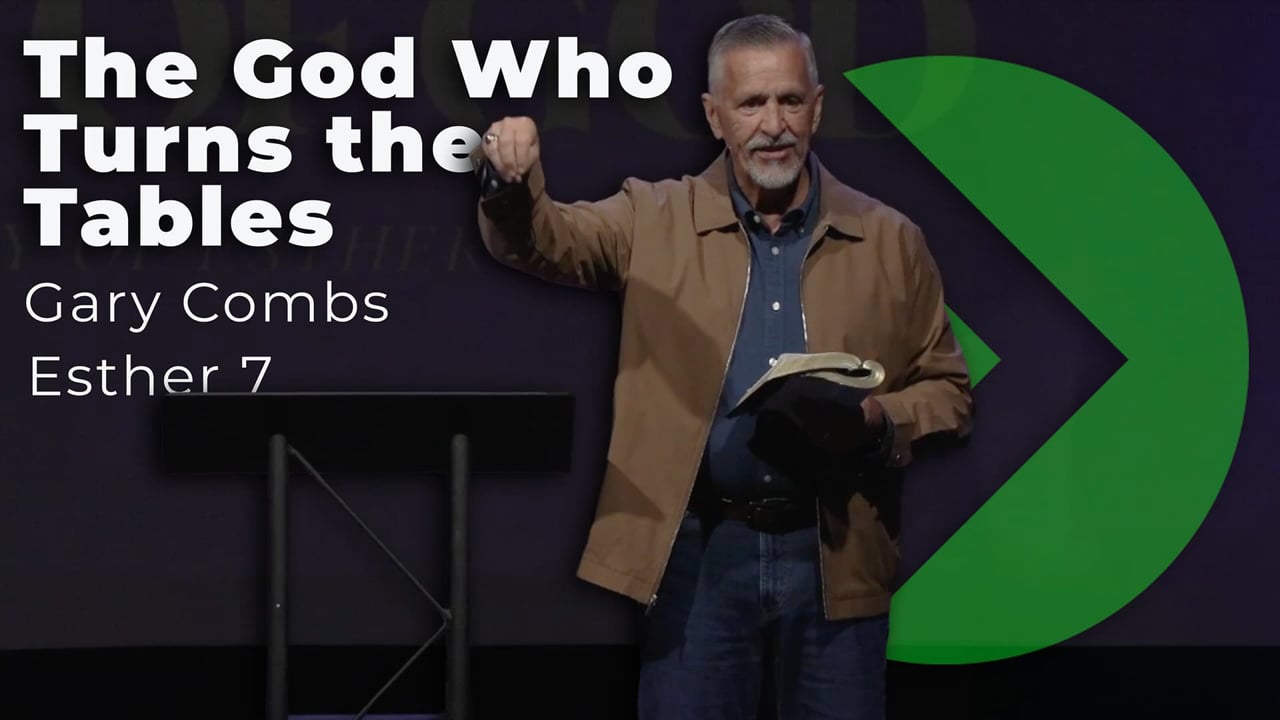
Read transcript
Good morning, church. We’re in part four of our series through the book of Esther, and we’ll be picking up in chapter seven today. We’ve entitled this series, “The Hidden Hand of God,” because in this book, and it’s a unique book, the name of God is never mentioned. It’s unique for two reasons.
One is, of all the books in the Bible, it’s the only book of the Bible that the name of God is never mentioned. And it’s also one of only two books in the Bible named for a woman, the other being Ruth. And so God’s name may not be mentioned, but he is not missing. We can see his evidence throughout the book and we can see him moving behind the scenes in this book of Esther. In previous weeks, we’ve seen that Esther is elevated to being the queen.
After winning the first ever Miss Universe contest of Persia, she is elevated to being the queen. This little exiled orphan girl who is adopted by a man named Mordecai, who is actually her cousin, but raised her as her father. He uncovers a conspiracy and his honoring for that is delayed. There’s a man named Haman, who’s a wicked man who wants to kill all the Jews, and he wants to start with Mordecai. And we see this background, this background leading us up to this place today where God’s starting to weave all these threads together, all these events to what might be described as the great reversal that he’s going to turn all these things inside out.
And God’s been quietly arranging these events according to his purpose. And I don’t know, today, maybe you’ve seen someone do something wrong and they appear to get away with it. Has that ever happened in your life? Someone seems to get away with everything. And I don’t know about you, I’m the kind of person that got caught.
Every time I tried something, you know, if it was in school or wherever, if I did something, I got caught. Looking back on it now, I think that was the grace of God. It’s best that I got caught right; you know, talking in class and so forth. I remember there was a little girl that the teacher would always pick her to take names.
I don’t know if they still do that today; the teacher would step out of the room for a while and she’d pick this little girl named Joan to take names. And Joan would write my name down every time. And then I’m up at the chalkboard writing, I must not talk, 100 times or whatever.
I would beg Joan not to put my name down, and she would smile and write my name down every time. But maybe you see people who seem to get away with it. Have you ever wondered why the proud seem to prosper?
Why do dishonest people seem to advance while people that manipulate and wound seem to find success, while the faithful apparently suffer? In other words, why do bad things happen to good people and good things happen to bad people? We struggle with these things. It causes us to ask questions about God. Stuff like, does God see what is happening?
Is he looking? Is he watching? Why does he seem silent?
Will evil ever be exposed? Will justice ever come? Will God ever be able to heal what seems to be hopelessly broken? These are the kinds of questions that we ask. And the book of Esther, really, if we look for the timeless principles, speaks directly to these kinds of questions,
because there are seasons when God’s hand feels hidden and the wicked seem to be winning. But yet, God is still at work. He may seem silent, but he’s never absent. In the book of Esther, chapter 7, the author recorded how God providentially reversed the wicked plot of Haman, the Persian official, and saved the Jewish people from destruction. I believe today that God is still working behind the scenes, still working providentially to turn the tables, to overturn the schemes of the wicked in order to rescue his people.
So we’ll be looking today for three ways that God is still doing this, turning the tables today. Let’s start in verse 14 of chapter 6, just one final verse in chapter 6, and then all of chapter 7. Esther 6:14-7:10 (ESV) 6:14 While they were yet talking with him, the king’s eunuchs arrived and hurried to bring Haman to the feast that Esther had prepared. 7:1 So the king and Haman went in to feast with Queen Esther. 2 And on the second day, as they were drinking wine after the feast, the king again said to Esther, “What is your wish, Queen Esther?
It shall be granted you. And what is your request? Even to the half of my kingdom, it shall be fulfilled.” 3 Then Queen Esther answered, “If I have found favor in your sight, O king, and if it please the king, let my life be granted me for my wish, and my people for my request. 4 For we have been sold, I and my people, to be destroyed, to be killed, and to be annihilated.
If we had been sold merely as slaves, men and women, I would have been silent, for our affliction is not to be compared with the loss to the king.” 5 Then King Ahasuerus said to Queen Esther, “Who is he, and where is he, who has dared to do this?” 6 And Esther said, “A foe and enemy! This wicked Haman!” Then Haman was terrified before the king and the queen.
7 And the king arose in his wrath from the wine-drinking and went into the palace garden, but Haman stayed to beg for his life from Queen Esther, for he saw that harm was determined against him by the king. 8 And the king returned from the palace garden to the place where they were drinking wine, as Haman was falling on the couch where Esther was. And the king said, “Will he even assault the queen in my presence, in my own house?”
As the word left the mouth of the king, they covered Haman’s face. 9 Then Harbona, one of the eunuchs in attendance on the king, said, “Moreover, the gallows that Haman has prepared for Mordecai, whose word saved the king, is standing at Haman’s house, fifty cubits high.” And the king said, “Hang him on that.” 10 So they hanged Haman on the gallows that he had prepared for Mordecai. Then the wrath of the king abated.
This is God’s word. We’re looking for three ways that God reverses the plans of the wicked to save his people. And the first way that we see here is:
1. By exposing hidden evil.
When we’re reading a narrative like this, a story, a historical event, we have to search for timeless principles in order to see what God is trying to teach us. The Old Testament is best understood by reading through the lens of the New Testament and of Christ and of the Gospel. And so it’s best to read the New Testament first and get an understanding there and then try to read through that lens. And then we should also look for timeless principles. In other words, when you’re reading a narrative, be careful to look for what is normative.
Not everything in a narrative is normative. You’re looking for that which would be true for all time. So what we’ve been looking for since God’s hand is hidden. Yet we see events being orchestrated. We start asking, where else in the Bible, especially in the New Testament, where it’s more clear, how can we answer the question, how does God work?
How does God work? The first thing you see here is throughout history and throughout Scripture, we see that God reveals hidden sin. He uncovers it. He’s the God of light.
And so here we see in this story that Queen Esther, as a representative of the Lord, fasted for three days. She asked the Jewish people to fast. And now she’s come to that place where it’s finally time to address the evil by uncovering what the wicked Haman has done. This decree he has put out to destroy all the Jews and to hang Mordecai upon a gallows, which we have learned, as we’ve studied more about the way the Persians would practice execution, was actually a pole that he would be impaled upon. And so we see in this story that Esther represents the Lord in uncovering to the king Haman’s evil.
You see, this is something that God does. He doesn’t allow hidden evil to stay hidden forever. Let’s look at the story with a little bit more detail. If you were here last week, you’ll know. If you watch any TV series, it always begins with what happened last time.
And what happened last time was Haman thought he had it made. He had decreed this decree that all the Jews were going to be killed on a certain day in the 12th month. He’s already been honored as the second in command in the Persian Empire. But then he gets invited by Queen Esther as the only man that’s invited to the king and queen’s banquet.
And so he comes home from that first night, because notice here, it says, in chapter seven, verse two, and on the second day. So on the first day, he’s invited to this feast, and he enjoys it, and all is good, all is great. And as he goes home from the feast, he sees Mordecai at the city gate. He hates Mordecai because Mordecai won’t bow down to him because he’s a Jew. And so he goes home, and he has his wife and his friends at his house, and he begins to glory in himself. He says to them, I was the only one that was invited to the feast with the king and the queen.
I was the only one. I’m the second in command. I’m wealthy, I have ten sons. And he went on and on to his wife and his friends about how great and how glorious his life was. But then he says, but none of this means anything to me.
It means nothing to me as long as Mordecai won’t bow down to me. That’s what he said. And so that’s what’s going on in the background here. He says this and then his wife, Zeresh, and his friends say, well, don’t let that bother you? Why don’t you build a gallows and hang Mordecai?
Why don’t you kill him? And he says, that’s a good idea. That pleased him. And so he gets up at the crack of dawn on the second day. Now this is the second day after their three-day fast.
He’s already had one feast. He gets up early and he goes to the king’s court. Unbeknownst to him, the king had a sleepless night and had the chronicles read to him, to make him sleepy. And he finds out that Mordecai had actually uncovered a conspiracy that saved the king. And so he says, what did we do to honor him?
He found out that we didn’t do anything to honor him. And he says, was there anybody in the court? Now this is early, early, I don’t know, this is 4 or 5 o’ clock in the morning, maybe, something like that. Haman couldn’t wait. He’s in there by himself.
Haman’s in the courtyard. Bring Haman up here, the King says. Haman comes up and the King asks him, what would you do to the man that the king wants to honor? And Haman thinks to himself, well, who else would it be but me?
And he says, I’ll tell you what I’d do. I’d put the king’s robes upon him. That king had worn the king’s crown on his head. I’d let him ride on the king’s horse, and I’d have one of the officials lead him through the city saying, this is the way that one the king wants to honor would honor him. And the king says, good, Haman, you do that for Mordecai.
That gets us towards the end of chapter six, because he goes home, he goes home and he tells them. Then, his friends and his wife, who gave him the idea of killing Mordecai, say, yeah, you’re dead.
This is all going wrong for you, man. That’s a tough group of friends and his wife to boot. And so that brings us to verse 14, and they’re basically saying to him, you’re going to fall before him. The king sends his eunuchs and they basically get him, they rush him back to the second feast, right? I don’t think he wanted to go to the second feast. And they rush him back and he gets there.
And this time the king asked for the third time. He asked the first time, when she came into his throne room and lowered his scepter, he goes, I’ll give you half of my kingdom. What’s your wish? And she said, come to a feast. And they came to a feast.
At the feast, I’ll give you up to half of my kingdom. What’s your wish? My wish is for you to come to a second feast. The King comes to the second feast. And he goes, I’ll give you up to half of my kingdom.
What’s your wish? She says, “Don’t let my people get annihilated. If you just sold us into slavery, I wouldn’t have said anything. I’d have stayed silent. But since we’re going to be annihilated, I had to bring it to your attention.
The King asks, who is the one who did this? Where is he? Right, there he is. Well, that’s my version. I feel like she pointed at him.
But he’s sitting there. He’s sitting there. I don’t know if he has food in his mouth right now. I don’t know if he’s drinking wine. I’ve got a picture in my head that Haman thinks he’s got it made.
And the tables turn just like that. This man, this wicked Haman, is the man. It upsets the king so badly that he gets up from his wine drinking and goes out of the area of the feast in the palace and goes out into his gardens and starts pacing around, talking to himself –I can’t believe I elevated him…
While he’s gone, and the way they would eat in those days and this time in Persia is they would recline and eat. They would be on a couch and they would be on their side and they would be eating and drinking. And so while the king is out, Haman knows it’s all going bad for him. So he falls at the feet of Esther, and he’s just begging her, please don’t let him kill me. I could tell the king’s mad. He’s just begging.
That’s when the king comes back. What a coincidence. Maybe you don’t realize this in the story, but you can’t touch the queen.
Only the king can touch the queen. That’s a capital offense. Here he is. His pride seals his fate, his passion and his desire for forgiveness. It just seals his fate on top of everything.
So the king says, will you even take my queen? You obviously want my throne. And so, he’s a goner. This is the story. This is the great reversal that God has brought about.
But it all begins with Esther as God’s representative in the story of uncovering Haman’s wickedness, his hidden evil. It says in the book of Hebrews, Hebrews 4:13 (NLT) “Nothing in all creation is hidden from God. Everything is naked and exposed before his eyes, and he is the one to whom we are accountable.” God is omniscient. He sees all.
Nothing is hidden. In fact, Jesus talks about this, and he says in Luke 12:2-3 (ESV) “Nothing is covered up that will not be revealed, or hidden that will not be known. Therefore whatever you have said in the dark shall be heard in the light, and what you have whispered in private rooms shall be proclaimed on the housetops.”
He’s basically saying that that skeleton you have in the closet is going to be dancing on the roof. People are going to know. It’s going to be put out. It’s going to be revealed. This is a principle.
This is a timeless principle in God’s economy, that evil will be uncovered. In the book of Numbers, it’s stated very clearly, Numbers 32:23 (ESV) “… behold, you have sinned against the Lord, and be sure your sin will find you out.” It says, if sin is personified here, that sin comes looking for you. The sin that you planted comes after you.
You see, a physician can’t heal what’s been concealed. You might go to the doctor and you have some symptom that you’re complaining about. You show up and then the doctor has to get to the bottom of it by uncovering what’s underneath.
You show up at the doctor’s office, the first thing they do is make you step on a scale. I always wish they would let me take my shoes off first. I’m sure that’s a couple of pounds, right? You step on a scale, and then they put a blood pressure cuff on your arm, and they check your heart and they check your blood pressure. All these things.
And then they might even have you take further tests, blood tests, and other kinds of tests. All the while, what they’re trying to do is to uncover that which is hidden. And the truth is, sometimes, and this has happened to some of us, maybe it’s happened to you. You go with one symptom and they take all these tests and they uncover something else that you didn’t know you had and sometimes disease grows silently with no symptoms. But then a scan reveals it.
The diagnosis is painful but necessary. You can’t heal that which is still concealed. You have to come clean; it has to be exposed, to be dealt with. Admitting your feelings is the beginning of healing. And so we see that God’s in the business of exposing that which is hidden.
Secret bitterness, private compromise, hidden habits. God’s exposure of sin is not merely punitive. Often it’s merciful. Often the only way to get healing is for you to come clean and to admit your sin. It’s better for God to uncover your sin now than to expose it later on the judgment day.
Ask yourself this question today. What am I hiding that needs to be brought into the light? A principle that we see here in scripture is that God exposes evil. He brings it into the light.
2. By overruling the sinful schemes of man.
By overruling the sinful schemes of man, Haman’s own actions and intentions began to collapse upon him. He had a plan.
He even had a gallows built. He was going to get rid of his enemies. He hated the Jews. This is the great reversal of Esther. And God uses Haman’s own panic to seal his doom.
In the eyes of the king, Haman had appeared untouchable, the second in command, wealthy highest official in Persia, favored by the king, architect of the genocidal decree. Yet, in just moments the king’s perception of him changed, he lost favor and his scheme collapsed. This is the providential principle of God, overrules the schemes of man. He subverts and overrules human schemes. Who has dared to do this?,
the king says, and Esther says, that wicked Haman, he’s the one. And the king arose in his wrath. It says that whenever the king spoke that the word covered his face. That’s an unusual picture, isn’t it? I think that’s in verse eight.
Will he even assault the queen in my presence in my own house? As the word left the mouth of the king, they covered Haman’s face. It’s like the word came out of the king’s mouth and became like a hood that went over his head, like an executioner’s hood. Because when the king spoke, his word was law. And when the king speaks, action follows.
It covers his face. And the author here seems to want us to see that his face just fell in horror. This word came upon him, this word of judgment came upon him. And God is overruling his scheme to destroy Mordecai and the Jews. It says in Job 18:7 (NLT) “The confident stride of the wicked will be shortened.
Their own schemes will be their downfall.” This is what I was talking about earlier. When we’re reading a narrative, we look in other places of scripture to find support for timeless principles. It looks like God’s doing this big reversal here.
He’s taking the scheme of Haman. Haman wants to destroy God’s people. And he takes the very gallows, the very scheme, and he reverses it and puts it back on Haman. Is this something that just happens once? Or is this a timeless principle?
We see that Job talks about it; we actually see the psalmist talk about it. We see this. In fact, we could say that perhaps Esther, in her three-day fast, had some insight from the Lord on how to progress in this story. Remember when she first came into the king’s chambers, he said, what do you want? And he extended his scepter?
I’ll give half the kingdom to you. I would have just said, yeah, I want to be rescued right there. But that’s not what she does. She asks him to come to a feast. And then, okay, now he is at the feast.
What do you want? She says, I want you to come to another feast. And if it hadn’t been for that delay, that waiting, then he wouldn’t have had a sleepless night, he wouldn’t have found out about Mordecai, Haman wouldn’t have built the gallows. All these pieces fell into place on that second day. On that night and that second day.
What a coincidence? No, what a “God-incidence.” God was moving and weaving the threads of his purpose into place. The timing of it, I’m sure Esther looked back on it and thought, oh my goodness. It’s as if she were following the psalmist instruction from Psalm 37:7 (NLT) “Be still in the presence of the Lord, and wait patiently for him to act. Don’t worry about evil people who prosper or fret about their wicked schemes.”
She fasted for three days and waited patiently for Him to act. Don’t worry about evil people who prosper or fret about their wicked schemes. She left it to the king, to the Lord, to handle the problem. We can see God at work behind the scenes here.
It reminds me of a story in the book of Acts, chapter four, where Peter and John healed a cripple. You probably remember the story. It was a man who’d been a cripple since birth. And as they were walking up to the Temple Mount to pray. Peter saw him and he said, Acts 3:6, “Silver and gold have I none; but such as I have give I thee: In the name of Jesus Christ of Nazareth
rise up and walk.” And the man jumps up, starts leaping and running through the temple courts and saying that these men have healed me in the name of Jesus. It attracts a crowd. Long story short, the high priest sends guards in there to shut this thing down. And they arrest Peter and John.
Peter and John have to spend the night in jail. And then the next morning, they appear before the high priest and the leaders, the Jewish leaders, and they say, haven’t we told you to stop preaching in the name of Jesus?
They threatened them and said, stop preaching and teaching in the name of Jesus. Because of fear of the crowd that was believing and were amazed by this healing. They let them go. And as they leave, they go to a prayer meeting that was already in action because they were praying for Peter and John.
And they get up in that prayer meeting and start praying, and they pray like this. This is not the way I would pray. Probably in this situation. I’d be praying, lord, go get those guys and do something to them. They’ve threatened us.
I’d probably be praying like that. But that’s not how they pray. This is how they pray, in Acts 4, “Lord, look upon their threats.”
That’s it, Lord, you look at that.
Acts 4:29, “Now, Lord, consider their threats and enable your servants to speak your word with great boldness.” And so sometimes we get very anxious, don’t we when we hear the news? I don’t know which “alphabet” news you listen to–CNN, FOX, ABC, CBC, NBC… whichever. I don’t know if it’s where you get your news, or maybe some of you have tagged out and you’re not listening to the news anymore.
But you hear it, you know, everywhere you go, and it just makes you anxious and you feel the threats of the world, and you get so distracted, and it makes you wonder, God, where are you? But what if we prayed like Peter and John in that prayer meeting? What if we just said, lord, would you look at that for us so we don’t have to and empower us and strengthen us to teach and preach in the name of Jesus. Help us to be what you called us to be
because we don’t have to worry about the schemes, the wicked schemes of man will be overturned by you. They will be subverted by you. You’ll turn them back on the heads of those who came up with the schemes.
We’re not going to try to get revenge. We’re not going to try to get back at those people. We’re not going to be anxious or worried about it. We’re going to walk and talk, Jesus. That’s how they prayed.
You may be living in a chapter of life right now where the wicked seem to prosper. Someone’s lied about you, someone’s hurt you, someone’s opposed you. Remember, God has not surrendered the pen. He’s still writing your story.
So be still. Wait on the Lord, Pray, Lord, you look upon their threats; then live for Jesus. That leads us to the third way that God is turning the tables against the wicked in order to save his people:
3. By executing righteous judgment.
By executing righteous judgment. We’re in the final couple of verses, verses 9 and 10. We’ve been working our way through this narrative, this story, and we see here that God uses the very gallows that Haman built in order to carry out judgment against Haman. The very scheme, the very gallows he built provides the rescue that Mordecai needed. This is the providential principle of retribution, or what we sometimes call poetic justice.
It just seemed poetic that this is how it would work out for him. We look forward to a final judgment at the end of days because the Word does teach us that it is appointed unto man once to die, and after that the judgment. And we all know that this is true. But here we see that in history that there are previews of God’s justice, that it comes up that these things happen.
There’s retribution even in this life. Notice how it takes place here. The major characters have been described. We have Queen Esther. We have King Ahasuerus, also known as King Xerxes I, king of Persia.
We have Mordecai, who is an official. He’s one of the officials, and he’s the adopted father of Esther. We have Haman, who we’ve mentioned is the second in command. Now we have a new guy who shows up and starts talking here at the end of chapter seven.
His name’s Harbona. Harbona is one of seven eunuchs who stand before the king continually. They’re advisors and guardians of the king. They guard his access, and they also give him advice. How do I know he’s one of the seven?
Well, if you go back to chapter one, verse 10, his name is listed there as one of the seven. Well, here he’s going to talk. He hasn’t talked up to now. But now, he’s going to talk. He chips in right when Esther needs him too. You never know when God has an ally for you in some place of power, first you often have to, by faith, speak up yourself.
And then sometimes an ally will come out of the woodwork. Here’s one named Harbona. He says this in verse 9 Then Harbona, one of the eunuchs in attendance on the king, said, “Moreover, the gallows that Haman has prepared for Mordecai, whose word saved the king, is standing at Haman’s house, fifty cubits high.” He just drops that in; we already have this inflamed situation.
Haman’s already over there and then Harbona walks up and oh, by the way, O King, just last night, he built a gallows to kill Mordecai, who saved you. By his word, by the way, that’s who this Harbona is. He chips in on Esther’s team, man.
50 cubits high. A cubit’s about 18 inches, so it’s 75ft high. The whole city of Susa, the capital of Persia, would see this. In Hebrew, the king replies with two words. It takes four words to translate it into English.
“Hang him on that.” The king’s so angry, can’t even talk. And the king said, “Hang him on that.” 10 So they hanged Haman on the gallows that he had prepared for Mordecai. Then the wrath of the king abated.
It says in the book of Galatians 6:7 (ESV) “Do not be deceived: God is not mocked, for whatever one sows, that will he also reap.” That’s the principle of sowing and reaping, principle of the harvest. Do you know this principle?
It’s hardwired into creation.It’s just built in. The principle of sowing is that you sow, and what comes up comes up later. It comes up according to what you sow, and it comes up more than what you sow. You sow the wind, you reap the whirlwind.
You sow an apple, you get an apple tree. You sow a tomato seed, you get a tomato vine. You sow a lemon seed, you get a lemon tree. You know this principle, right? It makes sense, right? You reap what you sow; it comes up. It doesn’t come up immediately, it comes up later.
Which is why we have this saying to remind ourselves, “Never dig up and doubt what you planted by faith.” Don’t get up the next morning after you plant something and dig it up to see if it’s doing anything. Just keep watering it, keep believing, because the principle of harvest is that it’ll come up later. God’s the one who causes the growth, not you. You water it, you plant it by faith,
and it’ll come up according to what you planted, and it’ll be more than what you planted. That’s the principle of multiplication. If you plant an evil seed, if you plant sin in your life and you think you’re getting by with it, you’re not. It’ll come up later, it’ll come up in the same kind that you planted, and it’ll be multiplied. If you plant good, if you plant righteousness, it’ll come up later.
Mordecai at the end of chapter two, it looked like he didn’t get credit. You have to get all the way to chapter six before you see him get credit for rescuing the king. God sees everything. No good thing goes unnoticed. You think you’re serving in obscurity.
You think you’re doing good for the Lord. Moms and dads taking care of their children, sacrificing, serving at the church, doing the things behind the scenes, doing extra work at the workplace or in your classroom. And while others seem to be getting credit, no one notices. God notices.
He’s at work behind the scenes. And he also notices those that are planning evil. And those principles are built in God’s doing this. Whatever you sow, you’ll reap. To illustrate this principle, the psalmist describes it like this.
Psalm 7:14-16 (NLT) “The wicked conceive evil; they are pregnant with trouble and give birth to lies. They dig a deep pit to trap others, then fall into it themselves. The trouble they make for others backfires on them. The violence they plan falls on their own heads.”
Haman should have read this psalm, because that’s exactly the pit he dug, is the one he fell into. Some of us have been digging a pit for a long time.
Some of us need to come up. You know, we describe it like this, “In the world, what goes around comes around.”
Maybe we call it karma, but it’s not karma. It’s God’s created, governed order of things. When the wicked prosper, believers are tempted to discouragement, to despair or even retaliation, to take it into our own hands. Wait on the Lord, pray. Say, God,
You consider that. You take a look at that for me. Allow me to keep living for Jesus without becoming bitter, without being focused on those things. I would just challenge myself and challenge all of us today.
Don’t become unfaithful in doing good, even though the delay of planting seeds. Keep planting, keep watering, knowing that God sees. God sees. And to those of us that have hidden sin areas, we have skeletons in the closet in order to receive healing. Someday you need to come clean.
Because someday, whether you do or not, it’ll all be exposed.
And God is merciful. And often coming clean is the most merciful action you can take. In fact, sometimes when you dig a pit and you’re the one who falls in the pit you dug, the only way to get you to look up is to be so far down, there’s no place to look but up. Maybe that’s you today.
Maybe that’s you today. We’ve seen that God reverses the plans of the wicked to save his people by exposing hidden evil, by overruling sinful schemes and by executing righteous judgment. But the book of Esther points beyond itself, as all of the Old Testament does. In the whole old testament, all 39 books are preparing God’s people in order to recognize Jesus when he comes, to recognize the Messiah. The greatest table turning is not Esther.
Although this is pretty great, it’s pretty impressive. The greatest reversal happened at the cross on that Friday. It looked as if evil had won. It looked as if the religious leaders plotted. Rome condemned.
Satan seemed victorious. Mordecai, like Jesus, was the one marked for death. And like Haman’s gallows, the cross appeared to be the instrument of defeat. But God reversed everything. The very instrument that was intended for Christ’s destruction became the means of Satan’s defeat and our salvation.
The enemy thought he was digging a grave for God’s Son. Instead, he dug his own pit and fell into it himself. The crucifixion of Jesus looked like a tragedy, but it became a triumph. The cross becomes God’s greatest reversal. Jesus took my sin and offered his righteousness.
Jesus took my separation from the Father, crying out, “My God, my God, why have you forsaken me?” He took my separation and offers his sonship, his relationship with the Father, and he took my death, and he offers his eternal life. This is the greatest reversal of all. And Esther is an echo, a foreshadowing of what Christ has done for us on the cross. The hidden hand of God is never more visible than it is at the core cross.
And because of Christ, what seems evil, what seems like it’s winning in your life today, will quickly be overturned. Its tables will be overturned when we trust in Jesus. Let’s pray. Lord, thank you for your word. Thank you that you’ve overturned the tables that were against us. That you’ve reversed our sin, our separation, our death by allowing Jesus to take all of that in our place.
You made the cross which was a place of suffering for Jesus. You made it the symbol of our salvation.
Lord, I pray for the person today that’s never made a commitment to this Jesus that we’re talking about. Is that you, my friend? This morning, right in your seat, right where you are, listening to God’s word, the Holy Spirit is knocking on your heart’s door. Why not pray like this? Why not pray right now? Dear Lord Jesus, I’m a sinner.
I know that you can see my heart.
I believe you died on the cross for me and that you were raised from the grave and that you live today. Come and live in me. Forgive me of my sin. I want to be a child of God. Adopt me into your family.
I want to follow you as my Lord and Savior all the days of my life. I commit my life to you. If you’re praying that prayer of faith, believing, he’ll save you, and the great reversal will be your changed heart for him. Others are here today and you’re a follower of Jesus. You’ve given your life to Him.
But you have an area of your life right now that’s hidden and it’s destroying you. And you’ve yet to turn it over to Him. It’s a hidden thing. He wants you to come clean. He wants to bring it into the light where you can have healing.
Would you confess it to him right now? Would you give it to the Lord? Would you entrust it to Him? Lord, we thank you now that you’re at work in our lives. In Jesus’ Name, Amen.
Read transcript
Good morning, church. Good to see all of you today. So thankful to be continuing the Book of Esther with you. We are coming towards the end now. We’ve got just a handful of weeks left, and we’re really at the turning point of the scripture today.
In fact, we’ve titled this sermon the God who Turns the Tables. I pray that you’ll hear today that we serve a God who is constantly reversing things, constantly turning what looks even evil into something good. Not only something good, but often something that rescues or saves us. And so I just pray that you would be able to hear that today. We’ve been experiencing this wonderful book.
I’ve been just joyful to get to study it. It’s a book I’ve not preached before, so it’s been a joy just to study. But we’ve seen this Esther, this once orphan, now turned queen, and now we’ve seen her adopted father uncover a scheme and now has been celebrated back in chapter six. And this wicked man named Haman has been working his fingers to the bone to try to kill off the whole nation of Israel, the whole people of God within the Persian empire. And all of that is happening.
And at the same time, the Book of Esther is so unique in that the name of God is never mentioned a single time. So in the midst of all of that wonderful, if not scary work, God is still working underneath it. Behind every banquet and sleepless night, God is arranging things, although it’s not obvious. But the farther we dig in, I think we see just the hidden hand of God so present. We’re now heading into Esther chapter seven, where all of these threads we’ve been weaving are now going to finally form the picture that we’ve been waiting on.
And this is just a sidebar. Good news to you is there’s probably been years and years of many threads that God is weaving, and you don’t quite see the picture yet, but God’s at work. So part of that is just trusting and walking with him, that his hidden hand is on the move and that a dramatic reversal is perhaps going to happen in your life. Here’s the Good News church. We live 2000 years after the greatest reversal of all time.
That the Bible is filled with these moments where it looks like evil’s going to win, and then God does something miraculous and suddenly provides salvation for his people. But the greatest of which happened in Christ Jesus. And so as we look at Esther today and see this reversal, it should point us to another great one that we can now receive in Christ Jesus. And so you’re going to see me take a take on this text that’s consistent with the way I preach and that the Gospel is clearly evident here in chapter seven. As I would argue, the Gospel is evident on every page of Scripture.
That the whole word of God points to one man, Jesus, that the entire scripture is about the good news of Christ. And here it’s so obvious. But we should be asking a few questions as we dig into this text, because here’s the way Esther and Mordecai feel in this moment. They feel abandoned, they feel betrayed. They feel like, I wonder what God’s going to do next.
Because so far all that has happened is the wicked have prospered. And that might be the way you’re experiencing life right now. Maybe you feel that yourself, that the people around you who seem like the most immoral or unethical or even just irresponsible, that those are the people that seem to succeed, they seem to get the promotion, things seem to go right with them. And we’ve talked a bit about that in this series. And here we’re going to see that God is exposing that.
That God is just. That’s what we’re going to see in today’s story. And as we dig in, maybe there’s some things you’ve been praying for and waiting for and wondering things you’ve tried to do right, but it looks like evil is going to get the upper hand. I have great news today. The Lord is watching.
He’s omniscient, omnipresent, and he knows everything. He is sovereign over all kings and rulers and nations, and he has a plan that’s better than what we could imagine. And so let’s ask the hard questions today. There’s some good ones. I’ve heard a lot of them in my life.
There’s a few good ones, like God, does God really see me? There’s billions of people on the planet. I know, sure, okay, there’s a God. Sure, he knows things, but does he care about me? Does he see me?
I love the song. We just sang that first, that opening verse of do you see me in the crowd? Which might have been just that, might have passed right by you. But that verse is there talking about that poor woman who touched Jesus in the crowd. And it says that some of his power left him and healed her.
And Jesus noticed. And he said, who touched me? Does Jesus notice me? Does God notice me in the crowd? Yes, he does.
Does God see what is happening here? Yes, he does. Will this injustice, will this evil ever Be exposed. Yes, it will.
Can God reverse something so hopeless in my life, like a broken relationship or something busted? Can he reverse that? I think this chapter is for you. It’s for me, as I ask those kinds of questions from time to time, is, what’s God up to? Does he see me?
Yes, he does. I love that song. What a God, what a God we serve. I pray today that you’ll see that that God is working constantly to rescue his people, that he’s providentially reverse these wicked plans first in this story. And it’s like it is a poetic kind of justice that he has for Haman.
And there’s a poetic justice that he has, I think, for all of his people of all time. And it’s poetic how this verse, this scripture, speaks of a man that’s trying to hang a righteous man on a tree, and that God repeats that story for you and I by hanging a righteous man on a tree so that you and I could be free. What a cool parallel. What a great foreshadowing. I pray you’ll see that today that God is still reversing the plans of the wicked, utmost of which is the plans of the evil one who hates you and desires to destroy you.
And yet Christ Jesus has dealt with it. And if you hear nothing else today, I pray that that through line will hit you as we go through the text will give us the three clear ways that God is reversing the plans of the evil one to save his people. Let’s read just a handful of verses today. Six, 14 into chapter seven, it says, while they were yet talking with him, the king’s eunuchs arrived and hurried to bring Haman to the feast that Esther had prepared. So the king and Haman went to the feast with Queen Esther.
And on the second day, as they were drinking wine after the feast, the king again said to Esther, so the third time he’s asked, what is your wish, Queen Esther? It shall be granted you. What is your request? Even to the half of my kingdom, it shall be fulfilled. Then Queen Esther answered, if I found favor in your sight, O King, and if it please my king, let my life be granted me for my wish and my people for my request, for we’ve been sold, I and my people to be destroyed, to be killed, to be annihilated.
If we’d been sold merely as slaves, men and women, I would have been silent, for our affliction is not to be compared with the loss to the king. Then King Ahasuerus said to the queen, queen Esther, who is he? Where is he? Who has dared to do this? Esther said, a foe, an enemy, the.
This wicked Haman. Then Haman was terrified before the king and the queen. And the king arose in his wrath from the wine drinking and went into the palace garden. But Haman stayed to beg for his life from Queen Esther, for he saw that harm was determined against him by the king. And the king returned from the palace garden to the place where they were drinking wine as Haman was full falling on the couch where Esther was.
And the king said, will he even assault the queen in my presence in my own house? As the word left the mouth of the king, they covered Haman’s face. Then Harbonah, one of the eunuchs in attendance on the king. Yeah, in attendance on the king, said, moreover, the gallows that Haman has prepared for Mordecai, by the way whose word saved the king, is standing at Haman’s house 50 cubits high. And the king said, hang him on that.
So they hanged Haman on the gallows that he had prepared for Mordecai. Then the wrath of the king abated. This is God’s word. Amen. That turned quickly, poetically.
God is good and his plans are superior to ours. The way in which he reverses things is amazing. Here we see a few ways in which God is reversing not only the plans of the wicked throughout all time, but certainly these plans. The first way in which he does this, not only then, but now and forevermore, is by exposing hidden evil. God does not let sin and evil stand.
It may seem that way at times, but he will eventually deal with it. Notice in this moment, God doesn’t strike Haman down with a lightning bolt to reveal his heart. It’s not the way he operates. Instead, he uses this courageous woman in a very normal kind of conversation, to bring about justice, to bring about and to reveal sin. It was the way in which God wanted to orchestrate.
It was such that the king would notice Mordecai and honor him. That couldn’t have happened if Esther had immediately said, you got to take Haman out. No, there was a pattern to which she did it because God was underneath it, orchestrating it. Now, at the prime moment, Esther unpacks everything and lets him know, I’m a Jew and this man’s trying to kill me. It’s a well timed conversation.
We know, in fact, that Haman is abruptly taken here. He has just spent the entire day by horse carrying Mordecai around, saying, this is the Guy the king loves. I secretly hate his guts. But this is the guy the king loves. And he’s come back home and told his friends, told his wife, this horrible thing happened to me.
And his own wife said, I don’t know if you’re going to make it. I mean, that’s what he’s just heard in verse 13. And the Bible is very clear in verse 14. It says, while they were yet talking, he didn’t even get a chance to plot or scheme or try to do anything else. He’s still delivering this message and hearing from his friends and wife.
And the men of the king show up to bring him and hurry him along to the feast. I don’t know, maybe in that moment, if he’d have had some time, he might have run away, he might have skip town, he might have plotted in some way, but he did not have the chance. Notice the Lord God is doing these little details. And so here he comes to this second day, this final feast, and the king asks yet again, and I have to admit, I’m still surprised at how Esther handles this, but she handles it so well. I think the Lord is so underneath her courage and her word, and he’s given her such wisdom.
Here he asks the third time, what is your wish? You can have half the kingdom, for goodness sakes, she says, have I found favor? I mean, if you love me.
We’ve been sold to be killed. We haven’t been sold into slavery. No, we’ve been sold to be destroyed and annihilated. Look, if we’d have been sold just into slavery, I would have been silent. Notice what she says there.
I mean, honestly, she’s probably thinking. I mean, our people, the Jewish people, we’ve been sold into slavery quite a bit of times. Like, I’m not. It is what it is. God is sovereign in that.
In fact, he’s delivered us many times in that. I would have been silent, but that’s not the case here. We’ve been sold to be destroyed. So I’m speaking up.
I can just imagine the king right here. He must have been so surprised by this. He’s thinking, what in the world are we talking about? Like, first of all, I didn’t know you were a Jew. You could have said that a while ago.
Not that it would have changed anything, but it’s like, I’m surprised by that. Who did this? What are we talking about?
So now she’s exposed this great evil God has done. It has provided this, like, perfect opportunity. So here’s the timeless principle here. Not Just that God saved this people, but that God saves all his. His people.
So Here in the 21st century, thousands of years beyond Esther, here’s what is still true. God is exposing hidden sin. He is exposing hidden evil. Now, I’m going to say something kind of hard right now, but I pray you’ll receive it. Sometimes we, like I shouldn’t say sometimes, most of the time when we read stories, we read ourselves as the hero.
When we read Lord of the Rings or whatever your favorite fancy is, we think we’re Aragorn. We think we are Esther and Mordecai. We’re not. And nor am I. We’re Haman.
Like, I don’t like that news today. Well, I just. It’s true, though. We’re not the Esthers of the world, we’re the Hamans of the world. And the reason I know this is because I’ve spent so much of my own time, and I bet you have too, plotting and scheming to take care of me, to find my own comfort, to position myself in a way that I will be best served.
And this is the human condition. And so as we look at this story, I want you to see yourself in light of what Haman has done and what God is doing now against him. And let your sins be exposed. Because we have a dangerous habit of thinking we can hide this stuff. We can hide it from other people, maybe even our very spouse.
We can hide it from people. But there is a long term principle in scripture. In fact, I found so much evidence of this, I was only able to choose a few of where God talks about exposing evil, exposing darkness, exposing sin. And he’s doing that in your life and he’s doing it in mine. Nothing is hidden from God.
I pray you would see that today. Hebrews, chapter four. It says, nothing in all creation is hidden from God. Everything is naked and exposed before his eyes. And he is the one to whom we are accountable.
He is the one. And Jesus, he goes on to say more about that. I mean, that’s there, the writer of Hebrews, Jesus. In Luke chapter 12, he says, Nothing is covered up that will not be revealed or hidden, that will not be known. Therefore, whatever you have said in the dark shall be heard in the light.
Whatever you have whispered in private rooms shall be proclaimed on the housetops. You’re not sneaky, my friend. You think yourself clever. You’re not. He sees not only all of your thoughts, but he certainly sees what comes from your lips and the actions of your body.
He sees it all. He goes Far beyond. He knows your very heart. What’s so surprising about Jesus is that in Mark, chapter two, he heals this paralytic man. But he also says, it says there in Scripture that he knew the hearts of the Pharisees.
This is a constant trait of God, and he is exposing evil. This is both good news and scary news. Good news, friends. Nothing unjust in this life will go unpunished, Period. Some of you have experienced great injustice in your life.
A lot has gone wrong for you. For whatever reason, God has. I’m using this word carefully. He has trusted you with that. I’m not sure why, but he knows why.
And he might even offer that wisdom to you. Lord, what’s going on here? This is pretty hard. What do you want me to know? What do you want me to learn?
How do you want me to respond? He, I bet will tell more. I bet we’ll have more to say on that. Be in prayer. But not only that.
That’s the good news. The good news is he handles injustice. Here’s the scary news. He sees your junk. He sees your mess.
You’re not hiding it. You’re not sneaky.
You can hide it from other people, but that sinking feeling in your gut. I want you to know something Christian in the room. Specifically that sinking gut feeling, that’s the Holy Spirit of God that’s convicting you of sin. Quit hiding it. It’s silly.
This is just silly. It’s like you as a parent, when you catch your kid doing something and then for days they pretend like they didn’t do it. You’re like, come on, like, we all know, Lord, you’re just not that creative. We all saw it. God is like that, but way more.
Be sure your sin will find you out. Numbers, chapter 32. It says, behold, you’ve sinned against the Lord. And be sure your sin will find you out. Out.
Quit hiding it. My friend, this isn’t meant to make you feel discouraged or guilty or shame. It’s meant for you to say, okay, I know this is true. So what do I do about it? Lay that down at the foot of the cross.
Because there’s a place that has hope. Unlike Haman, there’s hope for you. And God has provided a great reversal for you already. The cross of Christ speaks to us this, that these sins which God knows about have already been paid for. It’s like when we go to the doctor’s office.
I feel like this is kind of odd. Maybe you feel this way. I feel like sometimes when I go in there, I’M self diagnosing for a little while. It’s like, I think you’re supposed to tell me what’s going on, but there’s a bit of that, there’s a bit of an exchange of like, I’m feeling this, I’m having this and I shouldn’t have got on Google and I looked at this and now I think I might die. I mean, there’s a bit of that, you know, when you go in there.
But to be fair to the doctor, some stuff is so deep and so internal that they have do a scan of some kind. You go in for an MRI or a CAT scan or other things. Even the dentist, they have to do X rays because they can look at a thing, but they need to see internally what’s going on in there. There’s scans after scans. Sometimes diseases grow very silently with no symptoms, but then a scan reveals it.
The reason I bring that up is because when you go before the Lord God, it’s like getting the most ultimate MRI of your spiritual condition that you would go in that place and say, as the psalmist said all the time. He said, search my heart, O God, and see if there’s anything at fault in me. This is the heart of what it means to be a follower of Christ Jesus. The psalmist is dead on. Lord, give me a spiritual scan because I know good and well you already know.
Here’s how bad we can, here’s how off we can be. Sometimes we can foul up and forget about it. We can foul up and forget. So then we come before the Lord. Lord, give me a spiritual scan, show and reveal to me that hidden sin within me.
Because sometimes, I shouldn’t say sometimes, all the time, really, what is coming out is actually something that’s way deeper within. And so I’m saying, I’m yelling, I’m misbehaving, but what’s really underneath that is a problem of prayer, pride, or a problem of I want my own way or there’s something deeper. Search my heart, O God, reveal within me. Don’t be like Haman. This secret bitterness, this private compromise, these hidden habits, they’re not hidden from him.
You ain’t fooling nobody. And I’ll tell you what he’s going to do next. I just want to go ahead and let the cat out of the bag because I don’t want you to be surprised when you go and talk before the Lord. And he does reveal some things. I’ve noticed something.
Every time I pray to the Lord, hey, search my heart, find fault with Me so that I can live at peace and at one with you. Guess what? He finds stuff every time. And guess what else he does? He says, oh, and by the way, you need to talk to such and such about this too.
I’m like, that’s the reason I didn’t want to talk. God. It’s like, I’m fine talking to you, but I don’t want to. You don’t know how bad that’s going to make me look. To have to admit that to my wife or to my kids or to my church, to say, oh, my goodness, look at this.
And yet that’s the very thing God does. Because here’s what he’s trying to do in each one of us, to actually make us holy. That sinking feeling that I can’t get rid of, he will actually deal with. And it’s like. It’s like removing a cancer.
And it does hurt. But I’m thankful on the other side that I was honest. And sometimes he pulls me to be honest with others, and I’ve just got to fall on my face. As my grandparents used to say, sometimes I just got to eat crow. Which sounds gross.
I don’t know if people did that, but I think that’s the point. Sometimes you just got to eat crow. What am I hiding right now? Ask yourself this, my friend. I pray you’ll hear this and you won’t just run past this.
What am I hiding that needs to be brought to the light. God already knows. Lay it at his feet today. Because it’s foolishness, because he sees it. That’s the first.
He’s exposing hidden evil. He’s doing that in the nations. He’s doing that in the world. Don’t be afraid. God sees it and he’s going to do something about it.
But he sees the heart, your heart. And that’s the part you need to deal with. He’s exposing it. Here’s number two. He’s overruling the sinful schemes of.
Of man. He’s overruling it. He’s subverting it. He’s using the very powers that the Evil One is using against him and his people. He’s using those very powers against them.
This is kind of the way in which God works all the time. He’s not only good, but he’s funny. He’s not only good, but he’s kind of poetic in the way he deals with things. And you may not see it that way all the time, but I really think if any of us is ever funny, it’s because God is the creator of humor and he just does something right here that is beyond missing that, hey, the very thing you were going to hang the righteous man of the Hebrew people on, the king says, hang him on that, that’s purposeful. So here we have him overruling the schemes.
God uses Haman’s panic here to actually completely seal his fate. So here’s how the scene goes. It says twice that they were drinking wine. I think it tells us that because I think the king has had a few because he goes out to the garden and it says again, after some wine drinking, he goes out in the garden to blow off some steam. He’s not thinking totally clear and he knows this about himself.
He’s like, I can be hot headed and I’ve had a few. And I’m like, so I’m gonna go walk for a bit. Man, I can’t believe Haman did that. If you go back to chapter three, Haman is the king’s drinking buddy. Hey, I thought we were cool.
And now he’s done this. He’s trying to kill my wife.
He’s walking the garden. I don’t know in that moment, if maybe he would have subsided his anger, maybe he would have not done the punishment of coming back in and saying, hang him on that. But God is orchestrating this so perfectly. He’s out there trying to blow off steam and he comes back in to find Haman draped over his wife, but pleading for his life not to be fair to Haman. He knows he’s about to get it and so he’s probably at her feet and just pleading.
The Bible said he fell on the couch where she was begging. That’s not how the king saw it. The king walks in and he’s draped over his wife and he says something that in the English doesn’t make as much sense as it does in the Hebrew. He says, will you assault my wife in my own house? Assault’s pretty bad.
That word in the Hebrew has to do with sexual assault. Are you just going to take my wife right here in front of me? It’s like, okay, seems like the garden moment and the Lord just so he would come back and say, alright, I’m done with you, Haman. Forget it. I was thinking maybe we could still be cool.
We’re not cool. I’m done. So then Harbonus comes out of nowhere. We haven’t seen him since chapter one. He’s a fortuitous moment to say, oh, by the way, King Haman made this gallows.
He made it huge, by the way, 75ft tall. We can all watch Haman hang. What do you think?
I love that passage of Scripture. Maybe I shouldn’t love it as much as I do. It’s so funny to me. The King comes and he says, hang him on that. He’s done.
He ain’t got nothing else to say to Haman. Get rid of him. Do you see Just the providential poetic nature of God’s salvation here for his people. I’m going to say this again in this middle moment, that the very cross which Satan thought he had killed the son of God with is the very cross that has set the captives free. Do you understand how cool that is?
The Evil One thought, I’ve won. He misunderstood the power of God, which is kind of the case for him throughout human history. To put himself in the place of God was his greatest desire. I don’t think he realized, hey, wait a minute, Jesus is going to break the rules. He’s just going to rise from the dead.
I didn’t know he would do that.
This great reversal that the very cross that the Evil One thought he’d want on is the very place where we can come and be set free. That it becomes the very emblem of our entire faith. That which was once an execution device. Oh, this is who God is. He subverts the evil plans and casts them right back on themselves.
God overrules these sinful schemes. I love what Job writes in chapter 18. He says, the confident stride of the wicked will be shortened. Their own schemes will be their downfall.
But Esther doesn’t roll this way. She does, like the psalmist. Does she still? She fasts, she searches, she waits. Notice three day fast, two feasts.
She’s waiting on God. Psalm chapter 37. It says, Be still in the presence of the Lord. Wait patiently for him to act. Don’t worry about evil people who prosper or fret about their wicked schemes.
I just want you to know something. Today, church, you may be spending a lot of your time, a lot of the hours of your thought life, thinking about just how wrong everything is and just how bad things are going in your life and just how the unjust or something evil has happened to you and you’re thinking, God, when will you do something? I want you to hear the psalmist words today. Be still. Wait for the Lord.
He’s dealing with it. This is why the Scriptures say more than once, the Lord our God is an avenger. He will repay. So you don’t have to worry about this believer. Hear this today, don’t worry anymore about the schemes and evil schemes of man.
Instead, what’s going on with you and your heart? Are you being still and praying as the psalmist prayed? Search me and know me.
I’ve noticed something in my life that for most of my life, I was not particularly a fan of. Now I see it really much as a great mercy to me. But in my life, I don’t get away with anything. I’ve never been able to get away with anything. I asked my dad about this this week, and he said, you were never particularly good at hiding any of your sin.
You’re a terrible liar, and you’re just too out loud in the way you live. And now I look at that and go, well, that’s kind of God’s grace. I mean, there was a moment in my childhood where I was finally getting out of the house, getting on my little bike, and my mom said, you can go anywhere in the neighborhood, but don’t cross any major roads. So I had figured out a way to get into the back door of a gas station without crossing any major roads. And I would go there with 50 cents and get myself a strawberry kiwi, jungle juice and some artificial cigarettes, candy cigarettes, and be riding around on my bicycle, looking big, being tough, man, like a member of Grease or something, like one of those.
It was crazy. And somebody, I don’t know who it was, probably not here today, but somebody ratted me out. It was one of you church people. You ratted me out. I saw your kid riding around looking like he was smoking a cigarette, like, come on, man, it was candy.
And why did I get caught for that? I was way deep in the neighborhood. How did I get caught? Oh, I always get caught. I never got away with anything.
Even now. Even now, there’s moments where me and the Lord have this conversation of, lord, I just so badly want to not have to handle this thing that I feel like you’re gonna make me handle. You’re going to make me confront this thing. God, can you please just make it go away?
And I often hear something along these lines of like, hey, zip it and do what I told you. Now, I don’t know how he works with you. I hope that it doesn’t look that way with you. But with me, he knows I don’t need a tender touch. I need a slap in the face.
That’s how he rolls with me. He knows me. He knows my heart. He says, hey, hush, we’re doing it this way. I got work for you to do.
Even now. But now I see it as mercy, friend, I want you to know that moment when the conviction hits heavy. Don’t see that as judgment, don’t see that as shame, see that as mercy. That the Lord loves you enough to say, hey, my son. Hey, my daughter.
This isn’t okay. Can you lay this down? Can you cut this out? Because I got a better plan for you and this ain’t it. This is destroying you.
You think it’s for your comfort. You think it’s helping you. It’s destroying you. See it as mercy, my friend. I pray you would.
Some of you in the room, you think you’re escaping, but you’re not. Someone does know, someone does care.
If you’re living in this chapter right now, personally, I pray you’d lay it at the feet of Jesus. But if you’re living in a chapter two, where it seems like the wicked may prosper, I want you to hear this. That the Lord sees and he knows and he’s just. I pray that we would begin as believers to pray as the church, that we would begin to pray more like the saints in the book of Acts. There’s this moment where it looks like Peter and John and some of the disciples are going to be killed.
And I love the prayer here, Peter and John, they say to the others who are gathered there, they say, hey, let’s pray together. And let’s pray like this. Lord, you look upon their threats, but help us to preach the gospel boldly. Notice they don’t say, hey, God, can you remove them? Hey, God, can you give us the ability to fight them?
No, they say, hey, God, you look at their threats. Just help us to be ministers of the Gospel church. That’s a better prayer. Would you pray today, Lord, look upon their threats and guide me in truth. Here’s the third and final way that God reverses the schemes of the evil by executing righteous judgment.
He executes righteous judgment. In fact, it’s quite, quite perfect in this story that Haman has constructed this massive thing in which to impale Mordecai and hang him above most of the buildings of the city. And it’s the very thing that the king says, hey, you, hang him on that. Get rid of him on the very thing that he intended to humiliate the people of God in a righteous man with.
There’s a funny phrase here, in fact, verse eight, it says that the word left the king’s mouth and it covered his face.
That one might not jump off the page to you, but I’ve seen that look a lot of times. I’VE made that look a lot of times. That moment where you get caught. That moment when your kids, you finally catch them in the act. That moment when you were a kid and you heard your full name, Jonathan David Combs.
You know, I don’t know why I am this way. If I’m angry, I’ll get tearful. If I’m scared, I mean, the water just starts running, I get leaky eyes. I hate it, too, because it’s trying to be tough, but my eyes leak.
That’s Haman in this moment. He knows what’s coming down, and it’s righteous judgment. And Harbona steps in to give this fateful word. And the king says, what is four words for us in English is only two words in the Hebrew, tuluvu alav. Hang him on that.
God will not be deceived. He will not be mocked. I love what the writer Paul says in Galatians, chapter 6. Do not be deceived. God is not mocked.
For who, whatever one sows that will he also reap. I want you to know something. God has baked into creation the idea of reaping and sowing. Almost every world religion, almost everyone you will ever talk to, will say something like, what goes around comes around. In fact, the famous theologian Justin Timberlake sang a whole song about that.
It was one of my favorites. You can judge me if you want. I like it. I likes what I likes. I’ll sing it for you later if you want.
I’m not doing it right now. You got to pay for that.
It’s a truth that is everywhere. It’s a truth in the gospel. Christ says not once, but many times. That which you sow, you will also reap.
It’s true in your family, it’s true in your work life. It’s true everywhere you go. I want to give just. Here’s a side quest for us today because somebody needs to hear this, probably all of us need to hear this today, that we’re hoping to reap something that we’re never going to get because we’re not sowing it. We keep doing the same thing over and over again and expecting different results.
Just so you know, that is the very definition of madness, that you would do the same thing and want a different result. You’re going to keep getting what you’re putting into it. And if husbands, if wives in the room when you come home and you want to experience a better relationship, a better marriage, I would ask you this. What are you putting in? What are the deposits you’re making currently because if you go to make withdrawals and there’s no money in the bank, it’s because you didn’t make any deposits.
Deposits. And before I just pile on a husband or pile on a wife, just know this is a both. And everybody’s putting money in the bank. So, husbands, when you come home after a long day of work or whatever, and you’re hopeful that she’ll meet you at the door like she used to and say, honey, welcome home, but instead she hands you a baby and runs away yours. Now, just know that there’s been a lot of withdrawals and a lot of deposits need to be made.
Wives, you can see how that’s pretty hard on the husband, too. You see it, right? He’s coming home. He’s only got like 15,000 words a day, and he’s already spent every one of them at work. So now he’s got to come home and go on the way home, Husband, some of you need to pray this prayer.
God, give me 10,000 more words because I need them and I don’t have them. Help me. Give me the ability to speak kindly and speak generously and speak love and speak the word of truth into my family so that husbands, when you come in the door and you hear chaos, you hear noise, you could come in and add to that and you will reap more of it. You can come in. Friends, some of you need to hear this, and this might be hard to hear.
You sow yelling, you will reap yelling. You want your kids to yell? Yell at them, their parents. They will do exactly what you train them to do. You want to sow peace and joy and love, Then you have to deposit peace, joy, love, patience, faithfulness, kindness.
You want that with your spouse, and you have to speak that way to them.
You want that at your workplace.
But, Jonathan, if I’m good, if I’m nice, if I work hard, if I clock in on time, nobody else is going to change. You think, did God at any point say, hey, work at the same pace that every other person works? The word I read was, work as unto the Lord and not unto men. That’s the word I read in Colossians. So, friend, it hurts your witness to clock in late every day.
Friend, it hurts your witness that you’re a slacker student. It hurts your witness that you don’t ever try on the exam.
To whom much is given, much is required. Some of you have been given a fantastic brain and you’ve put it to no use.
So he’s executing righteous judgment. There is A reaping and a sowing. And so. So some of us in the room need to hear this today. We’re no different than Haman.
We have been reaping that which we have been sowing. And I’m encouraging you today that in Christ Jesus you can have a brand new story, that it can start over right now. Okay, maybe right now there’s reconciliation needed in my home, in my workplace, but God can do it, and he has empowered me to do so. And by taking this hidden stuff and this messy stuff. And first today, before you leave the building, lay it at the feet of Jesus and say, here’s my mess.
Now help me. I don’t want my family. I don’t want my life to look like this. I want a peace. There was a show back in the day called Shalom in the Home.
Man. That’s what I want in my house, peace.
But it’s going to take me depositing that.
The psalmist described that the wicked plan, it always backfires. Psalm 7. The wicked conceive evil. They are pregnant with trouble and give birth to lies. They dig a deep pit to trap others, then fall into it themselves.
The trouble they make for others backfires on them. The violence they plan falls on their own heads.
I have great news today. God’s already done that with the plots of the evil one against you. And because that’s true, your story can be totally changed.
That which was is no more. The Bible says in second Corinthians 5, we have been made a new creation. And God’s been doing this throughout his entire word. As we close right now, I just want to give you a snapshot of just this amazing God we serve that has been reversing the story throughout human history. In Exodus, chapter one, it says that the Pharaoh ordered the Hebrew sons to be thrown into the Nile.
A few chapters later, it’s Pharaoh who’s running after the people of God, and all of his men are destroyed in the sea, the Red Sea. There’s a poetic justice to that. You want to kill my people with water? I’ll kill yours. It’s like, whoa, this guy’s dangerous.
Yes, he is. And he’s serious about his rescue mission. Nebuchadnezzar’s soldiers were so interested in killing Shadrach, Meshach, and Abednego, and a fourth man shows up in the furnace. They turned up the heat and couldn’t kill him. They turned it up so high that the soldiers who cast him in were burned by it.
That’s poetic justice. Daniel is praying to the Lord God. And there’s this plot against him that everybody must pray now to King Darius there in Persia. But Daniel keeps praying to the Lord, and so he’s cast into the lion’s den, which must have been a very scary night. The Bible says that the Lord closed their mouths.
I don’t know if they were friendly. I don’t know if he was able to walk among them or if he just kind of sat in a corner. Maybe it was a hallelujah night. I kind of envisioned that. I want to talk to Daniel about that someday.
Like, what was that like then? The very conspirators, the very people that said that of Daniel, they were cast in and eaten alive.
I tell you these great reversals, because a great reversal has happened in your life, but you cannot experience it until you first receive it. And that the cross of Christ, which was meant for you, friend, it was meant for you, was taken by the Son of God. And this is for believers and non believers alike. Some of you need to be reminded of this today that what the evil one meant for evil, God has now meant for great good in you. That salvation has come to you, but you must receive it.
And you must receive it every single day. That every single day, you would come back to the feet of the cross and say, hey, God, search me, know me, help me to not hide from youm. Because I want to live first at peace with youh and then at peace with others. First, Lord, I want to experience what it means to have true salvation that works its way out in my life.
For others in the room, you need to, for the first time, say, all right, I’ll take it. The great reversal. I’ll receive that. Will you allow the cross of Christ to be your great reversal? Let’s pray now together.
Church. Heavenly Father, thank you. Thank you for who you are, Lord. We admit so often we watch the news, we watch the world, we even watch what’s near us. And we think, man, is it just going to get worse from here?
Is this ever going to get better? I’m thankful, God, that you have something to say to that. Though the wicked may prosper for a season, you’re going to show up and your justice is sure. More than that, Lord, I’m so thankful that you took the cross that I deserved. Lord Jesus, thank you.
Thank you for that great reversal. Dear friend, if you’ve come today and you need to receive that, you’re currently walking like Haman walked, trying to figure out, how do I best take care of me? How do I Best find my way for my own comfort. It’s a trap, my friend. It’s an endless search that ends in nothing, nowhere.
Dear friend, if that’s you, Christ has provided a way, the only way. Would you pray with me and receive this today, the great reversal that your sin has been paid for? Would you pray with me this Jesus, I believe today that you died on the cross for my sin, that God raised you from the dead.
I now invite you to be lord and king, Savior of my life. You were already all those things, but now I’ve decided to make that true for me. Lord, I ask you now, would you guide me? Would you help me to live not in a hidden place, because your word is clear. You’re going to expose all that God right now.
I lay that stuff at your feet, dear friend. If you prayed that. Welcome to the family of God. And all of us in the room can pray with you, that really important thing. And I pray you would do this today, friend.
Lord, here’s my hidden sin, friend, right now. You name it, whatever it is, you fill in the blank. More blanks, Lord, here they are. I know you see them. I’ve been trying to hide them from you.
I don’t know if I can change. Even when I’m praying right here. I’m not even sure if I want to change. But God, would you move me, encourage me, change me? God, here are those sins.
Whether it’s addiction or lies that I’ve told. Mismanagement of my money, mismanagement of something else. Lord, I’ve just been. And my wife doesn’t. My husband doesn’t know I’ve done this at work.
You fill in the blank, my friend.
Let that go today. God knows and he can heal. But you’ve got to open up. Let it go. God, forgive us of those things.
Guide us, lead us, restore us. Help us to live like lights. You’ve called us to be the salt and the light of the world. Help us then to be. To expose the sin in our own lives before you.
God, guide us, help us to be people of the cross wherever we go. This week we pray in Jesus name. Amen.
Have you ever watched someone do wrong and appear to get away with it? Have you ever wondered why the proud prosper, why dishonest people advance, why those who manipulate and wound others seem to succeed while the faithful suffer? Maybe you've prayed, waited, and tried to do what is right, yet evil still appears to have the upper hand.
There are seasons when God's hand feels hidden and the wicked appear to be winning. Esther reminds us that while God may seem silent, He is never absent. Even when we cannot see His hand, He is at work preparing to turn the tables. So when evil appears to be winning and God seems silent, how does God work to rescue His people?
In the book of Esther 6:14–7:10, the author recorded how God providentially reversed the wicked plans of the Persian official Haman and saved the Jewish people from destruction. We can see how God providentially reverses the plans of the wicked to save His people.
Keep Watching
 Life In Christ – An Exposition of Ephesians
Our Mission in Christ
WilsonGary CombsRocky MountJonathan Combs
Life In Christ – An Exposition of Ephesians
Our Peace in Christ
WilsonGary CombsRocky MountJonathan Combs
Life In Christ – An Exposition of Ephesians
Our Transformation in Christ
WilsonGary CombsRocky MountJonathan Combs
Life In Christ – An Exposition of Ephesians
Our Mission in Christ
WilsonGary CombsRocky MountJonathan Combs
Life In Christ – An Exposition of Ephesians
Our Peace in Christ
WilsonGary CombsRocky MountJonathan Combs
Life In Christ – An Exposition of Ephesians
Our Transformation in Christ
WilsonGary CombsRocky MountJonathan Combs