
Raising Up Children in the Lord

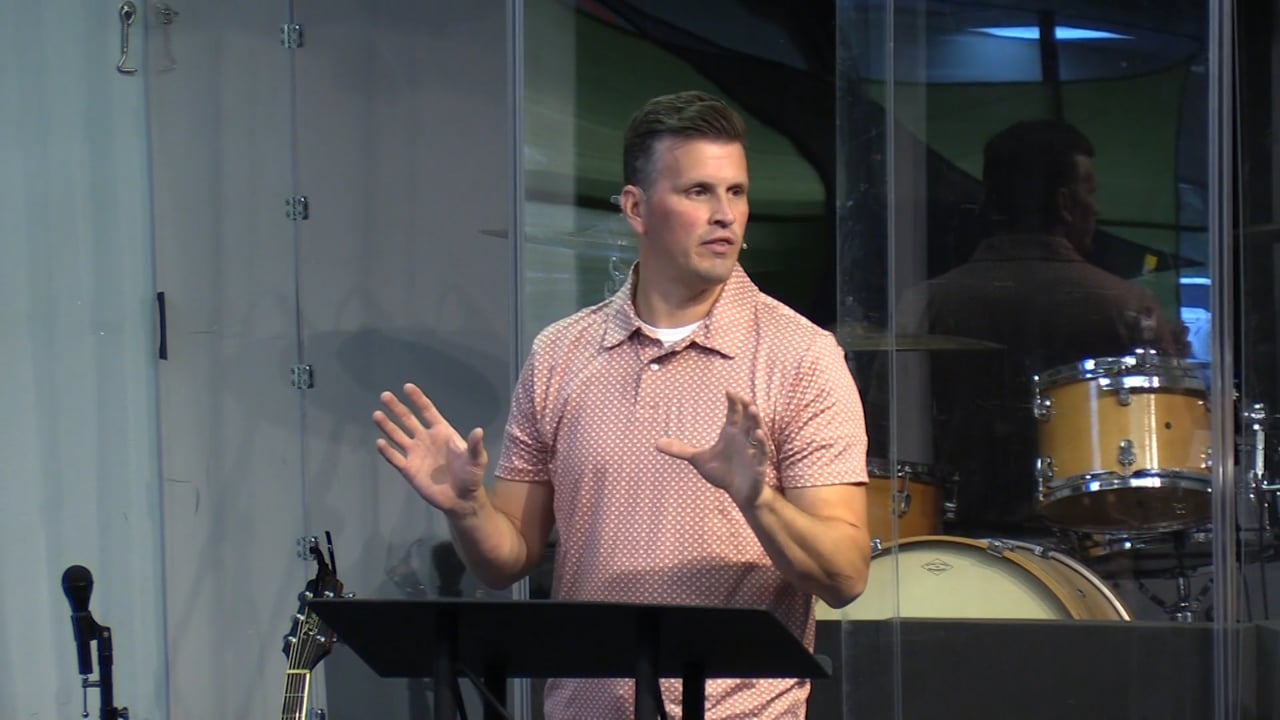
Read transcript
Thanks for listening to the podcast from Jonathan Combs and the preaching team at Eastgate Church in Rocky Mount, North Carolina. Check us out on the web at eastgate.church for more. And now, here’s the sermon. Good morning, church. So happy you’re here.
So happy to see you. I believe we have our subs still set to Children’s Week. If you felt that, you felt that thump, that’s not normal. If you liked it, we’ll keep it. I mean, whatever you want.
I felt it in my toes. That was nice. We’re continuing our series called The Three Rs of Parenting. And if you’re here this morning and you’re single, married without children, your children are already out of the house. I’ve been praying all week the Lord would give you a nugget of wisdom in this.
I’m confident He will. We’re in the book of Ephesians 6. And this is definitely a word to families. Definitely a word to children and parents. But I believe There are timeless principles here regardless of where you are in your life situation.
And so I want to get us started. Kind of hook you in a little bit and motivate you a little bit with a couple of funny memes. I’m gonna do this for the next couple of weeks because parenting is not really that funny. Most of the time it’s pretty harsh. It can be very trying.
And so here’s a couple of fun things just for you to get you started. Here’s the first. My doppelganger, Jim Carrey. New parent. 6 months in.
And then 1 year later. It’s a very quick aging process. All of my grays have come on the right side of my head. I don’t know if my kids address me from that side. I don’t know.
Next one. Parents saying, “Please don’t get any water outside the tub.” And that’s what every kid everywhere does. They become a giant shark. Next. You are surrounded by toys.
Are you not entertained? And the more toys you get out for them, the less entertained they will be. Just a good thought there for you. Next. What I thought it would be like to have multiple kids, what it’s actually like, they are velociraptors.
And the more you have, the more you have to run that zone defense. It’s difficult. Alright. 33% of your job as a dad is staring at your kids like this until they act right. If you haven’t learned that look yet, you got to learn it.
You need it. It’s part of your arsenal. Then you never have to say a word. Just give them that scary look. My dad can give me that look today and I’d go, What’d I do?
He still has it. It’s good to have a good sense of humor to survive parenting. It’s good to have a good sense of humor to survive life in general, but certainly if you’re dealing with kids, I’ve noticed something that a year later I can laugh about something that happens in the house that was so frustrating. It takes me a little while before I can look back and go, “Okay, that was tough, but it wasn’t so bad. God got us through that.” The questions I kind of want to ask this morning.
We’re in the second R of this series. We talked about this idea of what it means to receive your kids from the Lord. And if you didn’t catch that sermon, you can go back and check it out from last week. This week is really in the middle. The nuts and bolts-iest of all the sermons of this series.
It’s called Raising Up Children in the Lord. And I’m prayerful that you’re going to get something no matter where you are in your walk with Christ. But I want to ask you something. What’s your approach to life? Just in general, what’s your approach to life?
You can go ahead and pop up this image. This is an image that we saw years ago when we were going through the book of Galatians. And it just keeps coming back to my thoughts and back to my mind. It came up again this week as I’m thinking about parenting. But I was also— I’m just thinking about life.
That we have a tendency as individuals to get in one of these ditches. The ditch of license or the ditch of legalism. And as parents, We dig into one of those ditches as well, and often it breeds something in our house that we did not expect, that we didn’t want. Rather than go down the road of liberty, which is freedom and love, we end up being overly legalistic as parents or as individuals, or overly licentious. And so I would guess each one of you as a parent, if you could consider this for a minute, you would go, “I kind of lean more.” to one of those ditches and it’s causing this.
I wonder what your approach is. Parents in the room, did you get your approach from your parents? Is that where the majority of your style comes from? Or is it from some friends that you wanted to model your life after? Maybe a book really was influential.
Maybe some of you are just straight up winging it. And you know, there are seasons where maybe the Lord will still work that out for you. The winging it strategy works better if you’re also spending a lot of time with the Lord and such that He speaks and moves through you. Then, to be honest, are you really winging it? You’re just, you’re really walking with Christ and He’s parenting through you.
That’s an ultimate great strategy, but you should have some sort of approach to life, certainly an approach in your parenting. I love what Pastor Chuck Swindoll, and I don’t quote him nearly enough, he’s been such a wonderful guy to study over these years. But he says this, and this— if we could get this today, we would be excellent people, certainly excellent parents. Pastor Chuck says, “Children who breathe the air of love in a nurturing home are more likely to respond with submissive obedience. Balancing discipline and affection in child rearing is critical.” He says, the breath of love.
That if your kids in your household or if you in your household feel like there’s a sense of love— and you could just be married at this point without kids— if you’re experiencing a lot of tension, there’s not a certain amount of peace and liberty and love in the house, it’s stifling. The air feels thicker in the house. And sometimes, some of you as parents, you recognize this when When dad’s home or when mom’s home, things are calm, things are cool. But then when the opposite shows up, everybody gets really tense. It’s because most likely you’re leaning in one of these ditches.
Children who breathe that air of love are more likely to respond appropriately. Well, here’s the good news. Here’s the good news, parents in the room. This one is really certainly aimed right at you. But I know that God’s going to give us more nuggets today for all of us in the room.
Chapter 6 of Ephesians, verse 1. The Apostle Paul here is giving a clear message over these last few chapters of Ephesians. He’s given some really good application prescription to the church at Ephesus. He’s talked already. If you want to know more about how to have a godly marriage, he’s just dealt with that in chapter 5 of Ephesians.
He’s dealt with the church and how they should live and imitating Christ and walking with him. And now in chapter 6, He gets down even further into the weeds talking about parenting and then how we should live as workers in the workplace. So it’s very prescriptive here. I want you to understand something. This chapter does not come out of nowhere.
So I would encourage you at the end of today, if you’re feeling a sense of shame or guilt, that is not the idea of what I’m trying to preach. Certainly not the idea of what Paul is trying to say. In chapter 6, because I want to remind you of something. This letter would have been read in the church of Ephesus from the very first word to the end of Ephesians, and the people would have heard 3 chapters of, here’s why you can do this. Because Christ’s blood, because of what he’s done, because his power rests on you, because we imitate him.
The Holy Spirit of God is what’s working its way out in you. That’s why Children can obey. That’s why you can honor and everything we’re going to talk about today. So if you’re walking out of here feeling shame and guilt today, I want to encourage you with this. It’s not by your power, not by your strength, but by his and his alone.
So lean on him. If you get nothing else today, wake up tomorrow and rest in Christ Jesus, because parenting is extremely hard, harder if you think the power is yours. It’s not. He gave them to you. They’re His for you to steward.
And so reminder of that. We’re going to spend a couple of minutes here in these first few verses, and I believe you’ll see 4 really clear imperatives. There are imperatives here in the text, which is command verbs. Verse 1, it says this in chapter 6, Children, obey your parents in the Lord, for this is right. Honor your father and mother.
This is the first commandment with a promise that it may go well with you and that you may live long in the land. Fathers, do not provoke your children to anger, but bring them up in the discipline and instruction of the Lord. God bless the reading of His word. Amen. Amen.
All right, 4 really clear imperatives about how to raise up your children, your child in the Lord. Number 1, teach them godly and right obedience. Now, I want to say this first of all, You’ll notice the first word of chapter 6, verse 1 is children. If you are today in the building, in this room, and you are still living at home under your parents, this imperative is truly for you first. Obey your parents in the Lord, for this is right.
That first word is to you. Now I recognize something as I read that instruction, that I would be primarily dealing with the parents of this situation. So what do we have to do? Well, we need to give them something, something to obey. A right model, if you will.
So the point here, teach them godly and right obedience. The word children here is tekna in the Greek, which always means a dependent child. So if you’re a grown man, a grown woman, you’re not living at home anymore, this word is not the same to you now. The second point is more for you now. So if you’re 38 like me, about to be 38, when my dad gives me some advice, it’s that.
It’s advice. I don’t have to say, “I have to obey that.” I don’t live with him anymore. Now I will say the man gives good advice. And hopefully your parents give good, godly advice. But I don’t have to obey because I’m no longer a tekna.
You understand? But if you are that, and some of my kids are in the room, you’re tekna.
It’s still a yes sir and yes ma’am in my house because I still pay for all the stuff. And I love you. That’s the greatest part, is I love you. Not as good as Christ loves you, but I love you enough to give you good example and advice. Obey.
The word obey here is hupakouoete, which means to literally come under the hearing. This means you make the decision to come underneath instruction. For this is right, it says. I love this word here. It’s so fascinating.
This is really what Paul is doing throughout the book of Ephesians, is he’s painting a picture that all of this is modeled in God’s creation. The idea that children should obey is not like unnatural, but the very most natural thing. He says, in the Lord, for this is right. That means God has ordered creation such that it would look this way. In fact, you really don’t have to just look at humanity to see this.
Look at mammals on the Discovery Channel. They’re following mom around. They’re nurturing with mom for some animals for lengthy periods of time. It is modeled throughout creation that children would come under the hearing of their parents. And it is certainly modeled in humanity.
In fact, I think God may have modeled it even more so. Think about a newborn infant, for instance. That child that first comes out, if you do not take care of it, it will die. It will absolutely die. It is incapable of eating, communicating, walking.
It can do nothing other than it can suckle, it can cuddle, it can sleep, but even that it has a hard time. The child even won’t sleep when it should sleep, and if you’ve had infants, you know. You clearly are tired. Why will you not shut your eyes? Children are strange.
And such that God has, I think, modeled this thing of the uttermost need we have for parents in those early years. An elephant, when it’s first born, it’s in— within moments it can walk. Most animals are this way, but humans, humans are not this way. We need desperately our parents for a great long time, perhaps longer than society even tells us. That we should be under the hearing and respectful and leaning in.
We’re commanded to teach our children though as parents. Teach them diligently to obey God’s word. The idea of come under the hearing in the Lord is the idea that your parents, you as a parent, would be in the Lord. That your teaching and instruction would be in the Lord so that your kids are obeying something, they’re really obeying God through you. You being the steward, you’re the middleman.
You’re the middle manager. God’s the power. He’s the authority. The instruction is His. It passes through you and it makes it— I can guarantee you, I promise you this is true.
It makes it easier for the child to obey when they know this is from higher. This is more than human. This is supernatural. This is what We see throughout scripture Paul is not making up something new here. In fact, I would say he is greatly informed by the book of Deuteronomy.
Deuteronomy 6:6, it says, “These words which I command you today shall be in your heart. You shall teach them diligently to your children. You shall talk of them when you sit in the house, when you walk by the way, when you lie down, and when you rise up.” Understand this. Believers, let me just say this first before I even move to parents. Believers, this is a lifestyle.
Following Christ is not something we do on Sundays for an hour and a half. If that’s what it means to you, you’re missing so much of what it means to be a Christ follower. You’re missing so much of the freedom and peace and joy in Christ because you’re living this way for an hour on Sunday and a whole different way the rest of the week. And that must feel so confusing internally. No, no, no.
Deuteronomy shows us that the way in which we live should be the same in this place, the same in our households, the same as we walk, the same as when we go to work. This is life Christian. Which means your children who naturally come up under that order will see you as the same believer everywhere you go. I think most— one of the most painful things that happens to kids growing up is that they grow up in what we would call a Christian home. And yet what that has translated to them is, “We go to church on Sundays, and then you ought to see what my parents do the rest of the week.
What they say to us. The way they communicate with us. They don’t live out what they show us on Sundays. It doesn’t look the same Monday through Saturday.” And those children often leave and they don’t come back. Because they have now translated that Christ equals my parents.
And they don’t know what it really means because you are the model of Christ Jesus to them. You are the steward, the in-between. So they think, well, the upper management must just be like the middle management. Now, if that’s been your scenario, there’s good news. God shows grace and can work out all the mistakes we’ve made.
He can turn them into gold. All things to the good of those who love God. He can rework and remove, but Understand this. If you’re in the middle of this right now, you should be the same in this place as you are at home, as you are at work. No longer being two-faced Christians.
Children that obey their parents please the Lord. Paul says this to the Colossian church in chapter 3, “Children, obey your parents in everything, for this pleases the Lord.” Now I want to give you something. I’ve recommended this book before. I don’t know who my readers in the room are. I want you to know though, I heard this old adage growing up and I believe it’s true.
Readers are leaders. The more you read, the more you study, the more you’re gonna think things through better than most. The average American doesn’t hardly ever read. So you can get an upper hand. But here’s a really great book from Chip Ingram called Effective Parenting in a Defective World.
I think I have an image. Kinda give you an idea what it looks like. Yeah. I’m gonna give you a couple of these as we go through today. But he’s got this section, the parenting myths versus parenting realities.
And I want you to hear this first one. I love it. He says, parenting myth: my child’s primary responsibility is to juggle schoolwork, extracurricular activities, and everything that would make them well-rounded, successful adults. That is a parenting myth. It is.
The parenting truth or reality is this: my child’s primary responsibility is to learn healthy obedience. It’s a lot simpler. And the more important piece of it is, since we’re in the in-between, our primary function as parents is to instruct our kids to listen to God. So that they know through and through, the instruction I’ve been receiving from mom and dad was from the Lord. And now when I’m off on my own, I know how to hear His voice.
I know how to follow Him when He leads. What would it look like as parents if we actually taught our kids how to open this thing up? So few of us got that growing up. What would it look like if we as parents taught our kids how to pray? It’s amazing how many small groups I’ve been in over the years where people would say, “You know, I don’t pray out loud.
I don’t pray in groups. It’s very uncomfortable.” So much of that isn’t just anxiety. It’s actually lack of training. It’s lack of discipleship that so many of us— and don’t feel ashamed of that. That’s how so many of us experienced growing up.
We never saw our parents pray out loud. We never prayed as a family. So we’re not familiar with what that looks like. So then you get in the family of God and you get real weirded out. And we’ll weird you out because we love you enough to take you through that uncomfortable phase.
If you’re in my small group, I’m going to warn you right away. I don’t let anybody not pray. At some point, we’re all going to pray. Especially if we do men’s breakouts and women’s breakouts. Everybody prays.
And I think it’s a value in that, such a wonderful value, that maybe we miss something as kids, but it doesn’t have to be that way. My child’s primary responsibility is healthy obedience. Now, let me slap you around for just a moment. Don’t take this too harshly because I’m guilty of some of this too. Parents in the room, worldly methods used by parents in attempt to obtain obedience.
There are many, and I don’t have them all. But here’s a couple of things I want to encourage you are not very effective in training healthy obedience. Here’s one of the number one most used. It’s called bribing. Bribing.
Hey Johnny, come to mommy and I’ll give you a sucker. Well, you do a really good job at helping your kids have to go to the dentist a lot, but you’re not teaching them obedience really. You’re teaching them, I need something before I will obey. That won’t work in real life.
Threatening: “If you boys don’t pick up your toys, I’m going to throw them in the garbage.” If you’re going to say that, you better follow through. I’ve said this year after year. If you’re going to make a threat, it better be one you actually do. Otherwise, they’ll go, “Mommy and Daddy are liars.” Emotional appeal. This one’s really funny, especially with little ones, and I see this all the time.
After All I do for you. This is how you repay me? And some of you dads, this might happen, but I see this more with the ladies. And I know you’ve had— they’ve been killing you all day. I’ve come home to my wife before after a long day, and all 4 of them have somehow teamed up on their mother, and she is at an emotional breaking point.
Alright. Normally the way she handles it, I wouldn’t say it’s appropriate either, but I’ll take it. Is that I receive that. I don’t love that, but at least she’s still parenting pretty well. I’m just the one getting the brunt end of that emotional appeal, and it doesn’t look like sadness.
It looks like pure frustration. Reasoning: Sweetie, your hot dog’s going to get cold if you don’t eat it.
You may not like this approach. Let them sit there until they eat it. Or I’ve heard some wild ideas. People take dinner and just put it in the fridge and then get it back out for breakfast and heat it back up. Y’all are like, “Boy, that’s like child abuse.” No, the kid’s not starving and I’m not giving it to them like uncooked.
Some of y’all are looking at me funny like, “You’re just mean.” No, I just want my kids to actually obey because they’re obeying God. I’m trying to teach them to obey. Yelling. How many times do I have to scream at you? I’ve observed that the more you yell at the kids, the more they yell back.
The louder your house will be. If you want yelling kids, then yell at them as parents. It will work every time. Countdown. Don’t make me count to 3.
Don’t make me count to 10. I don’t know. Apparently mommy and daddy have some kind of DEFCON system. As they begin to count down, I know when they get to 1, I better move. So then I end up learning this thing that I have a certain amount of time before I have to react.
I just know the police officers don’t really operate this way. You know? They don’t count to 3. Unless it’s taser, taser, taser. And if you hear that, it’s already a game changer in your life.
Don’t make me count to 3. No, don’t make me say it again. Like, once?
There’s some fascinating truths in here. I would just encourage you to try them. If you have young kids especially, if you’ve been yelling, if you’ve been counting, try instead the polar opposite of this and see what happens. Try to soften your voice the more you are intensifying. Try to soften your voice and speak clearly and make eye contact.
See what happens. I know for a fact my dad used this strategy on me growing up. Rather than yell, he would get softer and lean in closer, and it was effective. More effective, I think, than yelling, and it results in the response you’re actually longing for, which is obedience that doesn’t have complaint.
Alright, let’s continue to go through this. We’ve got verses 2 and 3, which I think make a very clear imperative, and this one is a timeless principle for all people. So before you walk out of here today, You’re sitting here today saying, “Well, I don’t have kids. I didn’t get anything.” Then you’re just not listening to this port. This part right here.
You just decided to turn your ears off. It says in verses 2 and 3, “Honor your father and mother. This is the first commandment with a promise, that it may go well with you and you may live long in the land.” Here’s the imperative and the idea, I think, behind this is that we would establish an environment of mutual honor or respect. An environment of mutual honor and respect. Now let me ask you a question.
Is there anybody in the room Who was miraculously born without a mother and father?
I’ve never had anybody raise their hands and we’d have to have a really odd conversation if that was you today. But all of us have a father and mother. Now they may not be living still and that, I think, there’s a timestamp in the sense of that. But this word honor here, this phrase which was first given in the Ten Commandments is now reiterated several times in the New Testament. It is for all people.
No matter your age. And this word honor is tricky in the fact that it’s also speaking internally. Which means the honor that we give to our father and mother has nothing to do with whether or not they are honorable.
Some of you have very dishonorable parents. I consider myself blessed and lucky that my parents are not terribly hard to honor. Because they’re generally honorable people. Some of you did not have that. I want you to hear this still.
God says, “Honor your father and mother that it may go well with you in the land.” There’s a blessing that comes with you honoring. And it’s even more amazing that you would honor somebody dishonorable. It really comes right in line, same line of Jesus saying, you know, what good is it that you would love someone who’s lovable? What good is it that you would be friendly to someone who’s Friendly. This is kind of a paraphrase of what he’s saying.
But we as Christians do something beyond that. We love our enemies. We love our enemies. And your parents are certainly not your enemies. But maybe you had some really hard times.
Tough upbringing. The word honor here is for you. Not because of who your parents are. But because you honor God. And because you honor God, you honor them.
What does that look like? That means I’m going to forgive. I’m going to forgive. Even if they’ve not repented, even if they’ve not changed their ways, I’m going to forgive. Because you know what forgiving— not forgiving has done for me?
It’s made me bitter, not better. It’s never improved my life that I did not forgive them of something they did that they are no longer even thinking about. I’m the one holding it. I forgive. That’s honor.
I’m going to honor them. I’m not going to speak ill of them. They may deserve it, but I’m not. This does not have a timestamp, my dear friends. Honor.
That means you give them the honor due them. What kind of honor is that? Well, God decided that you would come from them, and so you honor God simply because you love him and you honor them. You give them the honor due them. Swindoll, now to younger kids, and this is, this is for you as parents.
This is what you’re trying to instill, and Chuck says obedience And like step 1 is the proper appropriate action, it involves the child’s behavior, but honor conveys respect and devotion which reflects the right attitude. Which means your job is somewhat twofold as a parent. You’re not just trying to help them learn healthy obedience, you’re also trying to help them have the right attitude. You’re like, “Oh gosh.” I see it on your faces. You’re like, “It’s hard enough to just get them to do what they’ve been asked.” Now to try to get them to do what they’ve been asked without going, “Pfft,” and walking off like, “Muh,” and kicking dirt.
Yeah. That’s the role of the parent. That’s the role of the mommy and the daddy, that we would help them reflect the right attitude. “That it might go well for them, they might live long in the land.” Now here’s what— this is referring back to Deuteronomy. It’s referring back to Exodus.
Here’s what Deuteronomy 5:16 says, “Honor your father and your mother as the Lord your God commanded you, that your days may be long.” that it may go well with you in the land that the Lord your God has given you. Now I love this. And I may, if I knew this previously, it was like an aha this week. So I think it was a new learning for me. But John Stott, one commentator writing on the passage, says this, that Christians have often divided the Decalogue.
That Decalogue means 10, 10 words. He’s here talking about the Ten Commandments. Generally, you’re familiar with the Ten Commandments. Most people are. But he says this: Christians have divided the Decalogue in two uneven halves.
Typically, the first four commandments are about our duty to God—no other gods before me, no graven images, all that stuff—and then the back six are our duty towards our neighbor, humankind. Understand this though: The Jews regularly taught that each of the law’s two tablets contains an even 5 commandments. That means the significance of this arrangement is that the fifth commandment, which is honor thy father and mother, is actually part of the duty to God. Isn’t that wonderful? I think that’s very accurate, that perhaps something down deep in you, some way you learned these things, you often thought, Honoring goes into the humanity category.
It does not— honoring your father and mother because God has instructed you and you’re actually honoring Him. This is your duty towards Him. Now, what is some ways that we can teach our children mutual respect? I never liked this phrase growing up and yet I found that it’s just true and I say it sometimes. I don’t know if my kids have become likely to hate this phrase.
I don’t know. I don’t say it as much as I heard growing up, but it’s honor looks like this. It obeys immediately, sweetly, and completely. I used to hate hearing that immediately, sweetly, and completely. And I don’t want to see that look on your face.
Immediately, sweetly, and completely. Like it’s constantly just reinforcing. I want you to do what you’re told right away. I want you to do it complete. And I want you to do it without kicking dirt.
It respects parents in thought and deed. It appropriately addresses their parents. Now, I’ve heard some people that let their kids call them by their first name. I don’t find that this is really a great idea because— and this might rub some of you the wrong way— I don’t believe that in the sense of stewardship we are equals. Okay?
If my kids call me Jonathan, that means they’re saying, “You are my equal.” No, we are not. Not yet. And guess what I never do now? I have never said to my dad, “Hey Gary, get in here.” That doesn’t even feel right right now saying that to you. It doesn’t feel right because he is my elder.
Now I might get up and, you know, if I’m talking about him, “Y’all, this is Pastor Gary.” But in the house, he has a new title. It’s an even better title. He’s Paw Paw. He’s Paw Paw now. If it’s just me and him, he’s dad.
He will always be that. It’s a certain level of honor and respect. And it’s valuable. In a society where we don’t value a lot of respect and honor, why would we remove that in our household? It does some other things like thank you and please.
In my house it’s yes sir and no ma’am. I’ve had some people say, you know, I really have a problem with yes sir and no ma’am. Most of you are from the North. I want you to understand something. I’m not saying you need to do this, but if you join the army, I’ve never found anyone that said, “You know, I just don’t feel like saying yes sir and yes ma’am.” If you want to spend your entire day in the dirt, you can do that.
Like, “I’m never going to say yes sir.” Okay. Say just yes to some superior officers and see what happens to you.
It cares about their parents in their old age.
That’s what honor looks like. It continues to honor them well into the end of their days. Here’s the third, the third imperative, and the third and fourth are both really in verse 4, and this is a tricky one. Encourage them with sensitivity and consistency. It says here, “Fathers, do not provoke your children to anger.” Now, mothers, before you check out, this is a placeholder to describe the parenting unit.
It’s not just saying fathers, it is saying the parenting system, fathers being the head of household, that’s in view here. Fathers do not provoke. The word here is “perorgōrzēte,” which means to rouse to wrath. It’s where we get this word “orgy” or “ogre.” And some of you are like this at home. You’re ogres.
And your kids are growing up to be ogres too. If you’ve been doing this, there’s no better time to change than today. Alright? The ogre system will breed more ogres. Fathers, don’t provoke.
Don’t rouse them to wrath. Exaggerate. Do not drive them to discouragement and frustration. Now let me give you a couple of ideas of what this might be. What would provoke somebody?
Well, you don’t have to be a child to get this one. What provokes you at work? Because y’all get provoked at work all the time. Some of you are retired, you’re still getting provoked at work. It means your spouse is provoking you.
But at the workplace, we all get frustrated. We get frustrated at home. What frustrates us? I’ll tell you, some of the most frustrating things in the workplace can be when someone never gives you encouragement and only ever finds fault. Isn’t that so troubling in the workplace?
Especially when you know you’re doing your best, you’re working hard, and yet you never get merits. You only get demerits. You know what that will eventually— what will it eventually do to you? You’ll quit. You will eventually quit.
You’ll say, “I need to find a place where people are alive and not dead. These people in here are rude.” You’ll quit. What will a child do if all they ever hear from mommy or daddy is, “You messed that up again. You messed that up again. You messed that up again,” and never, you know, You did a good job on that test.
You did a good job mowing that lawn. You did a good job cleaning this piece. They will eventually quit. They’ll check out. This is in fact exactly what the Bible says in Colossians 3.
You can go ahead and pop this up. 3:21. It says, Fathers, don’t aggravate your children. If you do, they will become discouraged and quit trying. Fault-finding.
Constantly negatives. It’s true for you, friend. It’s going to be true for your kids. Here’s another: humiliation. There’s some bad employers that you’ve run into that will publicly reprimand you.
You will never respect their leadership again if it happens. That will call you out for something you did wrong in front of the entire work group. From that point on, not only will you hide, but you won’t respect them. Isn’t that true? Because none of us wants to be publicly humiliated, and yet we do this sometimes as parents with our children.
It’s rather than pull them aside, “All right, that does need discipline, but I’m not going to do it in front of your crew. I’m not going to do it in front of your friends.” I don’t know if you’ve noticed this, all of my kids act a little bit weird around their friends. They act a little bit— sometimes they want to be slightly disobedient, sometimes they want to act cool. So I have to pull them aside. Take them somewhere outside of their group, and certainly if you have multiple kids, you pull them aside because otherwise you get this dogpile effect.
My oldest son is the worst for this. He’s in the room. I’ve been calling him Captain Dogpile lately because anytime we call down one of the other kids for something, he’s like, “Yeah, and I saw her do that too.” I’m like, “Have your own kids, man. We’re doing this. We don’t need you.” Part of that’s our fault though.
We should not be publicly reprimanded, and we need to do better. To pull this aside. Because the job is ours to discipline. Labeling. I don’t know if you grew up with this, my friend.
Maybe you grew up with a parent who called you lazy. Who called you stupid. Said you won’t amount to much. Some of you may have experienced that growing up. “Why can’t you be like your older brother?” “Why can’t you be like your older sister?” Labels.
Labels. Maybe you heard this growing up. Maybe you’ve done it a little bit. Change that. Change that pace.
Maybe create some new labels. You are loved. I love you. More than you know. You’re smart.
You messed this up right here. You made a mistake on this, but it’s not because you’re not smart. It’s because you didn’t try hard enough. Rework your labels. Because guess what you’re doing?
Breathing life into humanity. You’re breathing life into these people. This is true in your workplace too, friends, before you check out. This is true if you’re A leader of others understands encouragement is so much more powerful than discouragement. That speaking positive language into people, even if they don’t deserve it yet, you can find where they need to fix without completely just destroying their psyche.
Say, “Oh, you can do better on this, and I know you can because you’re smarter than this. I’ve seen the work you can do. What would it look like for us to get you there?” That’s better leadership and it’s better parenting. Comparison, comparing your kids, inconsistency. I’m pretty guilty of this one.
Which dad is going to come home today? Is it going to be tired dad? Tired dad eventually enters into angry dad. Tired dad almost never works out. So tired dad on the way home needs to go, “Bring it.
Bring the energy.” Dear Father, you have 4 of them. They’re waiting on you in there. Whew. Okay. I can do this.
I got more in the tank. Because tired dad results in leave me alone, I need my own time dad. That’s not good dad. Inconsistency. Are you angry one day, in a great mood the next?
Your kids, who is this person I live with? Or hypocrisy. You constantly tell them to do something and then you do the polar opposite. I love this phrase from one commentator. He says, “How often is the mind of a child left with a strong conviction that wrong has been done him by the punishment rather than the repentance for the wrong that he has himself done.” So instead of the kid walking away going, “I need to repent.
I need to do better.” They walk away going, “I feel like I’ve been done wrong in this situation because of the way that you disciplined.” was overly angry, inconsistent. So they feel like a victim rather than the one who needs to repent.
Be disciplined yourself. What that means is, dear parent, dear friend, dear leader, whether you’re a parent or not, if you have to confront something, be disciplined before you enter that confrontation. Employers in the room, leaders in the room, teachers in the room, Police officers in the room, some of you are constantly confronting things and you’re doing it in your homes too. Lloyd-Jones, when writing on it, he says, “When you are disciplining a child, you should have first controlled yourself. What right have you to say that your child needs discipline when you obviously need it yourself?” He says, “Discipline yourself first.” That means it’s okay, my friends, if you’ve got to confront something in your house or in your workplace, it’s okay to step back for a minute and say, All right.
Give me 5. Give me 10. Give me 15. I’ll be back. We need to talk about this.
But give me a few minutes. Because you know if you address it immediately, it’s going to be overly frustrated and angry. I found that this is a very helpful thing in your marriage. Marrieds in the room? Sometimes it’s not a great idea to immediately jump the thing that just happened where he said or she said something that was out of line.
It was off base or did something, it can be good to take a pause. “All right. Let’s come back and talk about that in a little while because I got to go in this other room and yell in a pillow.” Or, “I got to go in this other room really and pray.” It’s what I really need to do because I found that anytime I come to the Lord with it, I start to realize I’m not as offended as I should be. Or I’m overly offended. Reverse that.
God reminds me often. He comes in, in my prayer life and says, “Why are you so upset?” Why are you so offended about this? Is your character so needing positive language? Do you need that much encouragement, dear Jonathan? Really?
I hung one across from you for you, my dear friend. And when I start coming to prayer with to God with that, he goes, calm down. You’re okay. Don’t get so frustrated because you’re mine. You’re my child before you’re anybody’s husband, before you’re anybody’s parent.
You’re my child. Okay, God. Thank you. Now I can come back in the room with little Nate or one of these little kids who just did something, and the stuff that ticks me off is often childishness. That’s where God can help me correct the pace because their fumbly little fingers like to just— they walk through the house with whole cups of milk and just go, “Milk.” That stuff just irritates me to no end.
And I constantly walk around the house saying to my wife, “This is why we can’t have nice things. This is why we can’t have nice things. Let’s wait another 14 years. Maybe we can finally have nice things.” And that’s not good parenting. I have to step away for a second.
And my kids are going to remind me of this later. I’m actually sad I’m saying all this. But it’s true. I need to pause and say, “Wait a minute. What is my objective here?
Is it that my carpets will look good?” Small group. When you show up. You know who you are. Our carpets may not always look so good. Because I got these little kids with these goofy fingers.
And they just fumble. They fumble all the time.
But I want to teach them that I love them. And that healthy obedience looks like something else. Dr. Ted Tripp in his book. And this is another book. I’ve been recommending this one for years.
If you want a copy. I have more in my office. But your child’s behavior Reflects his heart, he says. If you are really willing to help him, you must be concerned with the attitudes of the heart that drive the behavior. That means you’re more careful to think about what’s going on with the heart before you care about this external behaviors.
Because it’s a representation of what’s going on in there. This understanding does marvelous things for discipline. It makes the heart the issue, not the behavior. The point of confrontation then is What’s going on in the heart? Your concern is then not to unmask so much what the child has done, but what is underneath that in the heart that leads them to the cross of Christ.
Here’s the fourth imperative: Train them with appropriate discipline and instruction. The last piece of this, I kept it almost verbatim from the verse because I couldn’t Why even try to improve? It was worded so well. Bring them up in the discipline and instruction of the Lord. Train them up with this.
Bring them up here is this idea of nourishing, to nurture, to rear, to train, to bring them to the Lord that you’re making this connection of here’s what it looks like to follow God and I’m making that handoff and I’m doing it through two words. He says paideia and nothesia, which is discipline or education. We have this term in English called pedagogy. Some of you may have studied that. That’s the idea of how to teach.
That’s the study of teaching. In fact, you could call teachers pedagogues, if you will, but that’s from the Greek, which means to tutor, to instruct, to bring under teaching. And then this other word, nouthesia, means instruction, sometimes with admonishment, Sometimes with warning and rebuke. It’s a more aggressive kind of instruction that’s kind of in view here. So you really have to bring out both of these tools.
There’s the teaching piece, but then there’s the correction piece. Proverbs 22, it says, “Train up a child in the way he should go, even when he is old he will not depart from it.” Proverbs 23, in fact, says it this way, “Don’t fail to correct your children. They won’t die if you spank them.” Oh! Physical discipline may well save them from death. What is he talking about there, Jonathan?
Save them from death? Spanking them won’t kill them. In fact, failing to discipline them might lead to— what kind of death is he speaking to here? Well, because now you’re modeling something that none of my mistakes ever warrant discipline. None of my mistakes ever warrant rebuke or correction.
That means I have a hard time later on in life when I’m outside of my parents’ house of understanding this concept of sin altogether. That I have done something wrong that requires a Savior. I used to hear this in church that you have to get people unsaved before you can get them saved. I think that’s the idea of this is that some people are completely unaware that they have done anything wrong that has required the Savior’s death on a cross. So when they hear this thing of Jesus dying on a cross and the need for a Messiah and the need for that penalty to be paid, they go, “What penalty?
What wrong have I committed? I’ve not killed anybody. I’ve not stole anything. I’ve not done anything wrong illegally.” They don’t view sin appropriately, and it could be they received very little discipline growing up. Proverbs 19, it says, “Discipline your children while there is hope.
Otherwise you will ruin their lives.” Now this is for someone today. And again, my goal is not your shame and guilt, but for you to look in and go, “Okay, here’s God. Here’s where I need to shift and here’s where I need your help.” Some of you have made the decision, “I want to be my kid’s buddy. I want to be their friend.” I can guarantee you this. If you will be their parent, If you will be a strong disciplinarian when they’re young, they will be your friend when they’re old.
If you try to be their friend when they’re young, it’s unlikely they will be your friend when they’re old because what they need you did not give them. What they needed was a parent and you were a friend. But Jonathan, I’m a nice guy. I love them and I want them to know that I’m their buddy. They’ll know your love by how much you’re willing to invest.
They’ll know your love by how much you’re willing to be in their day-to-day and how much you’re willing to say, “That’s not true. That’s not right.” A true friend, just in reality, my brothers and sisters, just in reality, a true friend will tell you when you’ve messed up. That’s a real friend. A real friend won’t just gloss over it and say, “Ah, that’s fine. You know, you just cheated on your wife.
That’s totally— I’m still your friend. It’s cool.” That’s not a good friend. A good friend would say, “I love you enough to tell you that ain’t right, and you need to go apologize and repent, and you need to work on this.” So if you’re going to be a friend to your kids, it looks like telling them the truth and discipline and correction. That’s what it really looks like. Then there’s this other side of it, the legalism side, where there’s no freedom in the house.
We’re either too friendly and we allow too much, or we allow nothing and we try to keep everything tight so that way when they finally leave the house at 18, they’ve been so bottled up all this time that they explode when they finally leave.
Discipline your children while there’s still hope. I want to give you this final parenting myth. Let me give you this verse prior to that. It says in Hebrews 12, “For the moment all discipline seems painful rather than pleasant, but later it yields the peaceful fruit of righteousness to those who have been trained by it. These are all statements that are true for you as a disciplinarian of your children.
Here’s the last and final parenting myth, and this one, if you walk away with nothing else, this will help you a lot. Parenting myth number 1: My goal is to make my kids happy. Well, good luck with that goal. If you have kids like mine, I can’t make them happy. You know what I’ve noticed?
Every Friday night— and church, just know this ahead of time— if you invite me to an engagement on a Friday night, I’m probably 99% gonna say no. The reason being, because Friday night is family night. It’s family night at my house. We watch movies, old movies together. We eat pizza together.
I’ve noticed something. I buy stuffed crust pizza for my kids some weeks. Do you realize how amazing it would have been growing up for my parents to buy me stuffed crust pizza. It was like, man, that was like heaven on earth when my parents would order anything out. I used to hate it when my mom would cook stir fry.
I would kill for her stir fry now. But as a kid, oh God, not stir fry night. Ugh. Beans and cornbread night. Every year on my dad’s birthday, he wanted beans and cornbread.
Weird. But it reminded him of home. It reminded him of his upbringing or something. I don’t know. Beans and cornbread.
I hate both of those. Love them both now. But stuffed crust pizza night? Oh my gosh. My kids, “I don’t like the stuffed crust.
I don’t like the stuffed crust.” I’m like, “You don’t know how bad I want to shove this down your face right now. You just don’t know how bad I want to hurt you with this stuffed crust.” Can’t make them happy. Oh, we’re watching this movie. I wanted to watch this movie. Oh, we’re going to the pool today.
I don’t want to go to the pool today. I’m like, you people are broken. I can’t make you happy. Or we’ll be at the thing. Hey, I wanted to do this.
And we do the thing. Hey dad, what are we doing next? Do your kids ever, hey, what’s next? Tell you what’s next. You can go to bed.
My goal is not their happiness. I won’t succeed. Even if it is my goal, I can never win. Why? People are fickle.
Have you noticed this? You can’t make anybody happy forever. Joy is this whole other animal that we get from the Lord. But this happiness is based on happenings and it comes and goes. I might be happy today and then on the way home somebody pulls out in front of me.
All of a sudden my happiness ended just like that. I’m like, “Grrr.” Happiness. No. My goal is not my kids’ happiness. My goal is to train my kids’ holiness.
That’s my only goal. That they would know what it means to be set apart for God. That when they leave my house, they would actually believe that this God is real. That this Jesus who saves us is true. That they would know I can personally communicate and have community with God the Father.
And that I have a Savior named Christ. That they would know that themselves. It wouldn’t be their father’s faith. It would be theirs. Holiness over happiness.
Here are those four: teach them godly obedience, establish mutual respect, encourage them with sensitivity and consistency, train your child with appropriate discipline and instruction. One last quote from dear old Chuck Swindoll, just to leave you on a good note: we should not view these words these words of honor, obey, don’t provoke, discipline. Don’t view those words as integers in a math formula, like some sort of math equation, he said. We can’t just add them all up and voilà, perfect family. It’s not how it works.
Real life’s not tidy as that, he says. It’s much messier, but it’s also richer and deeper when by God’s grace A beautiful family bond emerges out of this messy, messy thing despite our mistakes. Our goal: follow Christ. Teach our kids to follow Christ. Try to teach them something to obey, honor, not provoking, with discipline and instruction.
And then tons of prayer. Tons of prayer. And by God’s grace, something will emerge out of all that messiness. Let’s pray together, church. Heavenly Father, we thank you so much that you are a good God who loves us.
That first of all, the model for the family, which all of us as believers in Christ are a part of that family, it begins in such a messy way. That you show us even in our spiritual family that you welcome in some real misfits, myself included. That you bring in some of the wild ones, the wildest ones, and you love us in spite of us. And that’s such a good model for our earthly families, that in spite of the messiness, in spite of our mistakes, you still love us and you still guide us. You still teach us obedience to your son, Jesus, and you still instruct us in ways that we should live.
And even when we mess up, there’s still that breath, that air of love in community with you. I love that everything we’ve instructed today is first modeled in our spiritual family. That God, that’s who you are to us. And you’re perfect. You’re above our capacity.
I’m a decent father. You’re a perfect Father. You love me even when I make the gravest mistakes. And you rebuke me in a holy way. Not within perfection.
Like I rebuke others sometimes. Like I rebuke my kids. It’s not always without brokenness. And yet God, unto me, you are perfect. And I’m thankful, Lord, that you love me enough to discipline me at times.
That you love me enough to not let me walk so far off course without me hitting a rail. Say, “Wait a minute. That’s not where you desire me to go.” I’m asking now, Lord, as your imperfect people, as we try to walk with you by the grace of And by the power of your Holy Spirit, Lord, that you would help us to look different than the world around us. Certainly the parents in the room, God, I recognize today may have caused some to feel a sense of guilt, a sense of shame. Would you remove that right now?
That if they’ve been the type to bribe or threaten or yell or some of those worldly things or Or maybe they’ve recognized, “I’m inconsistent. I’m angry some days. I’m not other days.” And probably in your heart of heart, you already knew even before you heard my words that that’s not what I want to be. God, would You remove that guilt and shame right now and fill it with something else? Fill it with Your grace and Your mercy.
Help us to recognize something right now as parents. We are just stewards. You gave us these kids. And sometimes we don’t recognize that like we should. Sometimes we see them as a real encumbrance.
In our life. Help remove that from our lives and help us to see them as what they really truly are. Earth— er, heavenly vessels. People, eternal, eternal bodies that you have given to us to manage for a season. God, help us to see them just like that so that we would honor you in the way we parent.
God, help us to see those imperfections in the way we live. And not be overwhelmed by them, but instead see, “Okay, God, this is where I need you most.
God, help me right in this spot. I’ve been yelling at him. I’ve been yelling at her. Help me right there. I know it’s not going through the way it should.
God, help me in this spot where I’ve not been disciplining well. I’ve been trying to be their buddy too much, and now they don’t respect me. Help me overcome that, God, by your power and your grace and your mercy. Overcome that in me.” And for all of us in the room, Lord, help us to see where you’re leading us and instructing us to be better servant leaders in our workplace, to be more Christ-like in the places we go day in, just like Deuteronomy said, in our house and the way we walk and the way we work. Help us to be yours in all those places that we would be the same in this place as we are everywhere else.
We love you. We pray all of these things in Jesus’ name. Amen.
What is your parenting approach? Where did you learn how to be a mom or dad? Was it from your parents? From friends or a book? Or are you just winging it?
The apostle Paul told the Ephesians how to raise up their children according to God’s plan. As Christians, we can follow God’s Word in the training of our children and raise them up to maturity according to God’s plan.
Keep Watching
 Life In Christ – An Exposition of Ephesians
Our Transformation in Christ
WilsonGary CombsRocky MountJonathan Combs
Life In Christ – An Exposition of Ephesians
Our Enlightenment in Christ
WilsonGary CombsRocky MountJonathan Combs
Life In Christ – An Exposition of Ephesians
Our Blessings in Christ
WilsonGary CombsRocky MountJonathan Combs
Life In Christ – An Exposition of Ephesians
Our Transformation in Christ
WilsonGary CombsRocky MountJonathan Combs
Life In Christ – An Exposition of Ephesians
Our Enlightenment in Christ
WilsonGary CombsRocky MountJonathan Combs
Life In Christ – An Exposition of Ephesians
Our Blessings in Christ
WilsonGary CombsRocky MountJonathan Combs