
The Patient Kingdom
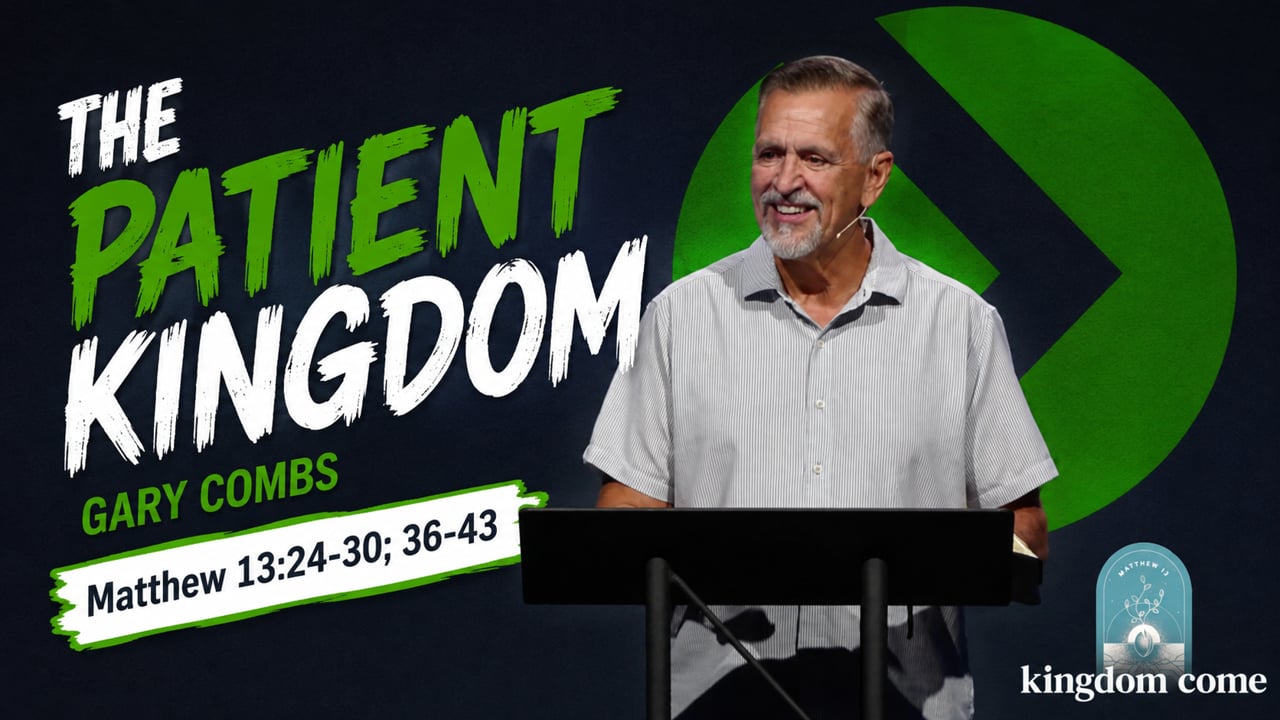
Read transcript
We’re going to dig into the sermon. We’re in part two of a five-part series. We’re focused on Matthew 13; the parables that we find in Matthew 13 all point towards the kingdom of heaven, the kingdom of God. We’ve entitled this series, “Kingdom Come” based on the Lord’s Prayer, where he taught us to pray “kingdom come” prayers. “Our Father, which art in heaven, hallowed be thy name…”
”Thy kingdom come,” right? “Thy will be done on earth as it is in heaven.” And so we’re praying “kingdom come” prayers. We’re praying thy kingdom come, not my kingdom come; thy kingdom come. And start with me;
I pray that Jesus will be the king of my life. And then I pray that His kingdom will come to this world and come to the people of this world. And so that’s what we were taught to pray by Jesus in Matthew chapter 6. And when he spoke of a kingdom of heaven, he wasn’t primarily speaking so much of a place as He was of a presence, of a person. He wasn’t merely speaking of a realm, but of a reign.
Not so much a castle or a crown, but a carpenter. He was speaking of one who came as King. He was speaking of Himself, that when Jesus came, the kingdom had come. But, there’s this tension; it’s already here, but not yet. And so some refer to this as the “inaugurated” kingdom of heaven, the “inaugurated” kingdom of God.
We’ve tried to define it like this: the kingdom of heaven is the saving reign of God that entered history through Jesus the King. It is even now breaking into this present age wherever His rule is received, and will one day be fully and visibly established when Christ returns. So it’s already here, it’s already at hand, but not yet fully visibly until He comes. Jesus has come as King, He is reigning as King and there’s a time coming where this will be fully realized. But this creates a tension and therefore He gives a parable to help us understand it. It’s the parable of the wheat and the weeds, or as those of us who have been reading the King James as we were growing up, the wheat and the tares.
And in the middle of this parable, his servants say out loud in a question, they describe this tension they’re feeling and they pray or they speak like this. They say, Matthew 13:27 (ESV) “And the servants of the master of the house came and said to him, ‘Master, did you not sow good seed in your field? How then does it have weeds?’” And that’s kind of the hinge of the parable. This question is the motive of the parable to describe, if you’re the King and you brought good, why is there evil in this world?
Why is it still here? How then are there weeds among the wheat? At this point in Matthew chapter 13, we see growing opposition against Jesus. The Messiah, the King has come, but yet His own people have rejected Him. In fact, the Jewish leaders have accused Him of doing works in the power of Satan.
They’ve rejected Him. And so this has to be confusing to the disciples. And so He begins to describe these parables to them to help them understand that yes, I have come, I am planting wheat, good seed, but there’s still a mixture of weeds in this world. And He tells this parable to talk to them about this, about the mysteries of the kingdom. They’re dealing with this question.
Let’s go ahead and name what their real question is – If God is good and Christ is King, why does evil remain? If God is good and Christ is King, why is there evil? Why does it remain in this world? That’s what they were really asking.
We often feel that same tension today. We look at a world filled with violence, with war, with unbelief, with suffering, with open rebellion against God, and we wonder if Jesus is King, why does evil remain? Why is it still here? It might cause us to misunderstand the nature of Christ’s Kingdom. We may mistake His patience for weakness, His delay for absence.
Where are You, God? Don’t You see this? Or the persistence of evil in the world as somehow defeating His purpose. And so we feel this tension, but as we understand this parable, we can learn to trust that Jesus is King and that His purposes will prevail. So let’s look at the text, the parable of the wheat and the weeds, the Gospel of Matthew chapter 13.
He taught His disciples that His kingdom would patiently coexist with evil until the appointed harvest. And at that time, He would finally judge the wicked and vindicate the righteous. And I believe today that we can understand and trust how Jesus will prevail in His kingdom. He gives us 3 reasons. So let’s unpack that today.Let’s look at the parable of the wheat and the weeds, starting in verse 24 of chapter 13 in Matthew. Matthew 13:24-30 (ESV) 24 He put another parable before them, saying, “The kingdom of heaven may be compared to a man who sowed good seed in his field, 25 but while his men were sleeping, his enemy came and sowed weeds among the wheat and went away. 26 So when the plants came up and bore grain, then the weeds appeared also. 27 And the servants of the master of the house came and said to him, ‘Master, did you not sow good seed in your field?
How then does it have weeds?’ 28 He said to them, ‘An enemy has done this.’ So the servants said to him, ‘Then do you want us to go and gather them?’ 29 But he said, ‘No, lest in gathering the weeds you root up the wheat along with them. 30 Let both grow together until the harvest, and at harvest time I will tell the reapers, “Gather the weeds first and bind them in bundles to be burned, but gather the wheat into my barn.”’”
Then let’s skip down to verse 36 for the explanation. Matthew 13:36-43 (ESV) 36 Then he left the crowds and went into the house. And his disciples came to him, saying, “Explain to us the parable of the weeds of the field.” 37 He answered, “The one who sows the good seed is the Son of Man. 38 The field is the world, and the good seed is the sons of the kingdom. The weeds are the sons of the evil one, 39 and the enemy who sowed them is the devil.
The harvest is the end of the age, and the reapers are angels. 40 Just as the weeds are gathered and burned with fire, so will it be at the end of the age. 41 The Son of Man will send his angels, and they will gather out of his kingdom all causes of sin and all law-breakers, 42 and throw them into the fiery furnace. In that place there will be weeping and gnashing of teeth. 43 Then the righteous will shine like the sun in the kingdom of their Father. He who has ears, let him hear.
This is God’s Word. We’re looking now for 3 reasons we can trust Christ as King even while evil remains. Here’s the first:
1. Because His sovereign purpose cannot be defeated.
Let’s look again at the question that sits at the heart of this parable. Master, did you not sow good seed in your field? How then does it have weeds? They’re asking, what’s the origin of this evil? If you’re a good God and this is a good kingdom, You created a good world, a good creation. Why then is there evil?
Well, this problem is too big for one sermon to answer, and it wasn’t Christ’s purpose to answer the problem of evil here. He has a singular purpose, I think, and it’s to describe why there is this mixture of response to His kingdom and to Him particularly, Him as King. Why is it there is a mixture of people rejecting Jesus, and why is there a mixture of people receiving Him as King? And then we could enlarge that and see the implication of, well, as the kingdom is growing and as people are coming to faith in Jesus, why doesn’t He just clean this mess up? He’s already come.
And so, we have these tensions that we feel. Why is evil still in the world? We start to be concerned about His sovereign purpose; what’s God up to?
What’s going on here? Evil is real and opposition to Christ and to His church is real, but that does not defeat His purpose. He speaks by a parable. We talked about this last week. What is a parable?
A parable literally means a story that’s told alongside another story. A parable tends to be easily understood; a story about earthly things, agricultural things, farmers and fields, kings and their subjects, fathers and their sons, just things we understand, easily accessible stories. But they’re not really about that story. They’re about the story beside it, which tells us something about spiritual things. Here, the kingdom of heaven. And so He uses these common stories to engage our thinking and to engage our faith.
You’ll notice in all these stories that there’ll be a strangeness to it that doesn’t quite fit. Here in this story, one of the strangest parts of the story is that the weeds don’t come up by accident. They’re planted during the night by an enemy. Now sometimes when I’m working in my yard, I feel the same way. I buy good seed, I buy fertilizer, I work in my yard, and I will say, “Where did these weeds come from?”
It’s kind of a strange part of the story though, because weeds seem to come up on their own, don’t they? You have to plant good stuff but weeds just come up on their own. But in this story, it’s got a strangeness to it that an evil one, an enemy broke in during the night into the farmer’s field while his servants were sleeping and sowed bad seed, evil seed. That’s the strangeness about this story, isn’t it? That’s an odd part.
And that’s what parables do. They’re recognizable but strange, which causes us to continue to chew on them so that it opens our ears and opens our eyes to spiritual things, to see things characterized by the parable, in this case, the kingdom of heaven. In verse 24, He put another parable before them. Last week we looked at the first parable, which was the parable of the sower. He puts another one before them.
The kingdom of heaven may be compared to a man who sowed good seed, and who is this man? Well, when we get over to 36 and following, it says that they left the crowds. You see that in verse 36, “Then he left the crowds and went into the house.”
Now I believe contextually, as I’m studying here, this seems to be Capernaum and it’s probably Peter’s house. And then they go back to the house. They’re in a private location now and the disciples, they’ve been chewing on this thing ever since He taught it. They have to get alone with Him and ask Him what this thing means.
Verse 36, “…“Explain to us the parable of the weeds of the field.” Can you tell us what that thing means? And He tells them that the sower is the Son of Man. Son of Man is a messianic title for Christ or Messiah, first emphasized in the book of Daniel, but then fulfilled in Jesus, and then often used, especially in the book of Luke, but also in the book of Matthew. It is a favorite Messianic title that Jesus uses to describe Himself. He says, the sower is the Son of Man.
I think we can conclude from the last parable that we studied last week that that applies there as well. Jesus is the Sower, and He’s the Sower here. He’s the one, but there’s a differentiation between the previous parable. The seed was the Word of the Kingdom, the gospel, the Word of God. Here, that’s not the case.
Here, the seed, the good seed, is the sons of the kingdom. Do you see that in verse 38? The field is the world. The field represents the whole world, and Jesus, the sower, planted good seed. I could combine the two parables in a way and say, ‘well, it was the good word that was planted in their hearts that caused them to be the good seed that He could plant in His world, in his field, and they’re sons of God.’ They’re the sons of the kingdom here, He says. And then He says, the weeds are the sons of the evil one.
So it turns out that the enemy that planted tares, weeds, is Satan. Verse 39 says, “and the enemy who sowed them is the devil.” In the Greek it says, “diabolos,” the devil, the accuser, the liar, the enemy of God’s kingdom. He has planted them and he’s planted them in the kingdom. He’s planted them in God’s field.
And so we see these weeds are planted right in the midst. And when did it happen? It happened while men were sleeping. This takes place during the night in darkness while men are sleeping. Now Jesus doesn’t accuse His servants.
Servants need sleep. But we might see an implication here that God’s people need to be careful about sleeping when evil comes. And so they— the evil one plants this during the night while they’re sleeping. And what does he plant? The word for weeds, it describes a kind of darnel, a kind of poisonous ryegrass that looks very much like wheat from its earliest planting.
It looks the same indeed all the way up till the point of fruition. When it bears fruit is the first time you can tell them apart. And so wheat is golden and it’s rich and has this wonderful fruit at the top, And then this darnel, this weed, this tare, it grows up and when it comes to fruit, a kind of black fruit, it’s not good for you. In fact, it has a poisonous flavor, and it has this other detail that we see that as they grow together, its roots intertwine with the wheat so that the wheat and the weed’s roots grow together. And so that’s like the enemy, that’s what the enemy loves to do.
We could see here a description of the strategy of Satan in a way. First of all, he seeks to counterfeit God’s work. And so he makes his own version. So they look just like good seed. He seeks to corrupt God’s people by intertwining and he seeks to distract God’s servants because the servants ask, ‘hey, do you want us to go and dig up the weeds?’
See, that’s the other strange part about this parable. He says ‘no, because if you pull up the tares, the weeds, because their roots are intertwined, you’ll pull up the wheat too.’
Now, I used to spend summers on the farm with my grandfather. I loved to help him plant. I loved to help him harvest, but I did not like going between the rows with a hoe and hoeing weeds.
Good farmers usually try to get rid of weeds. People who have lawns, They try to get rid of the weeds, but this is a strange parable. He says, 29 But he said, “No, lest in gathering the weeds you root up the wheat along with them.” No, leave it until harvest because harvest is coming. And if you pull them up too soon, not only will you have trouble telling them apart, but their roots are intertwined and you’ll pull up the good grain with it. And so we see the explanation.
He describes all of this and He says, in verse 38, “The field is the world, and the good seed is the sons of the kingdom. The weeds are the sons of the evil one, 39 and the enemy who sowed them is the devil. The harvest is the end of the age, and the reapers are angels.”
He makes this parable really clear, doesn’t he? It says in the book of Job, Job 42:2 (ESV) “I know that you can do all things, and that no purpose of yours can be thwarted.” I know that you can do all things and no purpose of yours can be thwarted, cannot be stopped. You might sometimes wonder, ‘God, what are you up to?
What are you doing? Why is there evil in the world, suffering, disease and war?’ The enemy planted at night while the workers slept. It might look like the enemy has ruined the field, but the Lord still owns the field. He hasn’t given up ownership. It’s still His field.
He’s not stopped the wheat from growing. The wheat’s still growing. And He will not determine what happens at the harvest. Because the harvest is coming. His purpose will be coming to pass.
The enemy has interfered with the field, but he has not defeated the farmer’s purpose. Opposition is not the same as defeat. Indeed, it’s been my observation as a pastor, as a Christian, that I’ve grown the most and many of you, as I know you, have grown the most during seasons of opposition, during seasons of difficulty. We often see God making us more like Jesus during those seasons. I wouldn’t want to go through ’em, but I’m always glad after I’ve been through them because I’m closer to Jesus.
He knows best. His purposes cannot be defeated. The enemy may oppose the King’s work, but he cannot defeat the king’s purpose. This is the first reason we can trust that Christ is King even while evil remains. Here’s the second reason:
2. Because His patient wisdom cannot be rushed.
His patient wisdom cannot be rushed. When the servants learned that the enemy had sown the weeds, they immediately asked, ‘do you want us to go dig ’em up? Do you want us to go gather them?’ But the master said ‘no. If you pull ’em up prematurely, you’ll uproot the wheat with the weeds.’
30 Let both grow together until the harvest, and at harvest time I will tell the reapers, “Gather the weeds first and bind them in bundles to be burned, but gather the wheat into my barn.” he says in verse 30. We might view the master’s delay as weakness. We might look at it as weakness, but it’s actually wisdom. He gives them the reason why. The servants wanted immediate separation.
They wanted to pull away, go live on their own island, They wanted to pull away from all the evil in the world and hide out over here. But He said, ‘no, I want you to continue to be in the world but not of the world.’
His delay was not weakness, it was wisdom. That is part of the mystery of the kingdom. We often want Jesus to deal with evil right now. We want Him to heal right now, fix it right now. Repair it right now, get rid of it right now.
But, His patience is purposeful, not passive.
29 But he said, ‘No, lest in gathering the weeds you root up the wheat along with them.’
Let both grow together for now. At harvest time, I’ll handle it. Harvest is coming. Scripture repeatedly connects God’s apparent delay with His patience and wisdom. Peter talks about it.
He says, 2 Peter 3:9 (NLT) “The Lord isn’t really being slow about his promise, as some people think. No, he is being patient for your sake. He does not want anyone to be destroyed, but wants everyone to repent.” The Lord isn’t really being slow about His promise, as some people think. No. He is being patient for your sake. He does not want anyone to be destroyed, but wants everyone to repent.
He’s waiting on you. He’s being patient for your sake.
His wisdom cannot be rushed.
A surgeon may delay a surgery because after he gets the tests back from a CT scan or some test that’s been taken, he might find that immediate surgery would actually risk the person’s life more than the surgery would help. And so they might come up with an intervention that’s safer, that they could maybe later do the surgery if they handled it first. A wise surgeon will delay and try other means. The surgeon sees what the patient cannot see. And in this parable, the servants saw the weeds, but the master saw the roots.
And man looks on the outward appearance, but God looks on the heart.
And he’s patient. I’m glad he’s patient with me.
I’m glad he’s patient so that we have time to come to our senses and repent, confess and believe. I don’t understand it sometimes. I’m glad he’s God and I’m not.
Sometimes I think, let’s just clean this up. But he knows best. He’s patient. This parable teaches us to trust the wisdom of the king. He knows what to remove and what to keep and when to do it, what to preserve.
So instead of asking, ‘Lord, why haven’t you acted yet? Why haven’t you answered yet?’ Perhaps we could ask, ‘which one am I, wheat or weed?
Which one am I in this parable?’ The truth is, for those of us who say, you know, ‘I feel like I need to leave this church and go find a better church,’ the problem will be that you have weeds in your heart. If we just take this parable a little further, none of us have completely weed-free hearts. The Lord is working on us. He’s sanctifying us.
He’s counting us righteous, but we still have some weeds to crucify, to kill, to remove, to pluck out. And if you go join a new church and you find a perfect church, please don’t join it because you’ll mess it up.
There’s another application –we’re not the final judges of the field. Christ has not commissioned us to judge.
That’s his job. He sits on the throne. Jesus is the judge. Our job is to faithfully bear fruit, proclaim the gospel, and await for the harvest. And look for Jesus to return.
Now, I don’t want to overreact to the parable because the same Jesus that teaches in chapter 13 is also the Jesus that teaches over in chapter 18 when He’s talking to the church. And He says, in the church, if there’s one who offends you because he’s sinned, go to him privately. You don’t need to enlarge the sin. Go to him privately and warn him. And if he doesn’t hear the warning, take a witness and then warn him again.
If he continues in his offense, bring it before the church. And so there is a place where weeds need to be handled.
Anytime we study a word, we always want to study it in the larger context of the whole word. And so we need wisdom, but He’s given us a picture of what the kingdom looks like. And in this season, there are counterfeits in the kingdom. There are weeds, there’s evil seed in the midst. Which one are you?
And if you’ve heard, if you have ears to hear, spiritual receptivity, the way that we know, that you know that you’re wheat, that you’re good seed, is that Jesus is your King. He is your Lord and your Savior, and you’ve declared Him thus because He’s placed the faith in your heart to do so, and you have done so.
And that leads us to the third reason. We’ve said His purpose cannot be defeated, His patient wisdom cannot be rushed, and thirdly:
3. Because His final justice cannot be escaped.
We’re in the final verses, 39 through 43. Jesus explains the parable, and He left no ambiguity about the meaning of the harvest. Verse 39, “…the harvest is the end of the age…”
There’s an end coming. There’s an end of this age coming.
And the harvest will come at the end of the age, He says. That’s what the harvest represents in this parable. And He says that the reapers are angels. And so there are heavenly angels, servants of God, messengers of God. You can’t see them, but they’re real.
There are fallen angels. There’s a real Satan. He’s in the parable, the devil. Evil is real.
This parable is showing us things that can’t be seen with human eyes, only believed and seen with spiritual eyes and understood with spiritual ears. There’s an end coming, an end coming, and the harvest represents it. Verse 40, “Just as the weeds are gathered and burned with fire, so will it be at the end of the age. And the weeds are gathered and burned with fire.” Verse 41, “The Son of Man will send his angels, and they will gather out of his kingdom all causes of sin and all law-breakers,And the Son of Man will send His angels.”
Do you know why? It is because He is the one sitting on the judgment seat. He’s been given all authority in heaven and earth by the Father. He sends the angels and they gather out of His kingdom, because there’s an intermixture, all causes of sin, all evil, He’s gonna gather it all up, and all lawbreakers, all sinners, all those who have been in rebellion against the King and have never bent their will.
Verse 42 says, “and throw them into the fiery furnace. In that place there will be weeping and gnashing of teeth.” Which brings forth the imagery of Nebuchadnezzar throwing the Hebrew children into the fiery furnace, But it also, after studying not only the Bible but extra-biblical sources, that the Jews often used that imagery of the fiery furnace to describe hell. Jesus often describes it with this additional imagery of how the people will respond to this in that place. Seems to be a real place, doesn’t it? In that place, there will be weeping and gnashing of teeth.
He talks about an end of the age when those who have rejected the King will find themselves in a real place called hell. Then, in verse 43, he doesn’t finish with the furnace, he finishes here, 43 “Then the righteous will shine like the sun in the kingdom of their Father. He who has ears, let him hear.” Who are the righteous? They’re the good seed. How did they become righteous?
Was it their own effort, their own righteousness? No. When Jesus died on the cross in my place, in your place, His righteousness to those of us who have received Him as Lord and Savior and believed Him, His righteousness has been imputed to our account. We had overdrawn our account. It was in the negative.
We were bankrupt spiritually. We were not righteous. We were unrighteous. But by believing in Him, we didn’t earn our righteousness, but we receive it as a gift so that His righteousness is deposited, imputed to our account. So the righteousness of Christ becomes our possession,
by faith in Jesus. In fact, a great exchange happens at the moment of faith that He died my death, for the wages of sin is death. He died my death and offers His eternal life. He took my separation, “My God, my God, why have You forsaken me?” He took my separation and offered His sonship.
He took my sin so that the sins of the world fell upon Him. And He became a sin offering. He who knew no sin became sin so that I could receive His righteousness. Oh my goodness, harvest is coming. Who are the righteous?
Those that Jesus planted in His kingdom, who placed their faith in Him from the good seed of the sower and the good seed, which is us, as Him being the one who plants us. We didn’t plant ourselves. He plants us in the kingdom. Then the righteous will shine like the sun. That could be spelled either way in my book, sun or Son
In what kingdom? The kingdom of heaven? Yeah, but He describes it differently here at the conclusion. In the kingdom of their Father. Their Father, because they were in rebellion against God have been planted in the kingdom and they are adopted into the family.
They are children of God and they’ve been planted in the kingdom of their Father. He who has ears, let him hear.
This is the third reason that we can trust in Jesus while evil remains in this world. Harvest is coming.
Paul preached this same truth in the city of Athens on Mars Hill. Judgment is not uncertain, it’s already been set. The date’s already in God’s heavenly calendar.
Paul says this, he says, Acts 17:31 (ESV): God “has fixed a day on which he will judge the world in righteousness by a man whom he has appointed.” Who is that Man? Jesus. He preached this on Mars Hill in Athens. Now, as we read in Hebrews 9:27 (ESV) “It is appointed for man to die once, and after that comes judgment.”
There’s a day, just imagine, God knows that day. He has that day, He has it fixed. It’s coming. There’s no avoiding it. Harvest is coming.
Judgment is coming. And through the growing season, the wheat and the weeds are nearly indistinguishable.
But as they grow to maturity, the wheat grows golden and bends over from the weight of the fruit.
But the tares, the wheat grows black and continues to point upward and straight and thin.
Seems appropriate that the wheat bows, doesn’t it?
Let Jesus make a decision about this. He can see the heart. He knows where you are today. The resemblance at harvest time gives way to reality. They no longer resemble.
You can tell them by their fruit. So the question this parable finally puts to us is not what should we do about the weeds.
Jesus is going to handle that. The question that’s put before us is which one are you?
Which one are you in this story? If you explain your part in this story, which one are you? Have you received Jesus as King? Have you recognized Him as Lord of your life? Have you surrendered the throne to Him or not?
The delay you’re living in right now is not proof that judgment isn’t coming. It’s proof of His patience.
So why delay?
Because no man knoweth the hour. The appointed hour is coming. If you’ve never come to Christ, today is the day of salvation. And if you have come to Christ, why worry?
Jesus is going to handle it, not in your timing, not in my timing, but in His timing. So we can rest, we can pray as Paul teaches us in His letter to the Philippians, “Do not be anxious about anything, but in everything by prayer and petition, make your requests known to God. And the peace that passes all understanding will be yours in Christ Jesus.” Why? Because He’s got it.
Oh, He’s got it and harvest is coming. His sovereign purpose cannot be defeated. His patient wisdom cannot be rushed. And His judgment cannot be escaped.
The weeds are still in the field, but the field belongs to King Jesus. And here’s the grace in this parable. The harvest has not yet come.
Jesus warns us about this judgment because He is still offering mercy. At the cross, the Judge of all the earth stepped into the guilty place of sinners and stood in our place that we might receive His place in the kingdom, that He might plant us in the kingdom. So do not mistake His patience for absence. Do not worry about how He’s gonna handle evil in this world. Trust in King Jesus and pray “kingdom come” prayers.
Harvest is coming.
Let’s pray. Lord, I pray first of all for that one that’s here today, and the Holy Spirit’s really working on your heart right now. You’re hearing maybe more clearly, better than you’ve ever heard, and that’s the Spirit of Christ pursuing you. Why not declare Jesus King of your life? Why not today?
I hear you, Lord, and I repent of my sin. I confess my sin to you, and I believe that you died on the cross for my sin, that you were raised from the grave, that you live today. Come and live in me by your Spirit. I surrender my life to you. I want you to be Lord and Savior, King of my life.
I want to follow you all of my days. If you’re praying that prayer of faith believing, He’ll save you. He’ll adopt you into His family. He’ll plant you in His kingdom. Others are here and you’re a believer, but you’re anxious, you’re worried, you’re afraid.
But Jesus says to us, “God has not given us a spirit of fear, but of power and of love and of a sound mind.” He prays over us even now as our intercessor.
Let’s trust Jesus together.
In His name we pray. Amen.
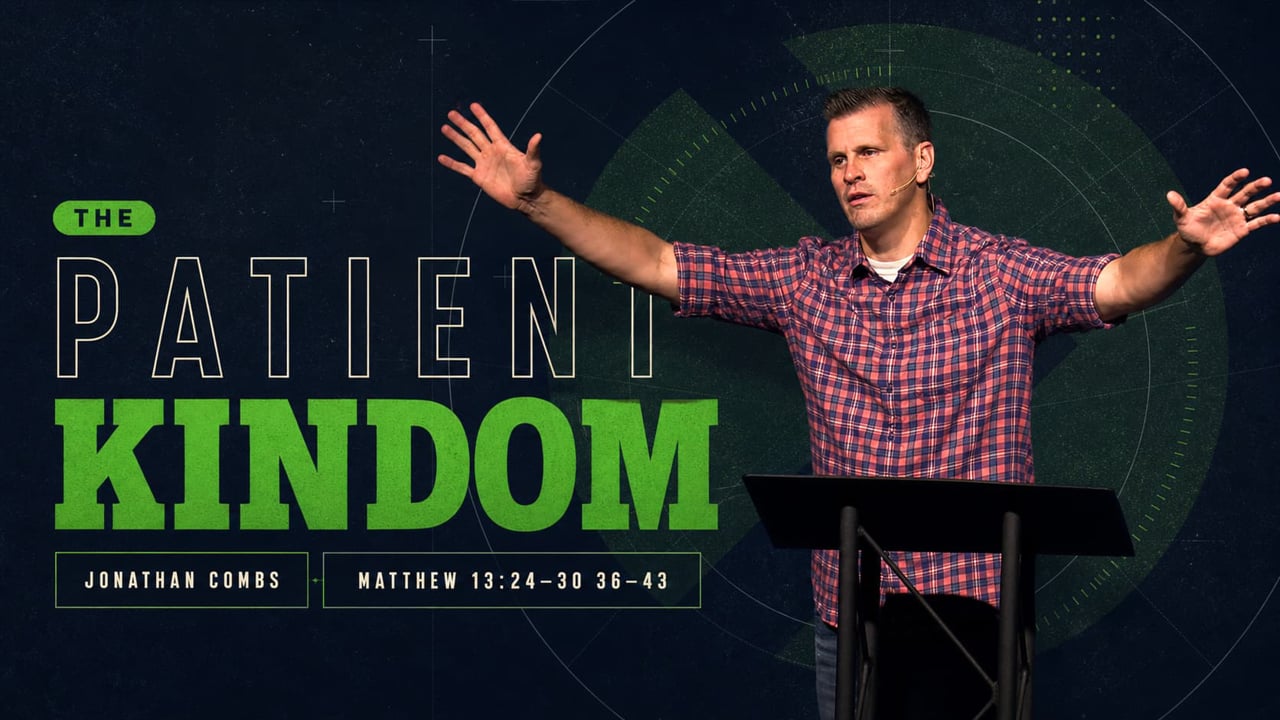
Read transcript
Good morning, church. Good to see all of you today. Don’t worry, we had a ton of people at first service. They all picked first service today, so I have great news. You know what it is?
I preach the same no matter if there’s 4 people or 40 or 400. So I’m thankful you’re here today. I’m grateful for you. I’m excited to be preaching today. We’ve got a really good message, I think, from the words of Jesus today.
They’re all wonderful, but today I’m very excited about this message. I wanted to just give you, if you will, maybe a, just a brief pep talk, if you will. Here in a few weeks, we’re going to be doing what we’re calling Back to Church Sunday. We wanted to give an opportunity for our church to have a really invitational Sunday where you can trust us, hopefully with your friends, your co-workers, your neighbors, maybe your family members. You might have noticed this in your card when you— in your bulletin as you came in.
This is meant to be kind of a bookmark for you to use to pray, to maybe read these scriptures and be praying for your friends and loved ones. But this little part, if you’re willing, if you’ll rip this off and write a name, or maybe you have several people in mind, write those down and put them in the buckets today so our staff, myself, we can be praying for your one or your ones. And in a few weeks on September the 20th, we’re going to be doing what we’re calling Back to Church Sunday. So we know just just so you know that people kind of start getting back into the swing of life in late August, September, and kids are back in school, things are back in the swing of life, and so this is an opportunity for maybe some folks to come that wouldn’t always check us out. And so use this as a tool, if you will, to invite your ones, and we’re going to be praying for you.
Our desire is simply that everybody might be able to bring one. And so if you can bring— if there are more of them, praise God, and he’s going to do, we know, a miraculous thing. I’m just going to say, I really truly believe that a move of God is happening in our city, in our county. I pray all over the world, all over our nation, and I believe we get to be a part of that as God’s people, as his church. And so with every single person that comes to faith, there is rejoicing in heaven.
And so I’m grateful to be a part of it. And I pray that you’ll get to as well. I wanted to also say your generosity in its time has been helping us so much to reach more. Some of you in the room have actually come as a result of our online engagement, which was only made possible by your generosity. And so thank you so much for that.
Keep that up, keep praying, and we’ll be praying together as we do church here in a few weeks, and hopefully many of your ones will show up. So let’s dig into the text today. We’re going to be in the parables this morning. We’re going to, over the next few weeks, be covering the parables of Matthew chapter 13. And last week we talked about the 4 soils.
If you missed that, that’s a pretty important one leaning into the parables that are to come. So if you missed it, it’s online. Check it out. But this one, I think, is going to move us in a direction that might— I’ll admit, it might feel a little bit spicy at times. But Jesus, I’ll be honest with you, at times he gets a little bit spicy.
And so, let me just preface it by saying, if you’ve got an image in your head that meek and mild Jesus is all He ever was, He also calls out religious leaders for their lies and their hypocrisy. He does a lot of things that are pretty strong, and today is one of those. This parable has some meat on it. And so, let me just say, as we’re leaning into this text today, that I’ve been praying for you all week that this would encourage you where you need it and perhaps challenge you also where you need it by the grace of God. So we’ve been leaning into really this idea of God’s kingdom come, the whole series, all of these parables is Jesus saying the kingdom of heaven is like.
Today He’s gonna do that again. And the kingdom of heaven is something that He tells His disciples and therefore tells us to be praying for. Remember the Lord’s Prayer in Matthew 6, it says, our Father which art in heaven, Hallowed be Thy name. Thy kingdom come, Thy will be done in earth as it is in heaven. He says, Thy kingdom come.
We as His disciples should be praying, hey God, let Your kingdom come. And so now He’s going to describe what that looks like to some degree, the kingdom of heaven. And so I said this last week, this is one of the best definitions I’ve ever heard. I didn’t come up with it, but the idea is that the kingdom of heaven is wherever Christ is King. Here’s a definition that we wrote for you.
The kingdom of heaven is the saving reign of God that entered history through Jesus the King is even now breaking into this present age wherever His rule is received and will one day be fully and visibly established when Christ returns. In other words, right now in your life, wherever Christ is King, there His Kingdom reigns. So even now, one day, sure, one day is coming, the Kingdom of Heaven where all will be dealt with, the harvest, as we’ll see in the story today, will come, and God will do His ultimate work. But even now, God is present and working in your life anywhere where you’ve made Christ King. Hopefully, you’ve made the decision, as many of us have, that Christ is King of all.
He’s King of all, and the more that you give ground to Him as King of your life, the more those areas are restored. So is He King of your marriage? Is He King of your relationships? Is He King in your parenting? Is He King over your finances, over the way you work?
Is Christ King? If so, there His kingdom reigns. But this creates a tension, a really strong tension we’re going to find today. This is where this parable has some difficulty that Jesus lays out for us to have, and so we, we want to come to it with honesty. Here’s the parable of the wheat and the weeds today.
If you have a King James Bible, it was originally called the wheat and the tares. And the idea of this is there’s a tension between those who are good seed and those who are bad seed. And Jesus presents this, and it all hinges around one question. And I want to present this to you before we dig fully into the text. It’s in Matthew chapter 13, if you’ve got your Bibles, verse 27.
The servants of the master of the house, they came and they said, Master, did you not plant good seed in your field? How then does it have weeds? How then does it have weeds? Now that’s a great question. Anyone who’s ever had a garden or anything like that, you know, I tilled this soil, I planted this stuff, what is this other stuff that’s coming up in here?
Because I planted tomatoes and I got a mess. That’s just life. But here Jesus is saying there’s a, there’s a battle going on in the field. And so at this point in the book of Matthew, just the setup here is Jesus’ opposition to His ministry is intensifying. Things are getting harsher for Him in ministry by the time we’re in Matthew 13.
The religious leaders in Matthew 12 actually called some of His miraculous works, they attributed those to the works of Satan. So already they’re accusing Him of doing works based on the power of the evil one and not God. And by this point, They are very much in opposition to Him, and it presents a question that I think is timeless, a question that I hope today you will feel eased in a way, and it’s this question: If God is good, why does evil remain? If God is good, why at times does it seem like evil is gaining ground? There’s a really good question there.
And that’s the one I think the wheat and the weeds, this parable really seeks to answer. We find ourselves in that tension today because our world, it honestly, let’s come and approach the world we live in not with blinders on. That’s what’s, I think, powerful about true Christianity is it doesn’t say, oh, it’s all going to be okay. No, it looks at it with correct vision and says, hey, we live in a broken world. Where there’s violence and there’s injustice and there’s— in fact, there’s even open rebellion against a holy God.
In spite of that, God doesn’t always remove people or problems. Sometimes He lets them stay. Why? That’s the tension of this parable. And it might cause us then to misunderstand what God is really up to.
It might cause us to start thinking, Is His patience actually His weakness? Is His delay— does that mean He’s not present? Is He absent? Is He listening? You ever pray and think, God, are You there?
Knock knock. Hello? It’s okay if you do because, hey, that happens to me, friends. Guess what? It happens to a lot of people in here.
Doesn’t mean God is not absent. It means God is doing something that Sometimes we don’t understand. Often we don’t. But we might, in our brokenness, think that God is absent or weak, or we might even get this impression that evil is winning.
That’s the tension today. Let’s open up our Bibles. I pray that this would really encourage you today, believers in the room, and those of you who have come today who are not yet walking in Christ, that this would encourage you into the kingdom of God. I pray that so much this week. Matthew 13:24, you’re going to notice I’m going to skip a little bite in the middle.
There’s a reason for that. Jesus is in the middle of teaching several parables back to back, and then in this case, He answers the questions of the disciples after telling several parables. So the area we’re going to skip this week, we’re coming back to it next week. This week, just the parable of the weeds and the wheat. Here we go.
Verse 24, chapter 13, it says, He put another parable before them, saying, the kingdom of heaven may be compared to a man who sowed good seed in his field. But while his men were sleeping, his enemy came and sowed weeds among the wheat and went away. So when the plants came up and bore grain, then the weeds appeared also. And the servants of the master of the house, they came and they said to him, master, did you not sow good seed in your field? How then does it have weeds?
He said to them, one enemy has done this. So the servants said to Him, then, then do You want us to go and gather them? But He said, no, lest in gathering the weeds you root up the wheat along with them. Let both grow together until the harvest, and at harvest time I will tell the reapers, gather the weeds first and bind them in bundles to be burned, and gather the wheat into My barn. Then he goes to explain this in verse 36.
It says he left the crowds and went into the house, and his disciples came to him. This is great. This is where me and you are. Hey, uh, explain to us the parable of the weeds of the field. I love that they asked him this and that we have it.
Thank you, Lord. Verse 37, Jesus answered, the one who sows the good seed is the Son of Man. The field is the world. The good seed is the sons of the kingdom. The weeds are the sons of the evil one.
That’s troubling. The enemy who sowed them is the devil. I know what you’re thinking. You showed up to church today, we’re about to talk about the devil and a fiery furnace, and you’re like, wow, this is quite a Sunday to come. Yes, it is.
Thank you for being here. The enemy sowed them is the devil, the harvest is the end of the age, and the reapers are the angels. Just as the weeds are gathered and burned with fire, so will it be at the end of the age. The Son of Man will send His angels, they will gather out of His kingdom all causes of sin and lawbreakers and throw them into the fiery furnace. In that place there will be weeping and gnashing of teeth.
Then the righteous will shine like the Son in the kingdom of their Father. He who has ears, let him hear. I pray you have ears today. This is God’s word. Amen.
May we hear this, Lord, this hard word that is important. The parable of the weeds and the wheat. This, I believe, for us is about trusting Christ is King, especially when evil Here’s the first way in which I believe, the first reason that we can trust Christ even when evil remains, because His sovereign purpose cannot be defeated. His sovereign purpose cannot be defeated. There’s something beautiful about this passage that I don’t want you to miss.
Jesus is yet again telling a parable. I like what the commentator said, and I recited this last week, but it was something like this. He said, the reason that Jesus teaches in parables is to present an image to us that is both vivid and strange, strange enough for us to have enough doubt in our head to go, what are you talking about? That’s exactly what you should do with one of Christ’s parables, not to walk away and go, that was weird, but rather to lean in and say, as the disciples said, hey, what’s this? What are you on about?
That’s the right thing to do. And so that’s why Jesus is teaching in parables that some of us Hopefully most of us would lean in and say, all right, Jesus, what am I in this story? Where do I fit? Am I wheat? Am I weeds?
What is this? That we would lean in. And he says this parable is about the kingdom of heaven where a man has sowed, and then he tells us later that man is me. He says the man who’s sowing here is the Son of Man. How many of you in the room know that that’s a title that’s given to the Messiah?
A title that’s given primarily in the book of Daniel and other prophets to describe the coming Christ, the Messiah, who Jesus, I believe, is, and He certainly who He claims to be. So He says, I’m the one sowing this good seed. And in fact, He’s telling us something pretty good here. He’s saying, hey, look, the world in which I created is good, and I have sowed goodness in it. But there is an evil that is sowing evil in it.
So, He’s making kind of a theological claim here too that’s a bit of an aside. He’s saying, the world which I created, the people in which I’ve planted, they are good, but there is a true enemy, and don’t be blind to that. He goes on to say there’s a good seed, and then He describes them. Those are the sons of the kingdom, He says in verse 38. So, those are those of us who have said yes to Christ Jesus, who have put our faith and trust in Him or are walking by faith in Christ Jesus, he says, you are the good seed.
You are sons and daughters of King Jesus by adoption into His family. There are 2 families being presented here. Do you see it? It’s pretty spooky, but he’s saying there’s the sons of King Jesus and then there’s the sons of the devil. It’s like, wow, this is quite a Sunday.
Yes, it is. He says there’s True opposition, but guess what? His purposes won’t be defeated. Now there’s a bit of a moment here. I heard a whole sermon on this recently because I like to listen to preaching as well.
I feel like I’m constantly trying to grow in what I’m doing too. I’m trying to improve, and some people really are just fantastic at this art, if you will, of preaching. And so I heard a preacher recently talking about verse 24 that when Jesus planted, then the men It says the men were sleeping, and he had a whole big part of his sermon about, hey, when the church or when the people of God fall asleep on their mission, it gives the devil an opportunity to plan evil. There’s some truth to that. I will say that doesn’t seem to be Christ’s major theme here, but let me just say there’s some truth to that if we decide or determine, hey, this whole world is going to hell in a hand basket, if you might say, What can I do about that?
And you decide to step back and fall asleep on what God has called you to, know that that is not at all what the Lord is desiring for you. In fact, you might say that’s a moment where the church has fallen asleep. All that to say, you could infer that, hey, let’s make sure that we walk and honor Christ in the things He’s called us to do. Yes, that’s a good idea. But in this text, it seems to me he’s making no accusation of these men.
That the servants have worked, they’ve planted, and they’ve done well. And then in a time where all of us would need rest, you and I would after a hard day’s work, the enemy shows up. So I don’t think He’s accusing them of anything here, but rather He’s accusing of this evil one who He later tells us is Satan, is the Greek here, diabolos, the devil. And he comes and he’s the biggest, Let’s just call it what it is. He is a huge jerk.
He shows up right in the very place where God has planted. He could plant in a different field, but he plants right in the same field. And what does he plant? It says he plants weeds in the ESV. In the King James, it’s the word tares.
This word here in the Greek is zizanion. It is a type of rye grass that looks almost exactly like wheat. So he comes planting a counterfeit. This is what he does. If you are unaccustomed to the kind of ways in which he manipulates the world, this is what he does.
He comes planting something that is a poisonous ryegrass that’s roots like to intertwine with the wheat, and it looks so similar. You can pop— yep, they got it up. When, when it’s just a an infant, if you will, a babe type of plant, you cannot tell the difference. You cannot. They look the same.
You won’t be able to tell the difference between this type of weed and wheat until they bear fruit. So probably a lot of the people listening to Jesus at this time would have been like, okay, like it’s a very obvious thing to them. Hopefully it’s obvious to you today that when the Master says No, don’t go ripping them up because it’s hard to tell the difference. You’ll rip up the good with the bad. No, let them grow together.
So his— the way he’s speaking here is not about him being unwilling to do the right thing, but rather there’s wisdom in what he’s saying. You’ve got to wait until they come fully up. They are— Jesus describes them— they are like their father, the evil one, who is deceptive. And sometimes these people are in your workplace, sometimes they’re in your family, sometimes they’re in the church. And it’s not for us to determine.
I don’t say that for you to go and start— don’t start looking left and right. That’s not why I’m doing this. Don’t stare at that person who really rubbed you the wrong way last week at small group. Don’t do that. Because the determination here is not that the people, the good seed of God, the people of God would go, we’ve got to weed out these weeds.
It’s the opposite actually that he says here. He says, don’t do that. Why? It’s not your job. It’s the job of the angels.
The reapers are the angels, not the people of God. They’re not. In fact, you would do great damage to the house of God if you try to do this. If we try to be a church that purifies people by our own work, we will hurt a lot of people. But if we’ll be the kind of church that says, come to Christ and let Him purify you, then we will be well.
I can’t do any different than you can do with this. I have to every day, just like you, come before the throne room of Jesus and say, here I am, a sinner, help me. I’m a broken man who desperately needs Your grace, Your all-sufficient mercy. We’re all in this together. So that’s the kind of presentation we give is not, hey, in order to be a part of this church, don’t be weeds.
Oh, don’t you dare. We can’t tell because they look similar, and the enemy knows this. Here’s a couple of things that I don’t want you to be blind to. This is kind of an aside as I deal with this text. Satan does several things here in the wheat and weed story that are true in life.
I want you to hear these. Satan will, number one, he will seek to counterfeit God’s work. It’s his, one of his number one moves that he does is, I’m going to counterfeit God’s work. This means he’s going to put people perhaps around you or others that claim to be Christians that do the work of evil. That will happen, you’ve probably seen it, it will happen.
Sometimes it will happen at big levels in the church. I pray it never happens here, But it can, because this is what the evil one is doing. But bigger than that, he’ll make counterfeit religions, and the ones that are most dangerous are the ones that look most like Christianity.
So he’ll counterfeit God’s work. He will also corrupt God’s people if he can. He can’t touch you because you’re one of the Lord’s, but he can certainly deceive you and cause you harm. He hates all people. Just know this about him.
He hates God, but he can’t touch God, so he hurts things that God made. He can do nothing with God and what God has done. God is all-powerful, but if he can’t touch God, he’ll touch the things God has created, and that’s you and me. He hates you. He hates your marriage.
He hates your children. I want you to know that. Don’t be deceived by this. He is very, very deceptive and evil and desires to corrupt. The way in which this story presents this is these are the type of weeds that deliberately get near the wheat and try to intermingle and put their root systems all in the same area with the wheat.
This is the way that often happens in life with us, so be not afraid, but rather be very vigilant and aware. Don’t be blind to the fact that there is a real opposition to the Kingdom of God. So he’s a counterfeiter, he likes to corrupt, and if he can’t do either of those things, he’s really good at the third, and that is He will distract you. He will distract you. We just did a whole series, if you missed it, called Connected.
One of his favorite things to do is get you doing this and watching shows so that you accomplish nothing in this life. If he can distract you and dull your senses, he’ll do it. But in this story, the way in which he distracts them is the, the servants go out and they go, hey God, uh, hey Master, we’ve noticed, um, you said you planted good seed. We’re seeing some other seeds out here. You want to talk about that?
And he’s like, no, it wasn’t me. It was the enemy. It was that terrible jerk went out and planted right there. So the servants say, hey, do you want us to come and get those out of there? That’s the distraction, that the servants begin to think, well, this is my job.
And God says, it’s not your job. Here’s your job. Be good seed. That bears fruit, that’s faithful. So you, me, it’s not our job to judge and look and go, well, that looks like a weed right there.
That, that person at my work that says they’re a Christian, look at what they’re doing and what they’re saying. They’re weeds and not wheat. That’s not your job. Your job is to be wheat so that other people will look at you and this person that may just be a very unhealthy Christian, but they’ll look at you and them and say, all right, we see what it looks like to really walk rightly with, with the Lord. And that maybe this person who may be a brother or a sister that’s really in bad shape would look and be with you and go, I want to— I want what you want.
But your judgment won’t help that.
Says in verse 28 that the, the reapers will come and gather that God’s purposes will not be defeated. Job, in fact, late in his book where he has gone through tremendous pain, he says, I know that You can do all things, that no purpose of Yours can be thwarted. He’s right. Yeah, the enemy planted at night while the workers slept. The reason he had to do that, my friends, is because the evil one can’t do anything with what God’s up to.
He has to try to be sneaky and do things when no one’s looking, but he does not have ownership of the field. The world and everything in it is the Lord’s, and He has the final word. Things are not out of control. Some of you are watching the news a lot, you’re reading newspapers perhaps, I don’t know who’s still doing that, but some of you are, and it may after a while make you start going, look, it looks like the world is out of control, who’s in charge of this? I can tell you who’s in charge, the Lord Jesus, and He never stopped being so.
This time right now is not about the Lord’s lack of control, it’s about His patience.
And opposition is not the same thing as defeat, my friends. So when you’re doing— perhaps some of you right now in your workplaces, in your families, you are doing things that you really feel the Lord has led you to do, and you are facing them with opposition, and it might cause you to think, I’m not sure the Lord’s in this. Because it seems like I’m having to fight a battle, but that opposition could be verification that you’re right where the Lord has called you. So don’t assume that any sort of enemy means you’re wrong. It may mean you’re dead on.
We’ve not lost ground or lost control. This enemy, he opposes the King’s work, but he can’t defeat the King’s purpose. That’s number one: He will win. He is winning. Here’s number 2, the second reason that we can trust even when evil remains: it’s because His patient wisdom cannot be rushed.
Now, this one is for somebody in the room today, probably a lot of people today, that His wisdom cannot be rushed. I know some of you in the room have been praying for a long time for something. Maybe it’s a loved one that’s lost, maybe it’s your own personal brokenness or problems and you’ve been praying and you keep thinking, Lord, I know You love me, I know You love those, and I know You have a desire for people to come to Christ. What are You waiting on? And I understand that.
That is like a constant feeling for so many of us believers. Lord, You say in Your Word that You want that all men would be saved, that none would perish. That all would come to saving faith. That’s what you say you want. Well, I’ve been praying for my, my, my father or my, my brother or my co-worker.
I’ve been praying, and I’ll be honest with you, Lord, they look farther from you right now than ever. What are you doing?
His wisdom, my friends, his timing is not yours, and it cannot be rushed. And His patience, don’t see that as weakness. I want you to hear something in this story that’s so helpful. The master delays. The servants, they come and they say, hey, you want us to pull up the weeds?
And he says, no. And he says it because if you do so, you’ll pull the wheat up with it. So His patience here is not weakness, it’s wisdom.
It’s wisdom. And so if he’s being patient in your prayer life, it’s divine wisdom that you don’t yet know, but maybe one day we’ll get to see. Some of you have asked for things, things that are good things that he is either delaying or will never do because he knows better.
He knows maybe it’s good things in life that you, you would, you would desire to use for good, but he knows you would use them for selfish gain. And so He sets them apart from you. Don’t look at that as weakness. Look at that as wisdom. Why hasn’t He saved my loved one?
Well, He’s working that in due time, and there’s a reason for that patience. He says instead in verse 30, He says, let the weeds and the wheat, let them grow up together so that at the end of the age, their harvest, you would see them both and know the difference. That we would know then at that point where to send the reapers. Scripture repeatedly connects God’s apparent delay with His wisdom, not His passivity. Hear this verse, I recited it in kind of a Jonathan paraphrase, here it is in actuality, 2 Peter 3, the Lord isn’t really being slow about His promise as some people might think, no, He is being patient for your sake.
He does not want anyone to be destroyed, but wants everyone to repent. So when you start praying as the saints in Revelation pray, how long, O Lord, before you come and bring justice? Just know He is being patient for one more. You want to talk about who’s your one and bringing one more? That’s what God is all about.
He’s waiting for one more. I’m praising Him that He loved me enough to wait to 20, you know, 2,000 years for a guy like me. I mean, He waited until the 1990s when I finally came to Jesus, right? And that’s, for some of you, that’s your story. Aren’t you thankful that He was patient and delaying so that you might come too?
And we often don’t consider that piece. In fact, what’s even more is I think to some degree, the Lord allows certain pain and suffering in our lives that we might actually be drawn towards Him. Some of us are so stinking hard-headed, we can’t see Him until things are hard. Some of you are in church today because things finally got hard enough for you to come. That’s okay.
I’m glad you’re here. I’m thankful for you. I want you to hear this truth: the Lord loves you and is desiring to separate the wheat. Are you one? And know that His plans cannot be rushed.
He’s like a great surgeon. Some of you in the room, you may have been under a surgeon before where there was maybe there was something, a major operation perhaps. I’ve heard stories about this. I thank the Lord at this point I haven’t had to have any major surgery, but sometimes the surgeon will look in, the physician team will look in, and they’ll see a lot of problems. Maybe it’s not just one, maybe there’s several things, and the patient might look in there and go, hey, you know, while you’re in there, why don’t you just go ahead and get all of it?
Why don’t you just go ahead and take care of all of it? And a wise surgeon would probably say, no, if we try to do that, it might kill you. We’ve got to just do this little thing and this little thing. I remember when my dad, he had both of his knees replaced over a few years ago, and he was the kind of guy that was like, hey, just go ahead and do them both at the same time. And the doctor’s like, absolutely not.
We’re not doing that. And he wanted to get it out of the way, but the physician knew better. This takes time. We’ve got to let this one heal and then get to this one. I want you to hear that the Lord is the great surgeon.
He is the great physician, and he knows wiser and better that some things it takes time to remove them and make them well. That some things, if I try to just pull out the entire cancer, if you will, if I try to deal with the entire brokenness, it will, it will ruin the crop. So instead, he is careful. In the gathering. Christ knows what to remove, what to preserve, and when the harvest will come.
What are we to do with that then? Trust. I didn’t want that news today, Jonathan. I wanted you to say God is going to do it right now. He might, but He very well might just teach you a life of patience.
He very well. I don’t want to tell you a lie. I know trusting Him is the impetus of this verse. Instead of, Lord, why have You not acted yet? We need to learn to Lord, help us to trust you while we wait.
This is not a passive waiting, not an inactive waiting. This is a prayerful, Lord, bring it on. Tell me where to go. Where should I be right now? I am active in my waiting, but I am not thinking, Lord, if you don’t do this, then you are not good.
No, instead I’m saying, I trust you. I don’t understand your timing, but point me where to go. And show me how to pray, that I might be wheat that proclaims the gospel and doesn’t worry so much about these weeds. Here’s the final, and this is where things got really spicy. The 3rd reason that we can trust King Jesus even when evil remains is because His final justice cannot be escaped.
That’s a hard point, but it’s a true point based on what He said here. He ends— Christ Jesus ends this parable by saying, the harvest is the end of the age, and the reapers are my angels, and I’m going to send them to gather. And there are 2 destinations. This has become a pretty unpopular thing to preach. It used to be a very popular thing to preach in America.
There was a great revival in the 1700s when a young man named Jonathan Edwards preached Fiery hands in the fiery hands of God. You remember this text? It’s escaping. Sinners in the Hands of an Angry God. Got it.
Y’all were worried about me for 5 seconds. I’m okay. Sinners in the Hands of an Angry God. That’s quite a sermon title, one I wouldn’t necessarily think would go over all that well. This is the way in which people used to talk a lot about heaven and hell.
I want you to know something. It’s not necessarily a popular text, but it is something Christ talked about a lot. Heaven and hell. Here He shows 2 destinations, one where the righteous shine like the sun, the other where it’s a fiery place where there’s weeping. These are real places according to this parable, according to the words of Jesus.
This passage does not end with just the hard news though, it ends with this great news that the righteous will be in the kingdom of their Father, and then lastly He says, He who has ears, let him hear. Why does He say that? Because His desire is not that anyone would be in the fiery, but we would all shine like the sun. If you would just hear Me and seek Me, then I’m ready. I’ve done everything necessary that you could be in the Kingdom of the Father.
You do not have to be the weeds. Paul preached this same truth in Athens. This judgment is certain, it’s appointed. Acts chapter 17, Paul says, God has fixed a day on which He will judge the world in righteousness by a man whom He has appointed. Hebrews 9 says, it is appointed for man to die once, and after that comes judgment.
Finally, I want to end with just a thought on why Jesus uses these 2 items. I presented how much they look alike, right? That’s true. It’s very difficult for you and I to know the difference between who is a real believer and who’s not. And what we should do with that is not worry about it, not be constantly going, I don’t know if he’s in or out.
That’s for the Lord to determine. What do we do with those people? We love them. We pray for them. We try to disciple them.
Those of us in Christ Jesus, if we know that confidently and we’re the wheat, then our job with the weeds is not to try to pluck them, but to try to say, hey, Here’s what it looks like to follow Jesus. Come with me. Imitate me as I imitate Christ, Paul says. That’s what we do with the weeds if they are that.
But in the end, they will be distinguishable by their fruit. That’s what Jesus is saying. I saw this recently. This is really a beautiful picture. As wheat and tares finally reach the point of harvest, A wheat in its final days of harvest becomes heavy.
It browns. You’ve seen this picture, I bet. When you think about wheat, that’s what you think about is the harvest time where the kernels have gotten heavy. The plant then at that point begins to do something where it almost looks like it’s bowing. Tares, on the other hand, their fruit is not heavy and it’s black and they stick straight up.
I heard this old preacher say, that’s how you can tell the difference between weeds and wheat. One’s bowing and one won’t. Pretty good. It’s like Jesus put some of these pictures in creation just so he could preach about them later. It’s pretty awesome.
But that’s how you can tell. You can tell by who’s bowing the knee before King Jesus and who’s not, who sticks straight up selfishly, whose fruit then is something you can use versus a fruit that, for the most part, this type of grass is poisonous.
It’s poison. Resemblance then eventually gives complete away to reality. So here’s the question as we come to a close together. It’s not, oh, I wonder if my neighbor’s a weed. I wonder if my coworker who claims to be a Christian, but I only ever see him do stupid stuff, I wonder if he’s a believer.
That’s not the point of this parable. The point of this parable is, who am I? Am I wheat or am I weeds? Am I good seed? Lord, am I?
That’s a great question, one that I believe the Gospels, especially 1 John— this is a friend, if this is a question you’re concerned about, you don’t have to lay there and stay there. I mean, you can The Bible talks of this word called assurance. 1 John, when the Apostle John, that seems to be his primary purpose of writing is that you would know that you have eternal life. If you believe in Christ Jesus as your Savior and Lord, if you have put your faith in him and put your life on that path and said, wherever you want me to go, Lord, you lead me, I’m yours. And the more that you do that, the more you say, Lord, you can have this.
This part of me. You can, and eventually you say all of it is yours. It’s hard. There’s a season where you go, oh, I don’t know if I want to hand him that, but here. The more you do that, King Jesus is King over all of your life.
You’re the good seed, my friend. You can know that you know that you know that you’re saved. That’s not the point of this text. It’s not to make the wheat go, am I wheat? It’s to make the weeds go, I don’t want this.
I don’t want to be gathered and thrown out. So, dear friend, don’t mistake the delay of Christ’s coming as some proof that judgment is not coming. Know that his patience is actually proof that he loves you and he loves your friends and your coworkers. Believer, I want you to hear this too. Jesus is not delaying His coming because He wants evil to reign.
He’s doing it because He wants more people to come into the kingdom. So I know things are hard. I know things are up and down. Sometimes it seems like, man, all things are going good. Even in those times, terrible evil is happening.
He is patient that one more might come to salvation. So as we close, I want you to hear this. Jesus gives us 3 reasons we can trust Him. His purpose will not be defeated. He will win.
He is winning. He will win. His wisdom will not be rushed and His justice cannot be escaped. And we can take confidence in this, that the very author of the one of this parable who said, I’m the sower, He’s also the one who said, I’m going to take on all of the sins and brokenness and iniquity of man. I’m going to take it on myself that all might move from weeds to wheat.
He doesn’t leave us in this place and say, hey, good luck. No, He says, I will pay that you might be free. If you’ve not made the decision today to walk in Jesus, today is the day. Let’s pray together. Heavenly Father, we thank You that You are a good God who loves us, that You have done everything necessary that we could be made right.
I’m praying first for believers in the room right now. Lord, would You help us to be good seed, that we wouldn’t stress and worry about what’s going on around us, what the so-called Christians are doing around us and think that we need to judge that, Lord. Would you move that out of our hearts and help us to be the kind of people who would represent you well, who would share the gospel well, who would love and show mercy and grace, that we would resemble our Savior and that that would be the fruit of our life, and trust you in all that, Lord, knowing that you will do what is right according to the harvest. That’s not our job to worry. Help us to be at peace about that.
God, help us to bear great fruit in Your kingdom. For that person who’s come in today, dear friend, if you’ve come, you’ve not yet said yes to Christ Jesus, you know in your heart right now, I’m not the wheat, you don’t have to be in fear any longer. There’s no reason to walk out of this place with an uncertainty.
This is an appointment of a day for you. There’s a reason you’re here, because God is desiring in this moment to separate the weeds from the wheat, and he’s going to do it today in your life if you’ll let him, if you’ll yield to that. If you’re ready to do that, my friend, would you pray a simple prayer with me? Jesus, I believe today that you died on the cross for me. That you paid for my sin, my brokenness, my guilt.
You paid. Thank you, Jesus. I also believe that God raised you from the dead, and the resurrection and the crucifixion give me hope that not only have you dealt with my brokenness, but you’ve also freely given me eternal life. Thank you for that today, Lord. And I’m asking, help me to trust you.
I’ve not lived a life that trusts you. I don’t know how to do that. Would you begin to guide me to trust you in all things, that I might bear good fruit, that others might look on me and say, that’s what, that’s what it looks like to be wheat. That’s what it looks like to walk in Christ. Would you do that in me, Lord?
Guide my steps. Would you restore my mind in such a way that I would think as you think? Give me the mind of Christ. That I might speak to people and think about them and think about my life and my work in a way that you would and would honor you. God, help us all.
It’s that, that new person has come to salvation. Help us all to pray with them. Lord, guide us. Help us to trust you even when evil remains, knowing that, God, you are good and your plans will not be stopped. And that you want to use us in bringing one more to salvation.
We love you. It’s in Jesus’ name we pray these things. Amen.
Wherever Jesus the King is received, His reign begins to transform hearts and lives. That’s why Jesus taught us to pray, “Thy kingdom come” prayers. The King has come, but His kingdom is an already/not yet kingdom.
In today’s parable, Jesus answers the question hanging in the air that is something like: If the Messiah has come and the kingdom has arrived, why are the wicked still here, and why are so many rejecting the King? Or in other words, “If God is good and Christ is King, why does evil remain?”
We often feel that same tension today. We look at a world filled with violence, injustice, unbelief, suffering, and open rebellion against God, and we wonder, If Jesus is King, why does evil remain? If we misunderstand the present nature of Christ’s kingdom, we may mistake His patience for weakness, His delay for absence, or the persistence of evil for the defeat of His purposes. We can learn to trust the King while we are still living in a world where wheat and weeds grow together. That is the tension Jesus addresses in the Parable of the Wheat and the Weeds.
In the Gospel of Matthew 13, Jesus told the parable of the wheat and the weeds to teach His disciples that His kingdom would patiently coexist with evil until the appointed harvest, when He would finally judge the wicked and vindicate the righteous.
Keep Watching
 Life In Christ – An Exposition of Ephesians
Our Peace in Christ
WilsonGary CombsRocky MountJonathan Combs
Life In Christ – An Exposition of Ephesians
Our Transformation in Christ
WilsonGary CombsRocky MountJonathan Combs
Life In Christ – An Exposition of Ephesians
Our Enlightenment in Christ
WilsonGary CombsRocky MountJonathan Combs
Life In Christ – An Exposition of Ephesians
Our Peace in Christ
WilsonGary CombsRocky MountJonathan Combs
Life In Christ – An Exposition of Ephesians
Our Transformation in Christ
WilsonGary CombsRocky MountJonathan Combs
Life In Christ – An Exposition of Ephesians
Our Enlightenment in Christ
WilsonGary CombsRocky MountJonathan Combs